Arctic Monkeys' Frenzied Early Years: A Sheffield Story
In 2005, a storm was brewing in northern British indie music, and NME coined a new genre: New Yorkshire. The tag lumped together bands like Arctic Monkeys, the Long Blondes, Milburn, and Kaiser Chiefs, but overlooked a split between artier indie bands and traditional local outfits. The Long Blondes, formed in 2003, rejected the earnest male-dominated scene, embracing pretension and pop. Drummer Mark Turvey said, 'We were setting ourselves up as the direct opposite: pretentious, trashy, feminine and pop.'
The geographical divide was stark. Jon McClure of Reverend and the Makers noted north Sheffield's thicker accent and brusque people. Joe Carnall of Milburn admitted suspicion of other bands, like the Long Blondes. Milburn, formed in 2001 by teenage lads, released a demo in 2001 called Steel Town and quickly sold out the Boardwalk, a 500-capacity venue. 'We sold out the Boardwalk, then went to school the next day for GCSE maths,' Carnall recalled.
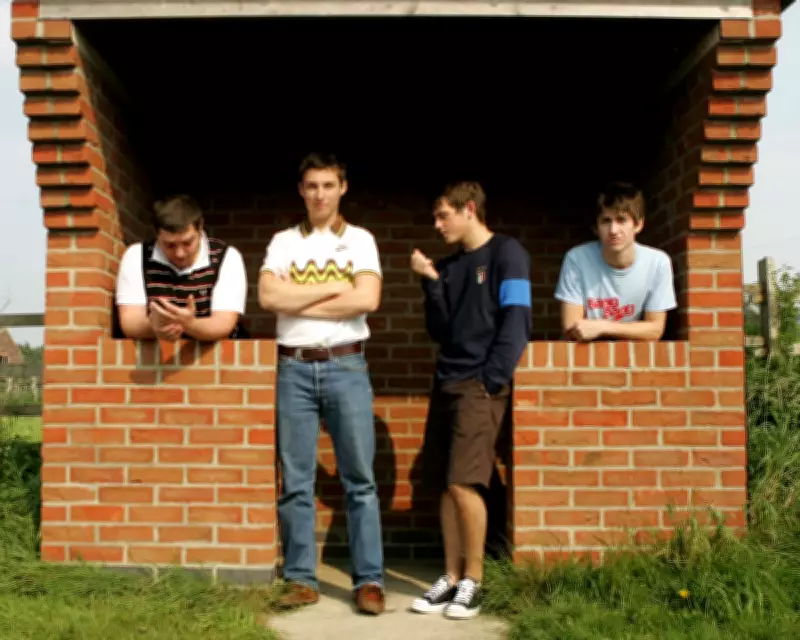
Arctic Monkeys, childhood friends from High Green, were inspired by Milburn. Drummer Matt Helders said, 'Milburn were the first people we saw doing it that were kids our age. We didn't think it was a thing that people did where we were from.' The Monkeys formed out of boredom, hanging out on the street, deciding to start a band instead of egging houses. Before their rise, Helders and Alex Turner played in a short-lived funk band called Judan Suki, which Helders called 'a foundational experience.'

The Boardwalk became a hub, with McClure, Turner, and others working behind the bar. Chris Wilson, the venue manager, recalled an impromptu gig where Turner played acoustic songs that later became hits. 'I got the feeling everyone there knew we were listening to something truly amazing,' Wilson said. Early interest led to manager Geoff Barradale, but not everyone saw the talent. A major label rep left after a few songs, later fired.
By 2004, a tight-knit group of bands played gigs for each other. McClure recalled innocence: 'The ceiling of ambition was to be on the front cover of Sandman.' But the Monkeys were leading the pack. McClure saw Turner's lyrical skills sharpen, influenced by John Cooper Clarke. 'I distinctly remember him asking what totalitarian means, then he wrote From the Ritz to the Rubble,' McClure said.
A notorious fight at a Harrisons practice space in Neepsend was immortalized in A Certain Romance. Jubby Taylor of Harrisons recalled 'brainless violence' with pool cues. McClure's bassist Karl Kelly was knocked unconscious. After the chaos, the Monkeys played one of the best gigs McClure had ever seen. 'That's when I knew,' he said. The fight strained relations, highlighting the bands' different trajectories: Harrisons treated tours as piss-ups, while the Monkeys were professional.
When NME's New Yorkshire tag emerged, McClure and the Monkeys turned down a photoshoot. 'We didn't want to be part of this shit,' McClure said. The bands' mums formed their own band, Mother Superior, reworking lyrics and filming fake Come Dine With Me episodes. Helders recalled, 'The whole band thing brought them all really close together.'
The hype around Arctic Monkeys built to a frenzy. Their demos, collected on the unofficial Beneath the Boardwalk album, spread via websites and filesharing platforms, aided by fan Mark Bull. They were hailed as an internet sensation, but some questioned their authenticity. The Guardian's Alexis Petridis reported rumors of a 'street team' talking them up. Barradale had McClure write blurbs online to create a story. 'They need a story because otherwise it's just four lads from High Green,' McClure said.
Turner bristled at the 'internet phenomenon' label. 'We put a lot of thought and work into it, so when people pass it off as an internet phenomenon, it right gets under the skin,' he said. Helders added, 'We were a bit pissed off. We felt that part was getting overlooked.' The band's monosyllabic interviews fueled the narrative. 'There just wasn't that much to talk about,' Helders reflected. 'We were stubborn teenagers and we didn't want to be famous.'

A&Rs fought to sign them, but the band chose Domino for creative control. Some journalists questioned if Turner wrote his own lyrics. McClure said, 'I had people saying, did you write the Arctic Monkeys songs? Because they couldn't believe that a young kid could write like this.' The idea of an industry creation is laughable: finding a bunch of press-averse lads who refused Top of the Pops.
The transition was difficult. Promotions manager Jodie Banaszkiewicz recalled a Paris trip where the band ran off to the Eiffel Tower. 'Everything had felt out of their control,' she said. Humor became a defense mechanism. When I Bet You Look Good on the Dancefloor hit No. 1 in October 2005, the band listened to the chart countdown in their local pub. 'I was like I'm either gonna cry now or say something funny,' Helders said. 'I ended up quoting Anchorman.'
By 2006, their debut album Whatever People Say I Am, That's What I'm Not became the fastest-selling debut in British history, selling nearly 120,000 copies on day one. The rising tide lifted other Sheffield bands, but some, like Little Man Tate, were criticized as Johnny-come-latelys. McClure admitted jealousy: 'Of course I was. This is like being in a football academy with Lionel Messi.' This extract is from Groovy, Laidback and Nasty: A History of Independent Music in Sheffield by Daniel Dylan Wray, published 7 May by White Rabbit.