The Franco-Algerian artist Zineb Sedira has transformed Tate Britain's Duveen Galleries into a manifesto for revolutionary cinema and intellectual pleasure. Her exhibition, which runs until 17 January, is both a tribute to the radical filmmaking of the 1960s and 1970s and a seductive recreation of an Algerian cafe in Paris circa 1974.
A Manifesto for Cinema as a Weapon
From the start, the exhibition declares its intentions. A giant sign reads, 'WHEN WORDS FALL SILENT, CINEMA SPEAKS,' while another board proclaims 'CINEMA AS A WEAPON.' These slogans frame the show as a political statement, raising questions about who wields art as a weapon and what battles it fights. Sedira answers these questions through a focused case study: La Cinémathèque Algérienne, a hub for leftist African filmmakers founded in 1965.
Recreating the Cinematic Mecca
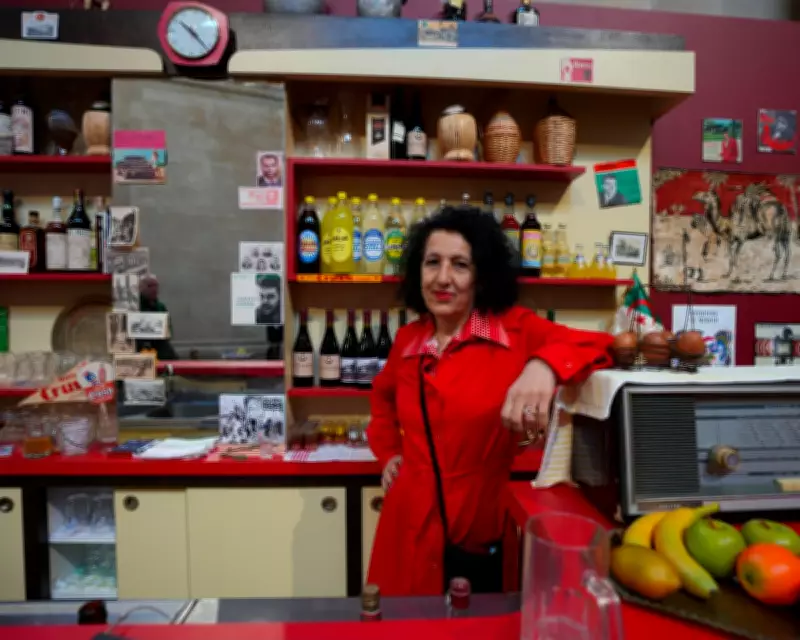
In a model movie theatre with flip-down seats, Sedira screens a short documentary about the cinema's director, Boudjemaâ Karèche. Karèche, who wears a beret with exceptional style, recounts the cinema's 1970s heyday, when idealistic young people gathered to watch revolutionary films, debate how to build a better world, and socialize with like-minded peers. Sedira's recreation of an Algerian cafe in Paris captures this spirit, complete with a jukebox playing period music, a bar serving wine and couscous, and tables strewn with books on leftist cinema. The installation argues that intellectual life and pleasure are not mutually exclusive; one can discuss injustice while enjoying a drink with friends.
Personal and Political Depth
Sedira, born in Paris to Algerian parents and a London resident since 1986, makes no pretense of impartiality. Her work is both a history lesson and a personal quest to reconstruct a sense of home from Algeria's brutal liberation from France. The exhibition brims with meticulous details: a vintage jukebox monitor plays clips from Agnès Varda's Salut les Cubains, still images are animated, the interior of a mobile cinema is painstakingly recreated, and a photograph of James Baldwin in Paris alongside a Palestinian pennant underscores the solidarity art can express.
The Challenge of Revolutionary Nostalgia
The exhibition's final film confronts a sobering reality. When the 1969 Pan-African Cultural Festival was restaged 40 years later, its revolutionary energy had dissipated. Filmmaker William Klein, who documented the original festival, asked the organizers, 'We were revolutionaries, that's why we created the festival. Why are you creating this one?' The question chilled the room and casts a pall over the show. Restaging revolutionary moments in museums can seem to preserve them in aspic, consigning them to history. If revolution is coming, it may be screened on phones, not in cinemas.
A Truly Revolutionary Art
Yet the Cinémathèque Algérienne offers a lesson: revolutionary art is not merely about watching or making films, but about opening up that possibility for others. A truly revolutionary art makes people feel more able to express themselves by offering models, exciting the senses, and insisting that art is not reserved for the wealthy or educated. By these measures, Sedira's show succeeds. It makes you wish the bar were serving and the crowd livelier, transporting you to a cinematic Algiers in the late 1960s. Ultimately, it celebrates the idea that art can enrich lives and connect people.