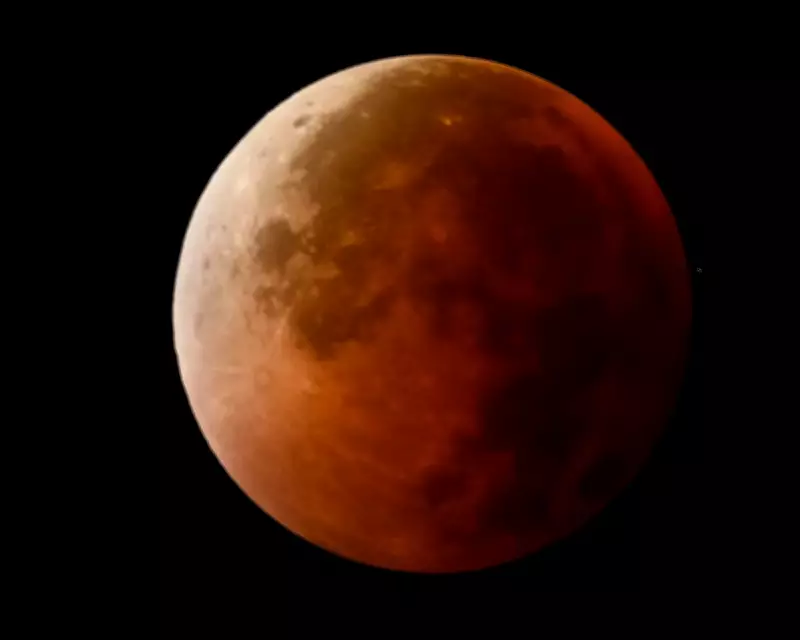
Total Lunar Eclipse 2026: 'Blood Moon' to Illuminate Skies Worldwide
On March 3, 2026, a spectacular total lunar eclipse, commonly referred to as a 'Blood Moon,' will grace the night skies, offering a breathtaking celestial display for observers across the globe. This astronomical phenomenon occurs when the Earth aligns directly between the Sun and the Moon, casting a shadow that gives the Moon a distinctive reddish hue. The event is set to be visible from multiple continents, including Australia and America, providing a rare opportunity for skywatchers to witness this natural wonder.
Visibility and Timing of the Eclipse
The total lunar eclipse will be observable from various regions, with prime viewing locations in Australia and parts of the Americas. In Australia, the eclipse is expected to be fully visible during the evening hours, while in America, it may be seen in the early morning or late night, depending on the specific time zone. The exact timing will vary by location, but the eclipse is projected to last for several hours, with the total phase—when the Moon is completely within Earth's shadow—lasting approximately 1 hour and 30 minutes. This duration allows ample time for enthusiasts to capture photos or simply enjoy the view.
Scientific Significance and Cultural Impact
Lunar eclipses like this one hold significant scientific value, as they provide insights into Earth's atmosphere and orbital dynamics. The red color of the 'Blood Moon' is caused by Rayleigh scattering, where sunlight passes through Earth's atmosphere and is filtered to longer wavelengths, similar to a sunset. Culturally, such events have been celebrated and feared throughout history, often inspiring myths and legends. In modern times, they serve as a reminder of the wonders of our solar system and encourage public interest in astronomy.
Tips for Viewing the Eclipse
To best experience the total lunar eclipse, observers should find a location with minimal light pollution and a clear view of the sky. No special equipment is required, as the eclipse can be seen with the naked eye, though binoculars or a telescope can enhance the details of the Moon's surface. Checking local weather forecasts and eclipse timing charts is recommended to ensure optimal viewing conditions. This event is a family-friendly activity that can be enjoyed by people of all ages, making it a perfect occasion for community gatherings or educational outreach.
Future Celestial Events and Conclusion
Following the 2026 total lunar eclipse, other astronomical events are scheduled, including partial eclipses and meteor showers, which continue to captivate audiences worldwide. The 'Blood Moon' serves as a highlight in the celestial calendar, emphasizing the importance of preserving dark skies for future generations. As we anticipate this event, it's a chance to reflect on the beauty and mystery of the universe, fostering a deeper appreciation for science and nature.