Photographer Eric Lusito takes readers on a visual journey through Soviet-era scientific institutes in his new book, highlighting their enduring legacy amid war and hardship. The images reveal a world of ambitious research, from radio astronomy to nuclear physics, often born from Cold War military objectives but surviving into the present day.
Institutes Across the Former Soviet Union
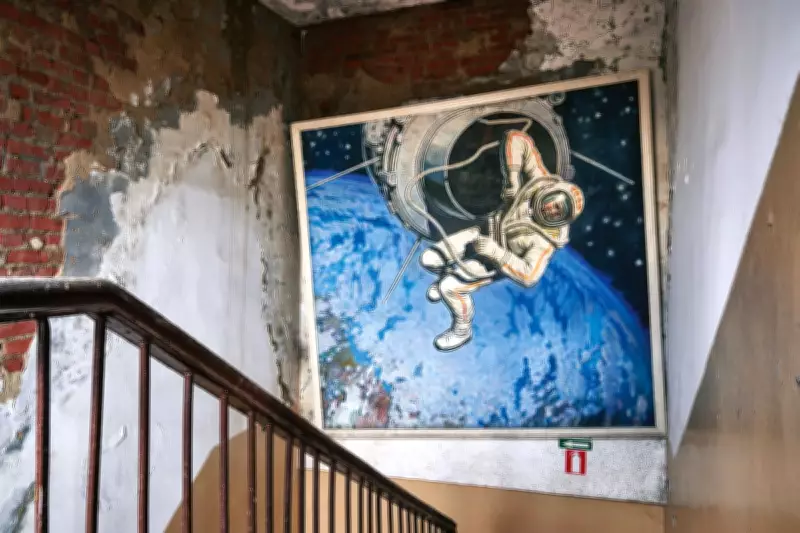
The book features numerous institutes, each with a unique story. At the Institute of Radio Astronomy in Kharkiv, Ukraine, a damaged stairwell still displays a mural of Alexei Leonov's first spacewalk. The Byurakan Astrophysical Observatory in Armenia, founded by Viktor Ambartsumian, discovered stellar associations and challenged contemporary ideas about star formation. In Kazakhstan, the Fesenkov Astrophysical Institute's Assy-Turgen observatory completed its 1.5-metre telescope in 2017 after funding was suspended following the Soviet collapse.
Technological Marvels and Challenges
Many institutes showcase remarkable technology. The UTR-2 radio telescope in Ukraine is the world's largest low-frequency telescope, covering 15 hectares with 2,040 antennas. The Big Solar Furnace in Uzbekistan uses 10,700 mirrors to concentrate sunlight for research. However, after the USSR's collapse, many institutions faced destitution. Some, like the Aragats cosmic ray research station in Armenia, survived through international grants and diaspora support.
Despite ongoing conflict, scientists continue their work. In Kharkiv, the Institute of Radio Astronomy persists, even as its building bears scars of war. The book documents control rooms, reactors, and observatories that remain largely unchanged, preserving a legacy of Soviet science.
Preserving History
Lusito's photographs capture both the grandeur and decay of these sites. From the synchrotron control room in Yerevan to the reactor control room in Romania, each image tells a story of scientific ambition and resilience. The book serves as a testament to the enduring spirit of research, even in the most challenging circumstances.