Scientists Develop 'Time Machine for the Nose' to Revive Historical Scents
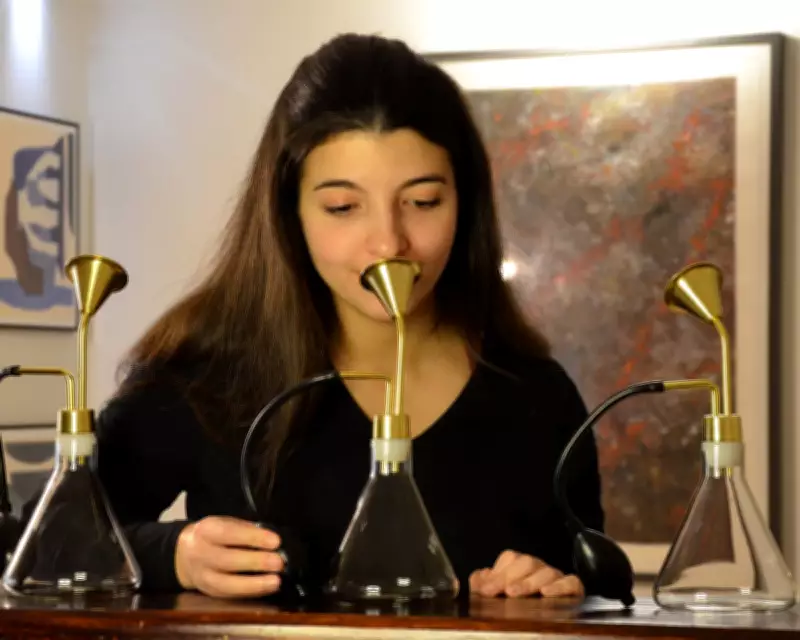
From the breath of a Tyrannosaurus rex to the interior aroma of Queen Elizabeth II's car, museum visitors are now experiencing the past through their noses like never before. This innovative approach is part of a growing field known as the archaeology of smell, where researchers collaborate across disciplines to reconstruct the sensory worlds of bygone eras.
The Science Behind Scent Reconstruction
Dr. Barbara Huber, an archaeochemist at the Max Planck Institute of Geoanthropology in Germany, explains that over the past decade, interest has surged in understanding not just what historical objects looked like, but how past environments felt, sounded, and smelled. "Researchers began asking not just what objects looked like but what past environments felt, sounded and smelled like," she said.
Huber's work includes the creation of perfumed cards for the Scent of the Afterlife project, which recreates ancient Egyptian mummification balms from 1450 BC. Through chemical analysis of residues in canopic jars, her team identified ingredients such as beeswax, pine resins, and coumarin, a vanilla-like compound. They then partnered with a perfumer to develop a safe and accurate aroma, described as rich with honey-like notes and earthy spices.
Enhancing Museum Experiences
This scent has been used in exhibitions in Denmark and Canada, and even sent to schoolchildren studying ancient Egypt. Huber emphasizes that smells make abstract history tangible, reminding us that the past was sensory and intense. "It can make abstract history tangible," she noted. "It also reminds us that the past was not sterile or silent, it was sensory, embodied and often intense."
While earlier efforts, like the Jorvik Viking Centre's smellscape from the 1980s, were more experiential, modern approaches are research-based. Liam Findlay of AromaPrime, which created Jorvik's scents, explains that today's methods aim for accuracy, such as reconstructing T. rex breath using fossil evidence and paleontologist input.
New Projects and Exhibitions
Upcoming initiatives include Huber's work on reconstructing scents from the Roman empire. Meanwhile, Dr. Cecilia Bembibre of University College London is involved in the London Intersections exhibition, marking UCL's 200th anniversary. Visitors will smell St. Paul's Cathedral library, an artistic interpretation evoking leather and vanilla, and the interior of Queen Elizabeth's Rover car, based on chemical analysis and historical research.
Bembibre highlights the benefits of investigating smells for researchers, helping explore how materials were experienced and cultural practices developed. She is also working on the UK smell inventory, inviting the public to share odours for preservation. "Our interpretation of heritage is largely vision-centric, but when people use their noses as tools for understanding, they often challenge how we think about the past," she said.
This evolving field transforms museums from visual displays to immersive, multi-sensory experiences, offering a deeper connection to history through the power of smell.