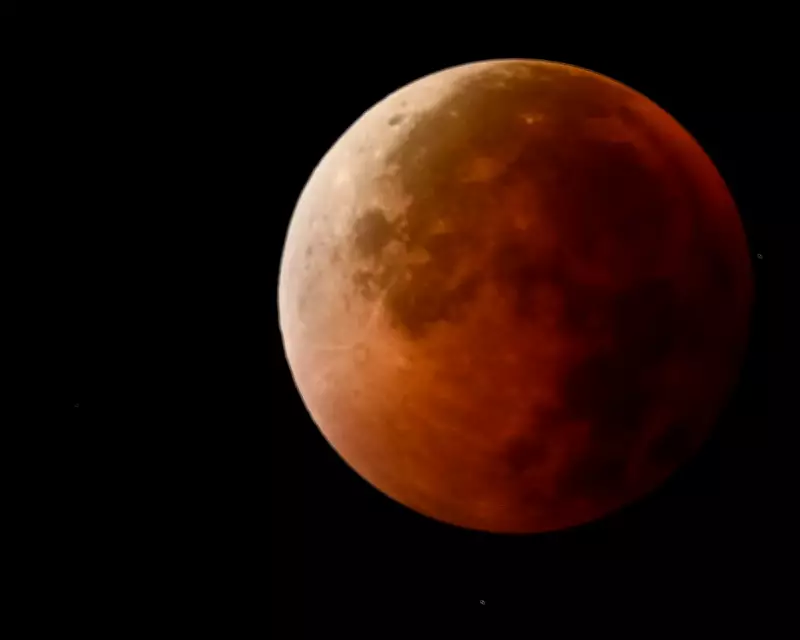
Rare 'Blood Moon' Total Lunar Eclipse to Illuminate Skies Across Multiple Continents
A spectacular total lunar eclipse, famously referred to as a 'blood moon,' is set to captivate viewers in North America, Australia, and New Zealand on Tuesday, March 3, 2025. This astronomical event will transform the full moon into a striking deep coppery red hue, offering a rare visual treat that won't be seen again for nearly three years.
What Causes the Blood Moon Phenomenon?
During a lunar eclipse, the Earth aligns perfectly between the sun and the moon, casting a shadow that blocks direct sunlight. However, some sunlight filters through Earth's atmosphere, refracting and painting the lunar surface in vibrant sunset colors. Dr. Rebecca Allen, an astrophysicist at Swinburne University, explains, "Any light that does pass shines through our atmosphere and transforms the lunar surface into a deep, coppery red." This effect is similar to the red and pink hues seen during sunrises and sunsets.
Best Viewing Times and Locations
For optimal viewing, experts recommend finding a dark spot away from city lights and allowing 10 to 15 minutes for your eyes to adjust. Jupiter will also be visible high in the sky, creating a stunning celestial pairing. Below are the key viewing times for different regions:
- Australia: The eclipse begins as early as 7:04 PM in Perth and ends by 11:02 PM in Sydney, with varying times across cities like Brisbane, Adelaide, and Darwin.
- New Zealand: The eclipse reaches its deepest point shortly after midnight, visible nationwide, as noted by Prof. Richard Easther of the University of Auckland.
- North America: Viewers in cities such as New York, Los Angeles, and Chicago can witness the event in the early morning hours, starting from 12:44 AM on the West Coast to 3:44 AM on the East Coast.
Historical and Cultural Significance
While modern science explains the blood moon as a natural astronomical occurrence, ancient cultures often imbued it with mystical meanings. For instance, the Inca people saw the red moon as a jaguar attacking it, and Mesopotamians viewed eclipses as threats to their kings. In contrast, today's astronomers like Dr. Allen see it as "a breathtaking reminder that we are living on a moving planet, in a dynamic solar system."
Future Lunar Eclipses
Total lunar eclipses occur approximately every 18 months to three years. The next total eclipse is scheduled for New Year's Eve 2028, visible in Europe, Asia, Australia, and Africa, but not the Americas. North America will have to wait until June 2029 for another total lunar eclipse, making tonight's event particularly special for viewers in that region.