London's Potential New Museum Honoring Communist Icon Friedrich Engels
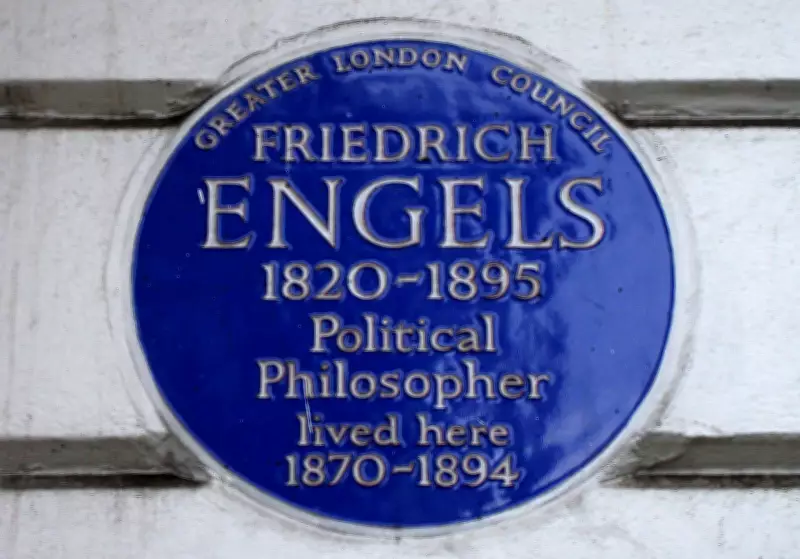
A historic house in London's affluent Primrose Hill neighborhood could soon become a museum dedicated to Friedrich Engels, the German philosopher and co-author of the Communist Manifesto. The property at 122 Regent's Park Road, which already bears a blue plaque commemorating Engels, is being considered for transformation into an educational space focused on socialist history and principles.
The Historical Significance of 122 Regent's Park Road
Friedrich Engels moved into the Primrose Hill house in 1870 to be closer to his lifelong friend and collaborator Karl Marx. During his residence there, Engels hosted weekly socialism debates, wrote significant works of political philosophy, and took daily walks on Primrose Hill. The property served as an intellectual hub for socialist thought during the late 19th century.
After Engels' time, the house was owned by elderly librarian Caroline Amy Read until her death in 2020. Read bequeathed the property to a trust that now reportedly plans to convert it into an educational museum. The trustees are bidding to create a space where young people can learn about working-class struggle, gender equality, and international solidarity.
The Vision for the Engels Museum
The proposed museum would occupy a multi-million-pound property located opposite The Queen's pub and near the entrance to Primrose Hill. Trustees envision creating an interactive educational space that explores Engels' contributions to socialist theory alongside broader themes of social justice and economic equality.
The museum would likely feature exhibits on Engels' life in London, his collaboration with Karl Marx, and the lasting impact of their work on political movements worldwide. Educational programs would focus on making complex political philosophy accessible to contemporary audiences while maintaining historical accuracy.
Community and Cultural Implications
The potential establishment of an Engels museum in one of London's most expensive neighborhoods creates an interesting juxtaposition between the area's current affluence and the socialist principles Engels championed. The museum would add to London's diverse cultural landscape, which already includes numerous institutions dedicated to political history and social movements.
If approved, the museum would join other blue plaque sites in London that commemorate significant historical figures, though few are dedicated specifically to socialist philosophers. The project represents a growing trend of preserving and interpreting sites associated with political and intellectual history for educational purposes.
The trustees' focus on creating a space for youth education suggests an emphasis on engaging new generations with historical socialist thought and its contemporary relevance. The museum could become a destination for students, academics, and visitors interested in political philosophy and social history.