Francesca Caccini's 1625 opera La Liberazione di Ruggiero dall'Isola di Alcina, the earliest surviving opera by a woman, receives a mixed but musically potent production at this year's Buxton festival. Directed by Eloise Lally and performed by Vache Baroque, the work is a meditation on power and authority that shines when it embraces its playful, mythical roots.
Plot and historical context
Premiered at the Medici court under regent Maria Maddalena of Austria, the opera adapts Ariosto's Orlando Furioso with a distinctly feminist twist. Warrior Ruggiero is reduced to a lovesick captive, while sorceresses Alcina (wicked) and Melissa (good) battle over him. A chorus of Alcina's former lovers, transformed into plants and shrubs, adds to the semi-serious, mythical romp. The original premiere reportedly ended with a horse ballet, though this production omits that spectacle.
Musical and directorial choices
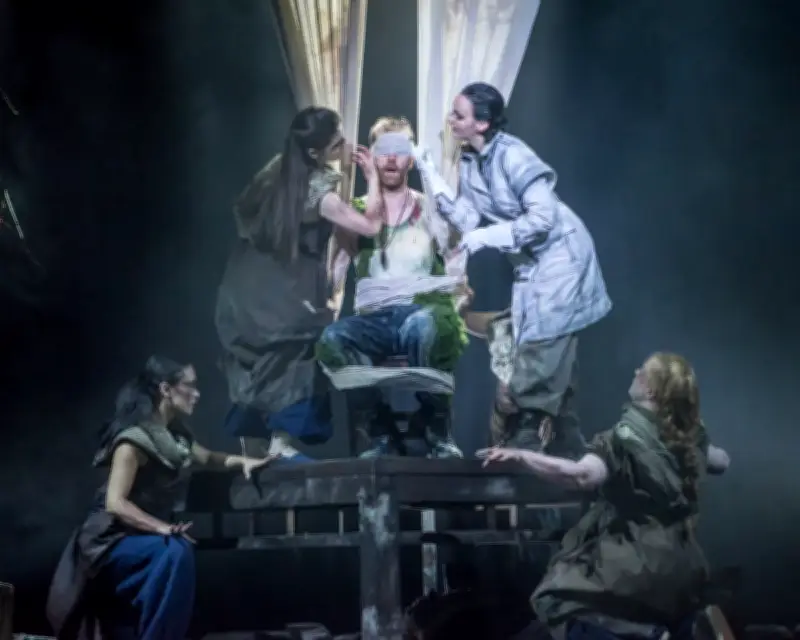
Jonathan Darbourne's band supplements Caccini's supple score with instrumental works from Florentine contemporaries, creating music bursting with colour and idiomatic energy. Three recorders weave in silvery parallel, answered by sackbuts; violins dance to theorbo and guitar rhythms, with textures ranging from gritty to gilded. Director Lally and designer Zahra Mansouri set the pastoral in a Skid Row aesthetic: Ruggiero (Jon Stainsby) is blindfolded and bound with a dirty shower curtain, Melissa's henchmen wear fatigues, and Alcina's potion-making resembles cooking meth.
Vocal performances
The dramatic stakes are raised, but the music does not always follow suit. Stainsby delivers an impassioned confrontation with Alcina that swells gloriously, but other voices, while full of detail, lack the power for full-scale psychodrama. Camilla Seale's Alcina is brooding and contained, outgunned by Phoebe Rayner's bright, prettily sung Melissa. Harriet Burns shines in supporting roles, her soprano liquid-lovely in Caccini's sensual upper-voice ensembles, and Filippo Turkheimer packs vocal personality into a cameo as Neptune.
Conclusion
Despite the absence of a horse ballet, this Liberazione casts a potent musical spell. Performances continue at the Pavilion Arts Centre, Buxton, until 21 July.