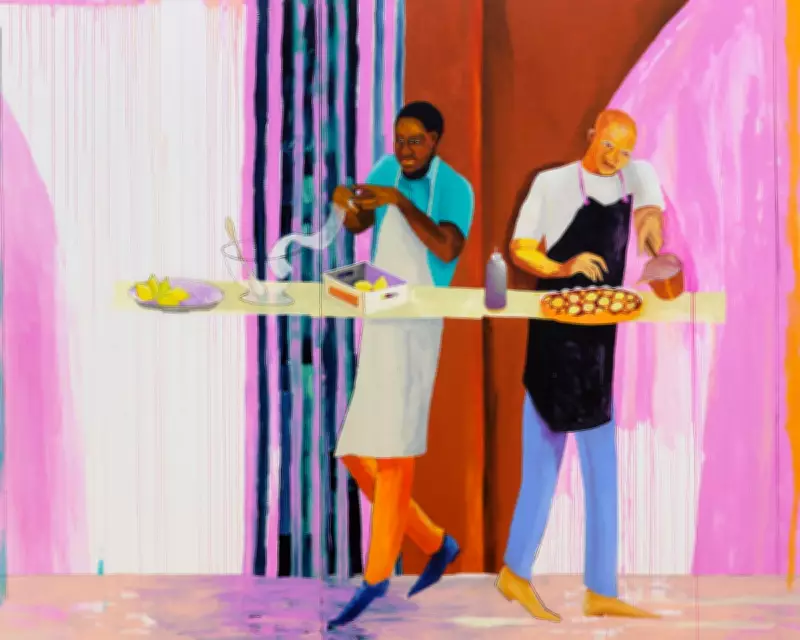
Home comforts are not always comfortable. At the Venice Biennale, Lubaina Himid presents an awkward, tense, and uncomfortable portrait of Britain. Her installation at the British Pavilion features monumental paintings and a wall of painted oars, populated by tailors, cooks, and architects—the people who shape the country, keeping it fed, clothed, and sheltered.
An audio piece fills the space with bucolic sounds: seagulls, rigging slapping on masts, bird calls, and buzzing flies. This soundscape suggests a lovely, welcoming, and accepting Great Britain. However, the black figures at the heart of each painting tell a different story. They exchange sideways glances while cooking and sewing, pausing in moments of shared discomfort. The tailors, dressed in clothes they made to fit in, freeze in a shared look that asks: “What the hell are we doing here?”
The architects, standing next to plans for a mosque, a church, and a factory, share the same uncertainty. So do the gardeners and the sailors. Himid repeatedly questions whether one can ever truly belong—whether a place can ever be home if one's roots are elsewhere.
Soft Philosophical Musings
The exhibition is anchored by 26 questions pasted on the wall, such as: “Can flies settle here?” and “Can poison taste delicious?” These soft philosophical musings may seem profound but are not. The answers are obviously yes. Nevertheless, the questions reveal the existential angst of the show: the feeling that if you are different, you will never truly feel part of anything.
A Limited View of Belonging
The show specifically addresses migration and the emotional and societal status of people who move to Britain. However, belonging is more complex than this exhibition suggests. It is not just about migration or race; it involves gender, sexuality, class, social discomfort, and societal unease. Millions of people in Britain feel as if they do not belong.
Visually, this may not be Himid's best work. She has executed this idea more successfully in the past. Moreover, a painting show by one of Britain's leading artists is not the most exciting use of the pavilion space.
Anxiety and Discomfort
What does work is the sense of anxiety that courses through the installation—the feeling of abject discomfort and frustration at a world that will never fully accept you. Despite the bright colours and calming sounds of lapping waves and cooing birds, Himid sees a darker truth: Britain might be green and pleasant, but for many, it will never feel like home.