Ancient Egyptian Book of the Dead Exhibition Opens in Brooklyn Museum
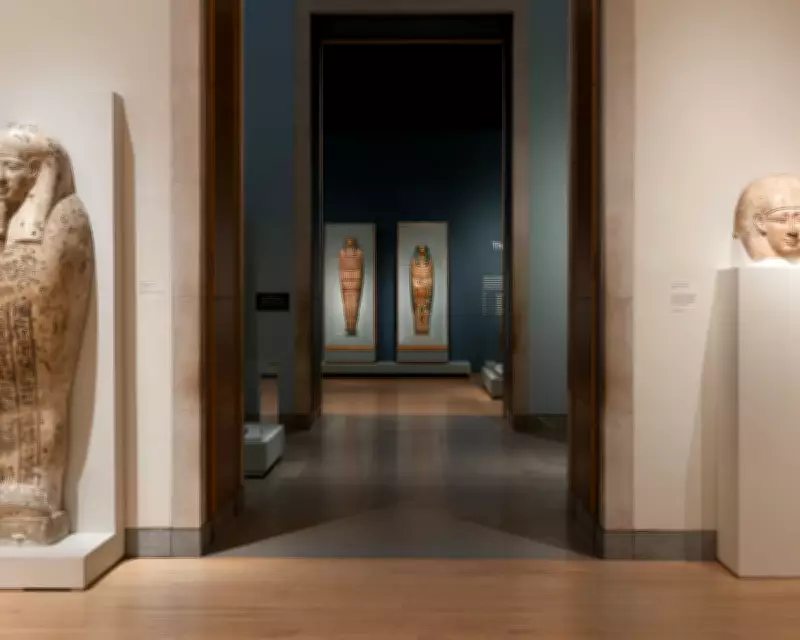
A remarkable and exceptionally rare complete gilded Book of the Dead from ancient Egypt has been unveiled to the public at the Brooklyn Museum in New York. This extraordinary artifact, dating back approximately 2,000 years, represents one of only about ten known Egyptian gilded papyri in existence worldwide. The exhibition titled Unrolling Eternity: The Brooklyn Books of the Dead showcases this meticulously preserved scroll, which ancient Egyptians used as a guide to navigate the perilous journey to the afterlife.
The Perilous Journey to Eternal Bliss
In ancient civilizations, reaching eternal paradise was no simple feat. For the Greeks, souls had to cross the River Styx with Charon and hope for entry into Elysium. The ancient Aztecs faced daunting challenges like climbing an obsidian mountain and traversing a gravity-less desert with fierce winds. For Egyptians, the afterlife journey involved navigating numerous dangers before facing judgment before Osiris and forty-two other deities, where one's heart was weighed against a feather. Failure meant being devoured by Ammit, a fearsome goddess combining lion, hippopotamus, and crocodile features.
To assist the deceased, Egyptians developed approximately 160 incantations collectively known today as the Book of the Dead. The term was coined by 19th-century German professor Dr. Karl Richard Lepsius, replacing the literal Egyptian translation "the Book of Going Forth by Day." This particular Brooklyn Museum specimen stands out as both complete and gilded, an unprecedented combination according to Egyptologist Yekaterina Barbash.
Historical Significance and Preservation Efforts
The scroll's history spans centuries, originally created between 340 BCE and 57 BCE. It arrived in America during the 19th century via British doctor Henry Abbott, who exhibited Egyptian artifacts hoping to sell the scroll. Though unsuccessful commercially, it attracted poet Walt Whitman, who visited repeatedly and mentioned it in his essays. After passing through the New-York Historical Society, it joined the Brooklyn Museum's collection in 1948.
A monumental three-year conservation project led by conservator Ahmed Tarek and museum specialists Lisa Bruno, Sara Bone, and Josephine Jenks successfully separated the fragile papyrus from its acidic backing. "It's kind of like if you took shredded wheat and had it flattened, it's just really brittle," explained Bruno. Using specialized gels to deliver controlled moisture, the team painstakingly remounted the scroll on ultra-thin Japanese kozo-fiber paper, ensuring its preservation for future generations.
Symbolism and Unique Characteristics
The gilded elements hold deep symbolic meaning in ancient Egyptian culture. Gold, associated with divinity and eternity due to its non-tarnishing properties, adorns key images like crowns, sun disks, and shrines. "Ancient Egyptians believed that gods had gold skin and silver bones and lapis lazuli hair," noted Barbash. The gilding also reflected the owner's wealth and status.
Each Book of the Dead was uniquely customized, with variations in dimensions, text selection, sequence, and even spelling. Scribes often added personal interpretations, sometimes cramming text at page bottoms. "It's a pain to read, but it's human," Barbash observed, highlighting the individual craftsmanship behind each scroll.
Public Reception and Exhibition Details
The exhibition has captivated visitors since its opening. "People who have come to the museum so far are in awe, as am I," said Bruno. Barbash added, "Everything is so fine about it, it's like lace, a spider's web. It's so fragile and intricate and beautiful." The display not only presents the scroll but also explores the evolution of Egyptian religious texts, from pyramid inscriptions to oral traditions and eventually compiled scrolls used in funerary rites.
Unrolling Eternity: The Brooklyn Books of the Dead continues its run at the Brooklyn Museum, offering a rare glimpse into ancient Egyptian beliefs and artistic achievement.