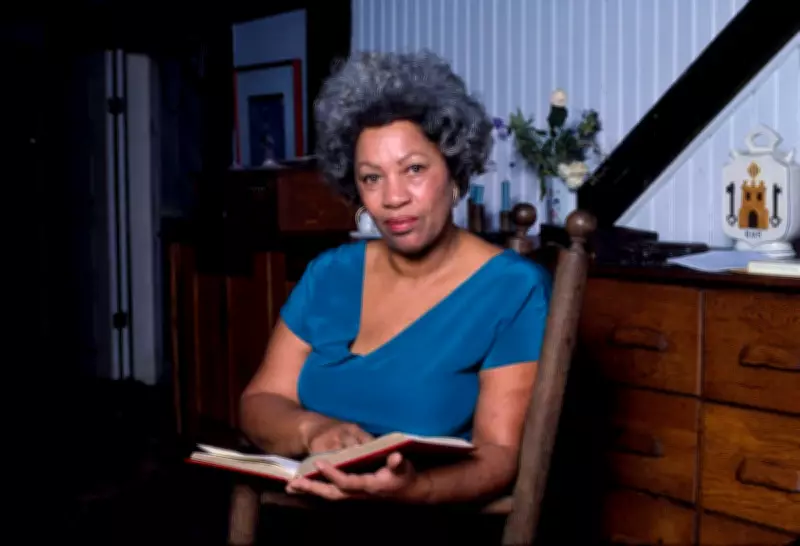
The Dual Legacy of Toni Morrison: Editor and Writer Intertwined
When examining the monumental career of Toni Morrison, the Pulitzer and Nobel Prize-winning author, one cannot separate her groundbreaking novels from her equally significant work as an editor. Two recent scholarly publications delve into this dual legacy, revealing how Morrison's sixteen-year tenure at Random House fundamentally shaped her approach to storytelling and her profound impact on Black literature.
Editing as Literary Practice
Morrison's editorial career began with Toni Cade Bambara's debut short story collection Gorilla, My Love in 1972, which she acquired for Random House. The poet Lucille Clifton famously responded to Bambara's work with emotional recognition: "She has captured it all, how we really talk, how we really are; and done it with both love and respect." This response, as scholars now argue, reflects Morrison's editorial philosophy—one rooted in deep listening and community connection.
In Toni at Random, Howard University scholar Dana A Williams meticulously documents Morrison's editorial acquisitions, marketing strategies, and her active participation in conferences aimed at developing African American writers. The book reveals intimate details of Morrison's process: she temporarily moved Bambara into her home while Bambara revised what would become her first novel, The Salt Eaters. "She'd write and I'd edit some," Morrison recalled, demonstrating her hands-on collaborative approach.

Listening as Creative Foundation
At the core of Morrison's work, both as editor and writer, was what scholars identify as a profound listening practice. She listened intently to the authors she nurtured, to her parents' stories that would later inform The Black Book and Jazz, and to the everyday conversations of Black women that became the seed for Sula. Morrison herself wrote about using "folk language, vernacular in a manner neither exotic nor comic, neither minstrelized nor microscopically analyzed." This careful attention to authentic voice became her signature across both editorial and literary work.
Williams's research shows how Morrison's editorial relationships directly influenced her writing craft. When editing Angela Davis's autobiography, Morrison encouraged Davis to write less academically and with greater attention to narrative and emotion. This experience, occurring around the same time Morrison wrote a scathing New York Times review of a Davis biography, demonstrates how her editorial and critical work informed each other.
Philosophical and Literary Analysis
In On Morrison, novelist Namwali Serpell approaches Morrison's work as sites of "doing philosophy," closely reading her fiction, criticism, and plays through frameworks ranging from Virginia Woolf and William Faulkner to Jacques Derrida and the King James Bible. Serpell particularly focuses on Morrison's application of "shade"—using wit, free indirect style, and literary parody in her criticism.
Serpell's analysis positions Morrison's novels as blues narratives, with their prose structured like musical scores. Drawing from scholar Clyde Woods's description of blues as "a hearth of African American consciousness," Serpell argues that Morrison's novels follow blues patterns: beginning with sober assessment, followed by restatement with difference, and concluding with resolution. This structure echoes Morrison's narrative technique of revealing her entire plot early, then revisiting and revising central themes until their meaning transforms.
Editorial Influence on Narrative Innovation
Williams documents how editing experimental writers taught Morrison about narrative possibilities. Working with Leon Forrest's nonlinear novel There is a Tree More Ancient than Eden showed Morrison that "there was a market for writers who took chances in their fiction." Similarly, republishing Henry Dumas's mythical novel Jonoah and the Green Stone in 1976 revealed how Dumas "completely ignored the supposition that every good story had a beginning, middle, and end."

These editorial experiences occurred as Morrison was publishing her own early works like The Bluest Eye and Sula. Her experiments with narrative form would reach their peak in subsequent years, directly informed by her work with Bambara, Forrest, Davis, and Dumas. Morrison often leveraged her growing reputation as a writer to promote her editorial projects, blurring the lines between these roles.
A Collective Literary Sensibility
The two books work in complementary fashion: Serpell provides deep textual analysis while Williams offers historical context and biographical detail. Together, they reveal how Morrison's editorial work at Random House not only preceded but fundamentally enabled her literary achievements. Her listening practice extended beyond individual relationships to encompass what Woods called the "collective sensibility" of Black working-class consciousness.
This sensibility manifested in Morrison's three-dimensional approach to literature, where the authors she edited, the communities she documented, and the readers who recognized themselves in her work all contributed to her creative vision. As Clifton's response to Bambara's work suggests—"She must love us very much"—Morrison's legacy rests on this foundation of deep respect and connection, whether she was editing another writer's manuscript or crafting her own Nobel Prize-winning sentences.