Margareta Magnusson, Swedish Death Cleaning Pioneer, Dies at 92
Margareta Magnusson, the Swedish artist and author who achieved global fame in her 80s by popularizing the concept of "death cleaning," has died at the age of 92. Her groundbreaking book, The Gentle Art of Swedish Death Cleaning, sparked an international movement that transformed how people approach their possessions and legacy.
The Birth of a Global Phenomenon
Magnusson defined death cleaning, or döstädning in Swedish, as "removing unnecessary things and making your home nice and orderly when you think the time is coming closer for you to leave the planet." She wrote her debut book in just three months during her 80s, and it became an international bestseller published in 32 countries.
The concept resonated particularly with those who had experienced the emotional burden of clearing a loved one's belongings after death. Magnusson argued passionately that it was unfair to leave this intimate, difficult task to others. "Why would your family and friends want to take time out of their busy lives to clean up your mess when you clearly could have taken care of it yourself?" she asked readers in her characteristically direct tone.

A Life of Art and Movement
Born in Gothenburg, Sweden, in 1933, Magnusson studied at Beckmans College of Design in Stockholm after being unable to afford medical training. She graduated in 1956, married Lars Magnusson the following year, and began raising their five children while pursuing her artistic career.
Her first solo exhibition took place in Gothenburg in 1979, and she went on to exhibit internationally. The family's multiple international moves for Lars's career—living in the United States, Singapore, and Hong Kong—helped Magnusson develop her philosophy of rationalizing possessions. Selling her artwork taught her the art of letting go.
The Personal Origins of a Philosophy
Magnusson first practiced death cleaning in 1969 after her mother's death, repeating the process following her mother-in-law's passing and again after her husband Lars died in 2005 after 48 years of marriage. She observed that women typically bear this responsibility repeatedly for parents and partners.
After downsizing to a smaller Stockholm apartment following Lars's death, Magnusson continued death cleaning her own belongings, constantly selling, shredding, or giving things away. She noted that while döstädning only entered Swedish dictionaries after she popularized the term, the practice was common among older Swedish women.
From Lunch Conversation to International Bestseller
The book that would change her life originated from a New York lunch conversation. When a friend complained to Magnusson's daughter Jane about needing time off work to sort through his parents' belongings, Jane mentioned that she didn't have that problem because her mother was always döstädning. The friend, who worked in publishing, immediately asked if Magnusson would write a book about the practice.
The resulting work not only became a bestseller but also entered popular culture. By 2019, Collins Dictionary was tracking the term "death cleaning," and by 2023, a U.S. reality television series inspired by and named after her book launched.
Legacy and Later Life
Magnusson published her second book, The Swedish Art of Ageing Well: Life Wisdom from Someone Who Will (Probably) Die Before You, in 2023 at age 89. She illustrated both books with her own sketches and was working on a third, Death Cleaning from the Afterlife, when she died.
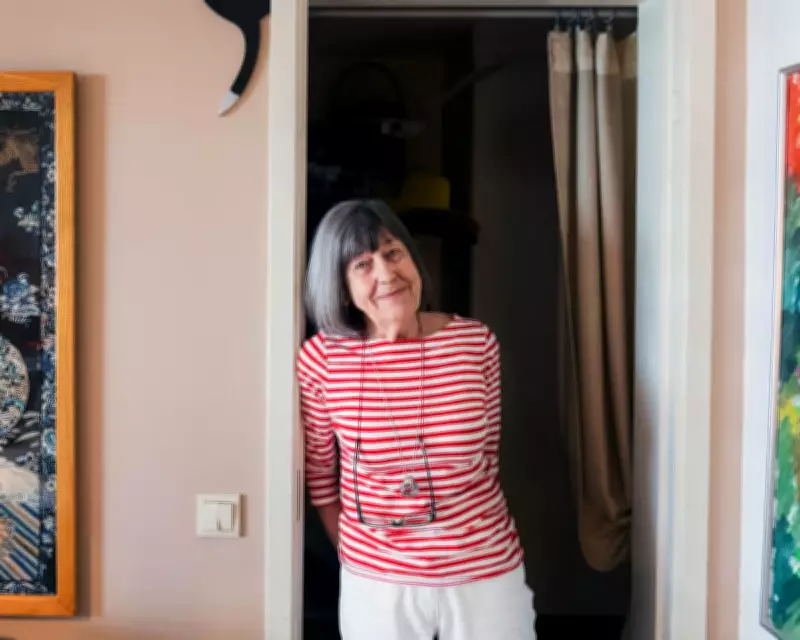
Her advice for joyful aging included eating a little chocolate, wearing bright colors and stripes (her signature style in Sweden), and learning to appreciate kärt besvär or "cherished burdens"—the regular chores and daily habits of life.
True to her philosophy, Magnusson left little for her family to sort through after her death. Her daughter Jane told Swedish broadcaster SVT: "I don't need to lift a finger. Mum had nothing in the attic, nothing in the cellar. But she still had a very cosy home."

Magnusson is survived by her five children—Jane, Ann, Jan, Tomas, and Johan—and seven grandchildren. Her legacy continues through the global movement she inspired, encouraging people worldwide to consider their possessions, their memories, and what they leave behind.