Francis Spufford's Nonesuch: A Dazzling Wartime Fantasy Adventure
In the realm of creative writing, the element of fun is often emphasized as crucial—not as a mere indulgence, but as evidence of an author discovering their true form and subject. This principle shines brightly in Francis Spufford's latest novel, Nonesuch, a historical fantasy set during the Second World War that exudes authorial zest and exuberance. With its blend of romance, occultism, and airborne adventure across blitz-stricken London, the book stands as a popcorny delight, inviting readers into a very interesting person's idea of a good time.
A Fantastical Journey Through Wartime London
Nonesuch, Spufford's fourth work of fiction, opens in London in August 1939, just as war has been declared but before its grim reality fully descends upon the city. The story follows Iris Hawkins, an ambitious office clerk navigating the sun-baked West End in a slinky dress. After a disastrous date, she finds herself at a DIY surrealist film club in bohemian Bloomsbury, where she meets two pivotal characters: Geoffrey Hale, a sweetly apprehensive BBC television engineer, and Lady Lalage Cunningham, an icy aristocratic beauty with worrisome political sympathies.
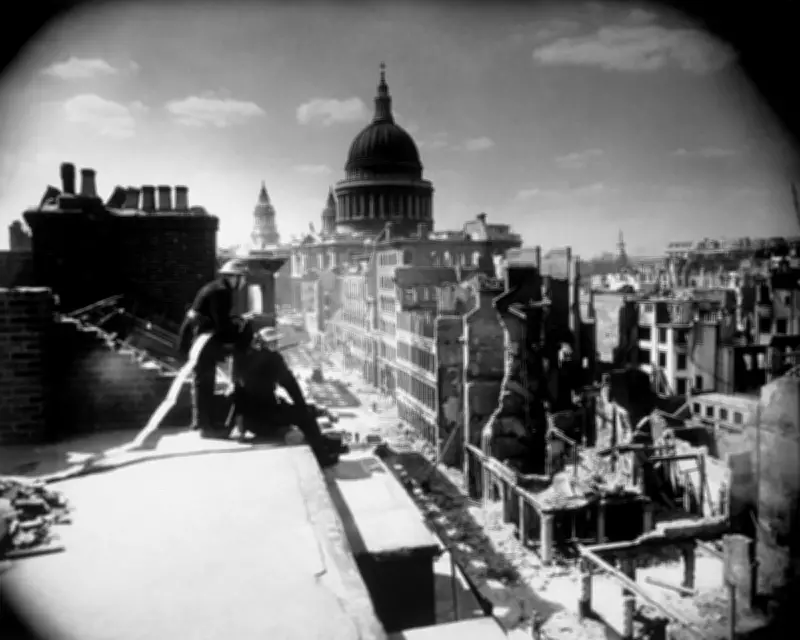
From this seedy summer's night, the plot spirals into chaos, taking Iris through a regrettable Hampstead hook-up and deep into a time-travelling scheme by "magical fascist lunatics" aiming to assassinate Winston Churchill. The novel is a pasticcio of romance, occultism, non-Euclidean geometry, and airborne escapades over London's bombed-out rooftops, all held together by Spufford's adept storytelling.

Authorial Expertise and Historical Context
Spufford's experience with wartime themes is evident, as Nonesuch isn't his first literary response to the blitz. In his 2021 novel Light Perpetual, he gave fictional lives to children killed in a real 1944 bombing, a project laden with conceptual weight. In contrast, Nonesuch emerges as a true fantasia, unburdened by such heaviness, yet it doesn't lack substance. The novel's madcap denouement and metaphysical preposterousness often serve as a commentary on the psychological confusion of life during wartime, set in "civilisation's last redoubt" where bombs fall "as indifferently as raindrops astrew with pits and horrors and splintered places."
Throughout the book, supernatural energies are cleverly analogized with the Nietzschean will to power underlying fascistic thinking. Spufford's prose is adroit, seamlessly blending "angels as well as office work," and his insight into the dynamics of both realms is formidable. The setting of bombed-out London proves a fitting match for his narrative style, enhancing the novel's depth and resonance.
Character Dynamics and Minor Quibbles
The pairing of Iris Hawkins and Lady Lalage Cunningham offers a superficially interesting protagonist-antagonist dynamic. Iris's strident proto-girlbossing, expressed in declarations like "I want to be a Rothschild, a Rockefeller, a JP Morgan—and when I am, I want everyone to know that I'm Iris Hawkins from Watford," may not resonate as empowering for all readers, potentially falling short of Spufford's intentions. Meanwhile, Lady Cunningham, described as "a Christmas tree fairy among fascists," accumulates little more menace than PG Wodehouse's Mosley parody, Roderick Spode, with a late-game revelation about her motivations feeling somewhat contrived to add dimension to this otherwise cartoonish villain.
Despite these minor characterisation jarrings, the broad sweep of Nonesuch remains dazzling. The novel is a formidable achievement, a popcorny delight that captivates with its exuberant storytelling. Fans will be pleased by an ending that hints at more to come from Spufford's fantasy multiverse, promising further adventures in this richly imagined world.
In summary, Nonesuch by Francis Spufford is a historical fantasy that masterfully combines fun with substance, set against the backdrop of WWII London. Its blend of romance, occultism, and adventure, coupled with Spufford's insightful prose, makes it a standout addition to the genre and a compelling read for those seeking a lively escape into a fantastical past.