Yann Martel's Ambitious Novel Blends Ancient Epic with Modern Domestic Strife
In his fifth novel, Son of Nobody, Yann Martel crafts a complex narrative that merges the discovery of a long-lost epic poem about the Trojan war with the personal turmoil of a Canadian classicist. The story follows Harlow Donne, who accepts a fellowship at Oxford University, leaving behind his wife Gail and their seven-year-old daughter Helen. Their strained relationship culminates in Gail's whispered warning as he departs: "Don't come back." This sets the stage for a tale that oscillates between ancient battles and contemporary heartbreak.
A Scholarly Discovery with Personal Implications
At Oxford, Harlow's work involves translating ancient papyri from Oxyrhynchus, Egypt. Amid the tedium, he uncovers fragments of what he believes is a lost epic poem, The Psoad, which recounts the Trojan war from the perspective of a common soldier named Psoas, rather than the heroic figures of Homer's Iliad. This poem forms a significant portion of Martel's book, printed across the top half of pages, while footnotes below reveal Harlow's personal reflections on his failing marriage and paternal guilt.
The dual narrative structure, reminiscent of Nabokov's Pale Fire, creates tension as the ancient and modern strands intertwine. Readers are left to question Harlow's reliability: is he fabricating the poem to process his own emotions? His supervisor dismisses it as a "corpse with a thousand stitches," yet Martel skillfully engages audiences with this meta-fictional approach.

Reimagining the Trojan War with Nuanced Perspectives
The Psoad itself is a compelling piece, written in iambic pentameter with vivid details, dialogue, and sardonic humor. Martel shifts focus from traditional heroes to include merchants and soldiers, highlighting the grim realities of war—such as chafing armor, fear-induced vomiting, and the loneliness of missing home. Unlike recent adaptations by Alice Oswald or Pat Barker, which emphasize lamentation or female perspectives, Martel explores the "dreadful glamour" of war and its inherent brutality.
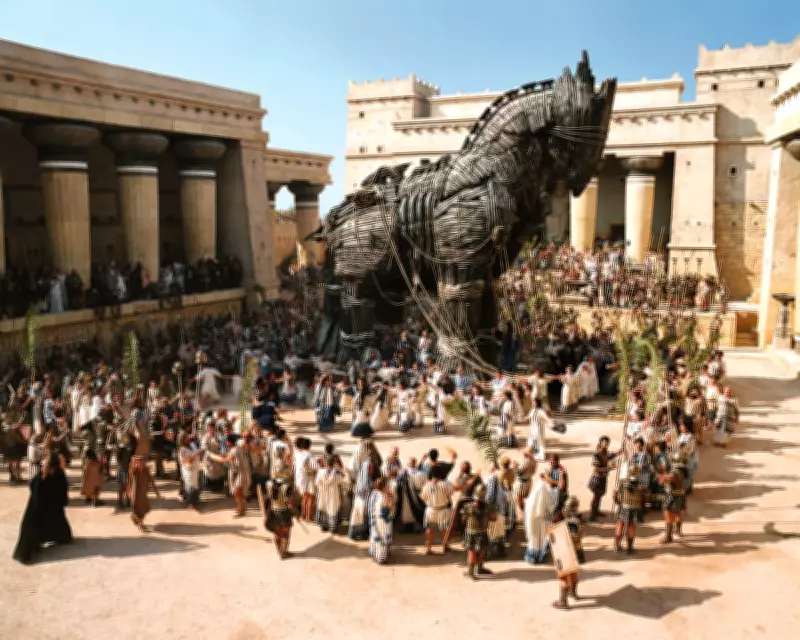
Animals play a mystical role, replacing gods with giraffes, porcupines, and elephants—a nod to Martel's Life of Pi. In a bold twist, elephants are used to breach Troy's walls instead of the wooden horse, adding a sacred dimension. However, Martel's attempt to link the epic to Christian faith feels forced, as Harlow argues that warrior heroes "created the space" for Christianity, an idea that lacks integration with the pagan narrative.
Structural Challenges and Emotional Depth
Despite its strengths, Son of Nobody struggles with balance. Harlow's footnotes often come across as pernickety and self-pitying, overshadowed by the epic's powerful imagery, such as a "rain of children" tossed from Troy's walls. The domestic drama fails to match the epic's emotional weight, as seen when Helen compares her parents' arguments to the Iliad, a connection Martel doesn't fully substantiate.
Ultimately, this novel is a thought-provoking exploration of war, memory, and personal loss, though its structural issues may leave readers yearning for more cohesion. It showcases Martel's creativity but highlights the challenges of merging vastly different narratives into a seamless whole.