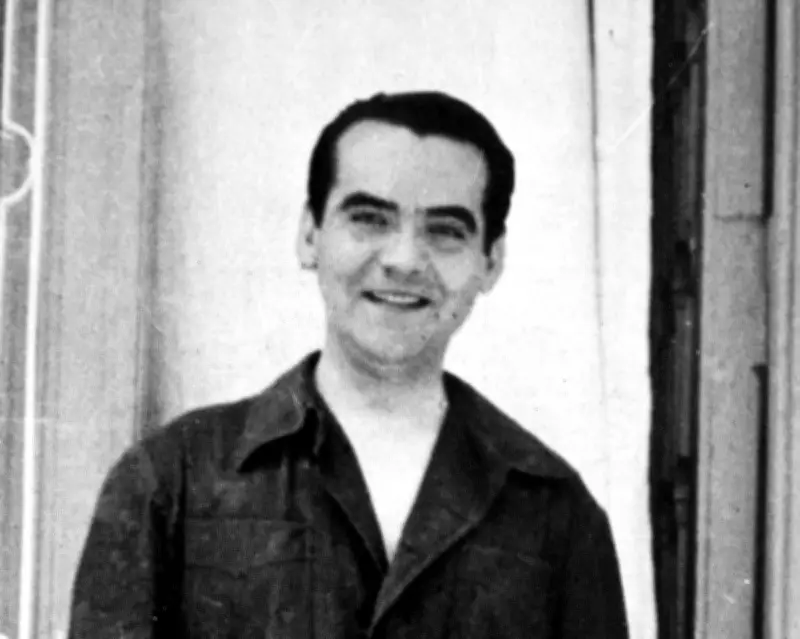
A remarkable literary discovery has emerged nearly a century after its creation, as a previously unknown verse attributed to the celebrated Spanish poet and playwright Federico García Lorca has been uncovered. The eight-line poem, believed to have been written in 1933, was found on the reverse side of a manuscript from Lorca's collection Diván del Tamarit, a homage to the Arab poets of his native Granada.
A Fortuitous Find
The manuscript was purchased by flamenco singer and Lorca enthusiast Miguel Poveda from a German antiquarian. Poveda, who has recently championed efforts to transform Lorca's childhood home into a cultural center, was alerted to the significance of the handwriting by Lorca expert Pepa Merlo. "My attention was grabbed when Pepa Merlo said to me, 'That's Federico's handwriting. You've got something new by Federico there'," Poveda recounted in an interview with the state broadcaster TVE.
The Verse and Its Themes
The newly discovered poem, composed just three years before Lorca was murdered at the start of the Spanish civil war in 1936, delves into the poet's familiar obsession with the passage of time. The verse reads: "The clock sings / I count the hours mechanically / Seven o'clock; twelve o'clock / It's all the same / I am not here / It is the mark of flesh / That I left behind when I departed / So as to know my place / Upon my return."

Merlo noted that while the verse might have been overlooked due to its placement on the back of another work, it powerfully reveals "the importance that the concept of time held for Lorca." This discovery adds a poignant layer to the understanding of Lorca's literary legacy, as he was a gay, progressive writer whose works, including Gypsy Ballads, Poet in New York, and plays like Blood Wedding, continue to resonate globally.
Historical Context and Legacy
Lorca's tragic death in August 1936, when he was shot by a rightwing death squad, made him one of the most prominent victims of Spain's three-year civil war. His body has never been recovered and is thought to lie in a shallow grave near Granada. Despite this, interest in his work has only intensified as the centenary of his death approaches.
In recent years, efforts have been made to bring more of Lorca's writings to light. For instance, a facsimile edition of his posthumously published Sonnets of Dark Love was released last summer to introduce these homoerotic and anguished poems to new audiences. Previously hidden by his family due to concerns about their sensual content and potential controversy, these sonnets have long been known to scholars but are now gaining broader recognition.
Future Publication
The newly discovered poem will be featured in an upcoming book titled Las cosas del otro lado. lo inédito en Federico García Lorca (Things from the Other Side: the Unpublished in Federico García Lorca), co-authored by Poveda and Merlo. This publication promises to offer fresh insights into Lorca's unpublished works and further cement his status as a pivotal figure in 20th-century literature.
As Poveda reflected on the discovery, he expressed deep emotion, calling it "a heartfelt gift" that captures the essence of Lorca's poetic voice. The verse not only enriches the poet's oeuvre but also serves as a timeless reminder of his artistic preoccupations and the enduring impact of his life and work on Spanish and global culture.