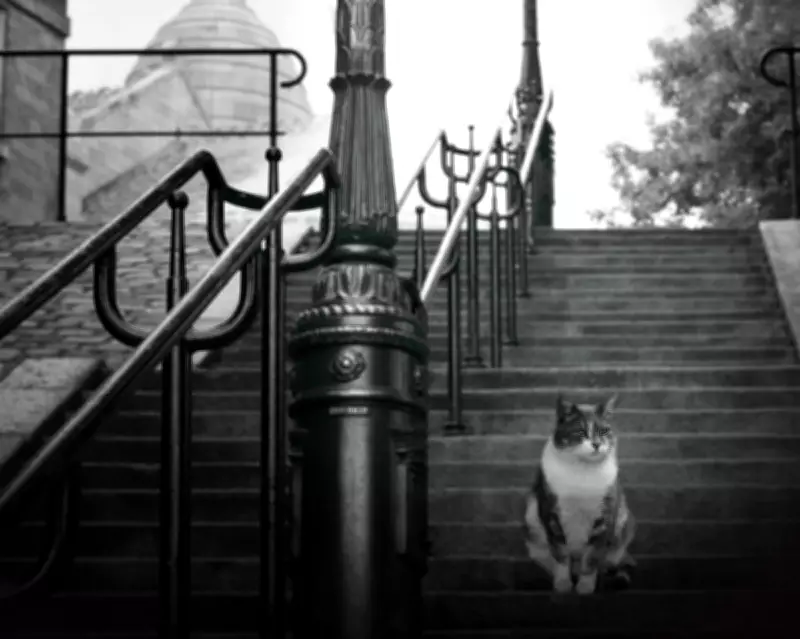
A Lost Cat and Literary Exploration in Paris
Deborah Levy's latest work, My Year in Paris With Gertrude Stein, defies easy categorization as it weaves together biography, fiction, and philosophical inquiry through the story of three female friends navigating contemporary Paris while contemplating the legacy of avant-garde writer Gertrude Stein.
The Unconventional Narrative Structure
The book opens with a seemingly simple premise: a lost cat named "it" sets in motion a chain of events that reveals deeper truths about language, identity, and artistic expression. This feline disappearance becomes a recurring motif throughout the narrative, with the word "it" taking on multiple meanings - from lost sanity and artistic inhibition to love, memory, and the elusive essence of Gertrude Stein herself.
Levy's narrator, an English writer struggling to complete an essay about Stein, finds herself suspended between two compelling friends during a pivotal November in Paris. Eva, a Spanish-Danish graphic novelist with an all-white apartment and fat-free culinary preferences, initially appears angelic but reveals surprising commercial acumen and emotional detachment. Fanny, a chic French financier navigating polyamorous relationships, combines surface-level impatience with deep vulnerability stemming from paternal rejection.

Stein's Legacy Through Modern Eyes
While the framing story unfolds over a single month in November 2024 - coinciding with Donald Trump's re-election and global conflicts viewed through smartphone screens - most of the narrative exists in dialogue with Stein's era. Levy skillfully transports readers to early 20th-century Paris through carefully chosen anecdotes and character sketches that illuminate Stein's circle without attempting traditional biography.
The author demonstrates particular talent for concise characterization: Chaïm Soutine requiring medical removal of bedbugs from his ear, Marie Vassilieff pushing a drunken Modigliani down stairs before calmly carving a chicken, and Stein herself being "so forward-looking that she never learned to reverse her Ford Model T." These vivid details create a living portrait of the artistic milieu Stein inhabited.
Friendship, Art, and What Never Happens
Central to the narrative is the dynamic between the three women, whose relationships prove more complex than initial appearances suggest. When the narrator suffers a bicycle accident, Fanny's response - first queuing eight minutes for a rum baba bouchon with roasted pineapple, then explaining she would eat it herself if the narrator had died - perfectly captures the book's blend of dark humor and genuine affection.
The novel excels in exploring relationships that never fully materialize, from the narrator's abortive romance with a mysterious cat-owning man who ultimately wants only Eva's phone number, to the imagined meeting between Stein and Freud that serves as a philosophical centerpiece. Levy suggests that what doesn't happen can be as revealing as what does, particularly in understanding artistic legacy and personal connection.
Language and the Elusive "It"
Throughout the narrative, Levy plays with language in ways that honor Stein's experimental spirit while remaining accessible to contemporary readers. The lost cat's name becomes a linguistic playground, highlighting how "it" can signify everything from trivial objects to profound emotional states. This linguistic exploration mirrors the narrator's central struggle: how to capture the essence of Stein's work and life when, as she observes, "I cannot get into her eyes" even when examining photographs.
Despite Eva's declaration that the Stein essay will never be written, Levy's book itself serves as the triumphant completion of that very project - an inventive, entertaining meditation on artistic influence, female friendship, and the spaces between biography and imagination. Published by Hamish Hamilton, this "fiction" proves that some literary explorations require unconventional forms to reveal their deepest truths.