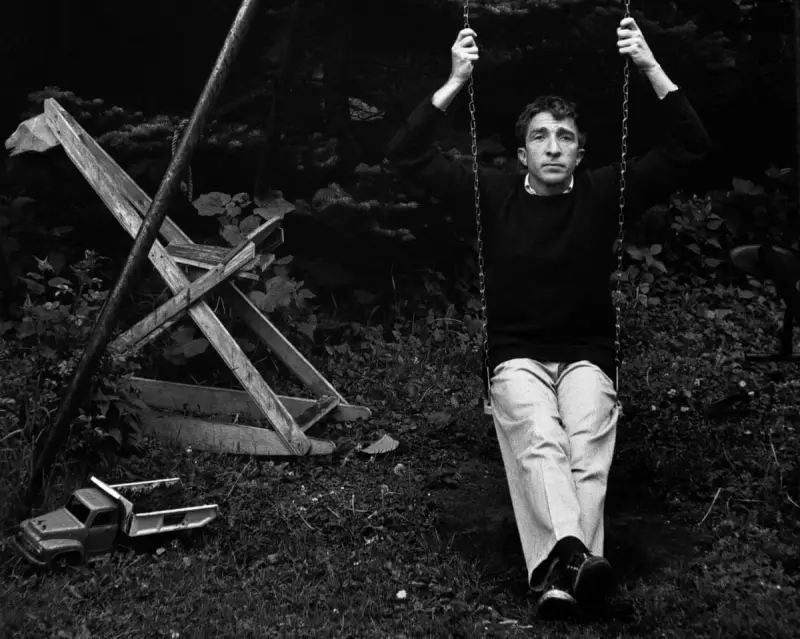
The private world of John Updike, one of America's most celebrated authors, has been unveiled through an extensive collection of his personal correspondence spanning more than six decades. John Updike: A Life in Letters, edited by James Schiff, presents an intimate portrait of the writer whose extraordinary prose style contrasted sharply with his ordinary middle-class American subject matter.
The Making of a Literary Genius
Born in 1932 in Pennsylvania, Updike spent his first 13 years in Shillington before his family relocated to a farmhouse in Plowville. As an only child, he maintained particularly close bonds with his parents throughout their lives. His father, a high school mathematics teacher, took on road labouring work during the Depression years to support the family, while his mother Linda pursued writing ambitions that eventually saw her publish stories in the New Yorker - the same publication that would become her son's literary home.
Updike's escape from rural life came in 1950 when he entered Harvard on a scholarship to study English. Even at this early stage, his correspondence revealed remarkable talent. He wrote approximately two thousand letters, notes and postcards, primarily addressing detailed descriptive prose to his mother and other Plowville residents. Though sometimes testing patience with their jaunty tone and length, these early communications demonstrated the sharp observational skills and literary energy that would define his career.

Ambition and Early Career Struggles
Updike's determination to establish himself in the literary world emerged remarkably early. At just 13 years old, he began submitting poems, drawings and unsolicited pieces to various magazines, including the New Yorker. By fifteen, he was recommending James Thurber stories to Ellery Queen's Mystery Magazine and courting relationships with cartoonists, publishers, and even the Pentagon. This demonstrated a confidence and ambition unusual for someone so young.
The collected letters reveal Updike as generally even-tempered, though he could become defensive when faced with intrusive or abusive correspondents. While he maintained lasting enmities with critics like Frederick Crews and Alfred Kazin, and particularly struggled with Gore Vidal, his affections significantly outnumbered his dislikes throughout his correspondence.
Censorship Battles and Literary Courage
One of the most dramatic episodes documented in the letters concerns the censorship battle surrounding his second novel, Rabbit, Run in 1960. Both his American publisher Alfred A Knopf and London-based Victor Gollancz objected to language and descriptions they considered obscene, threatening the book's publication entirely.
The 28-year-old Updike displayed impressive conviction, writing to Gollancz on 2 July 1960 that "there is only one honourable and decent thing for me to do, which is to insist that the book be published as I wrote it or not at all." He added that compromising would leave him without moral ground to stand on. Ultimately, however, he accepted the lawyers' recommended changes with characteristic stoicism, acknowledging compromise as the only possible avenue.
Personal Life and Literary Controversy
The collection provides particularly revealing insights into Updike's complex relationships with women, both in his life and work. The correspondence from the early 1970s documents his separation and divorce from his first wife Mary and his subsequent affair and marriage to Martha. These letters make for painful reading, showing Updike capable of cruelty yet more often expressing pain or passion.
His most commercially successful novel, Couples (1968), for which he received $400,000 for film rights to a movie never made, featured erotic content that nearly overwhelmed the narrative. The characters so closely resembled Updike's social circle in Ipswich, Massachusetts that libel lawyers became involved. When asked for her reaction, his wife Mary famously remarked that she felt as if she were "choking on pubic hair."

Despite his serial infidelities, Updike maintained his Episcopalian faith throughout his life, demonstrating the contradictions that characterised both his personal life and literary career. In his later years, he expressed concern that his work had become "yawnworthy period pieces", though his prose remained of such quality that it could "make the envious seraphim sigh."
Published by Hamish Hamilton at £40, John Updike: A Life in Letters offers unprecedented access to the mind of a writer whose extraordinary literary gifts were matched only by the complexity of his personal journey through postwar American life.