The Literary Festival Phenomenon in India
Across India, more than one hundred literature festivals bloom each winter, attracting enormous crowds to venues ranging from major cities to small towns. Yet this vibrant cultural scene presents a striking paradox: while festival attendance reaches impressive numbers, actual book sales and reading for pleasure remain disappointingly low among the Indian population.
The Numbers Tell the Story
Publisher Pramod Kapoor of Roli Books illustrates the reality with a telling anecdote about cricketing legend Bishen Singh Bedi. "When Bedi learned we were printing just 3,000 copies of his autobiography in 2021, he protested that he regularly filled stadiums with 50-60,000 spectators," Kapoor recalls. "But his admirers don't translate into book buyers. The average English-language book sells only 3-4,000 copies here. If it reaches 10,000, it's considered a bestseller."
Author and columnist Parsa Venkateshwar Rao Jr describes India's reading habits as a genuine mystery worthy of social scientific investigation. "Perhaps our strong oral storytelling tradition explains it? The epics are passed down generations and taken seriously, yet so few Indians actually buy and read books," he muses, genuinely baffled by the contradiction.

Festivals as Spectacle Rather Than Literary Events
The answer to why festivals thrive despite limited reading lies in their transformation into multifaceted cultural experiences. Priyanka Malhotra, CEO of Full Circle Publishing and owner of Delhi's Café Turtle bookstore, observes that "buying books remains a luxury for the middle and lower-middle class." Instead, festivals have evolved to offer what she calls a social and cultural experience where books often become background rather than the main event.
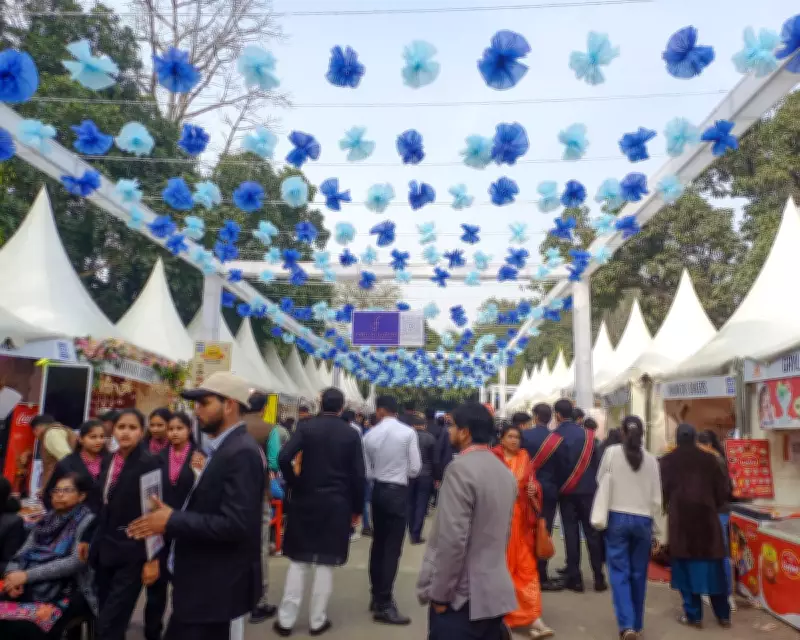
At the Banaras Lit Fest in Varanasi, this dynamic becomes vividly apparent. While discussions about screens versus books fill the Durbar Hall, the surrounding hotel lawns buzz with diverse activities: mime shows, standup comedy, handicraft sales, carpet displays, sari exhibitions, fashion shows, and even local artists painting beneath dust-laden mango trees. The evening features Grammy award-winning classical instrumentalist Vishwa Mohan Bhatt performing to rapt audiences.
Educational Outreach and Future Hopes
Deepak Madhok, president of the Banaras Lit Fest and owner of the Sunbeam school chain, understands that serious literary discussions alone won't attract crowds. "You need a 'masala' mix with something for everyone," he explains. "I tell my students they can take selfies but must listen to at least one author and discuss it later with teachers."
Madhok points to eleven-year-old Suryavansh Raj, attending because he loves history beyond textbooks. "He's here for history now, but next year a chance remark by an author might spark interest in another subject," Madhok hopes. "I'm planting seeds that might germinate into a new generation of readers."
The Digital Challenge and Regional Realities
Mobile technology presents additional challenges to reading habits. Malhotra notes that "India is one of the largest consumers of mobile data. Short videos, YouTube, reels and gaming have largely filled what little leisure time might have been spent on books."
Meanwhile, English-language books represent only a tiny fraction of India's literary landscape. For most Indians, English serves as a functional tool rather than the language of emotion and thought. Regional languages like Hindi, Gujarati, Tamil, Bengali, and Kannada host vibrant literary scenes, though statistics remain scarce.
The story of feminist writer Banu Mushtaq illustrates this regional dynamic perfectly. After spending her career chronicling Muslim women's lives in Kannada, she remained largely unknown outside Karnataka until her book Heart Lamp was translated into English, winning the International Booker Prize in 2025 and spreading her renown nationally.

A Democratisation of Culture
American author Dan Morrison, attending the Varanasi festival, sees the proliferation of festivals as a democratisation of literature happening in places that would have seemed unlikely venues just a decade ago. "No matter what motivates non-reading people to attend," he argues, "there's no downside. At least you're around some culture that isn't a screen."
As flute music competes with rap beats across festival lawns, Banaras Hindu University student Arya Mohan, reading Christopher Hitchens and Dostoevsky's Crime and Punishment, offers philosophical perspective. "At least festivals raise awareness about books," she says. "Even if just a handful of people hear something they'll remember forever, it's worth it."
India's literary festivals thus represent a complex cultural phenomenon: they celebrate books while often overshadowing them, attract crowds that don't necessarily translate into readers, and simultaneously democratise literary culture while highlighting the gap between literacy and actual reading habits. As these festivals continue to multiply across the subcontinent, they reflect both India's cultural aspirations and its ongoing relationship with the written word.