Siri Hustvedt's 'Ghost Stories' Chronicles Life After Paul Auster's Passing
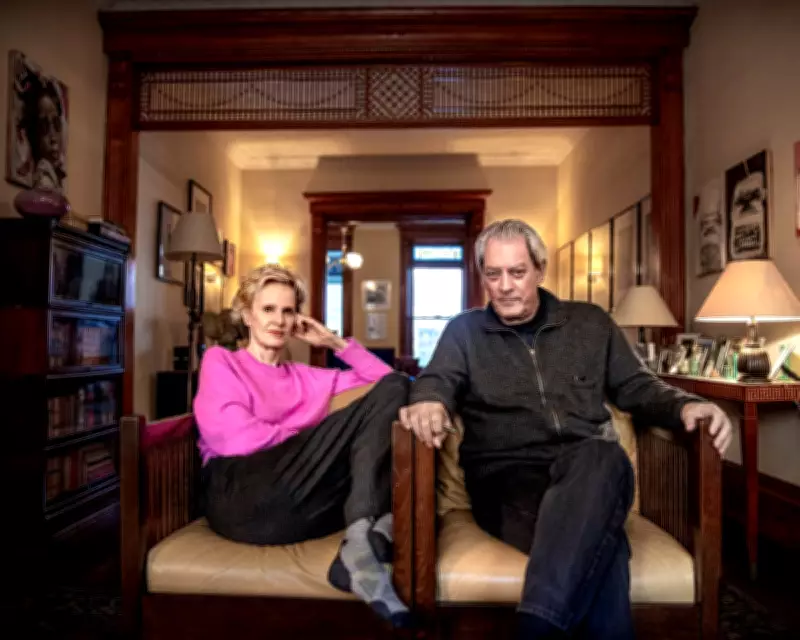
In her deeply personal memoir Ghost Stories, novelist and essayist Siri Hustvedt reflects on the profound loss of her husband, literary icon Paul Auster, who died of cancer in 2024 after more than four decades of marriage. The book serves as a raw exploration of grief, memory, and the seismic shift from a shared life to solitary existence.
A Literary Partnership Forged in Brooklyn
Hustvedt recounts meeting Auster in the early years of their careers. She was a tall, blond PhD student in a jumpsuit; he was a striking figure in a black leather jacket, living alone in a gloomy Brooklyn apartment while separated from his first wife. Their connection was immediate and intellectual, rooted in a shared passion for literature. Both had committed to writing from a young age—Auster at 15, Hustvedt even earlier.
Their marriage blossomed into a creative dialogue. They read and edited each other's work, with sentences from her novels appearing verbatim in his books and vice versa. Hustvedt describes their union as an "AND"—a conjunction where their lives overlapped and enriched each other. This partnership endured even as Auster's fame skyrocketed in the 1980s and 1990s, with fans mobbing him at events worldwide and lucrative offers pouring in.

The Shattering Impact of Loss
With Auster's death, Hustvedt confronts a world deranged by grief. She writes of mundane disorientations: struggling to find familiar subway entrances, constantly checking for lost keys, and navigating a home filled with painful reminders—the smell of his cigars, postcards in his handwriting, his name on a chequebook. The memoir's fragmented structure, with short, often single-sentence paragraphs, mirrors the concussive nature of her sorrow.
Hustvedt poignantly captures the linguistic shift forced upon her, catching herself saying "our" and correcting to "my." She recalls earlier tensions in their marriage, when she bristled at being introduced as "Paul's beautiful wife" by figures like Harvey Weinstein, feeling reduced to a nameless appendage. Yet, she also cherishes intimate memories, such as Auster telling her, "I love to watch you walk across the room naked," or a passionate moment sparked by a debate over Beckett versus Burroughs.
Academic Insights and Personal Tragedies
Hustvedt, who lectures in psychiatry at a New York medical college, weaves academic perspectives into her narrative. She cites thinkers like Maurice Merleau-Ponty on "intercorporeality" and reflects on houses as "zones of gestural repetition." This intellectual framework contrasts with the visceral realities of loss, including Auster's decline from cancer, treated with an immunotherapy drug partly derived from Chinese hamster ovarian cells.
The memoir also delves into broader family tragedies. Auster's son from his first marriage, Daniel, struggled with addiction, forging academic transcripts and using tuition money for drugs before dying of an overdose. Daniel's infant daughter, Ruby, had previously died from acute intoxication by heroin and fentanyl. These losses compound Hustvedt's grief, set against a backdrop of personal mishaps—a broken wrist from a fall, the death of her longtime analyst—and the political decay she observes in America.
Anger and Absurdity in the Face of Grief
Despite its melancholy, Ghost Stories is galvanized by incandescent anger. Hustvedt notes Auster's disdain for the political climate, referring to Donald Trump only as "45" and lamenting the anti-intellectualism epitomized by figures like JD Vance. Drawing on her Norwegian mother's experience under Nazi occupation, Hustvedt warns of rising fascism, quoting her father: "'When fascism comes to America, they'll call it Americanism.' It has, and they do."
Yet, humor persists amid the darkness. Hustvedt laughs at absurdities, like forgetting to remove her socks before climbing into a bathtub in a distraught state, or bickering with Auster over library organization. She recalls his wish to "die telling a joke," a testament to their shared resilience.

Ghost Stories is not just a hunt for a lost partner but for a lost way of being in the world. Through "Grief Reports," email bulletins from "Cancerland," and poetic tributes, Hustvedt crafts a moving testament to love, loss, and the enduring power of memory. The memoir stands as a stark, beautiful exploration of what it means to go from "we" to "I" after 40 years of shared life.