Veteran Fleet Street Journalist Chris Boffey Dies at 74
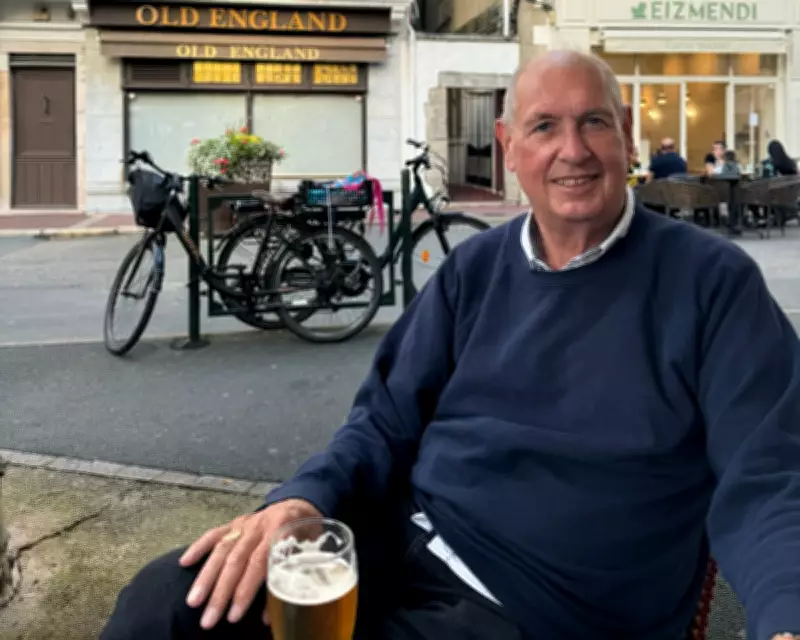
Chris Boffey, the veteran Fleet Street journalist whose remarkable career spanned from the Sun to the Sunday Telegraph and Observer, has died at age 74 after battling cancer. The newsman, who famously declared that "journalism is a serious job that is best undertaken by serious people who preferably don't take themselves seriously," leaves behind a legacy of newsroom wisdom and decades of frontline reporting.
A Career Spanning Tabloids and Broadsheets
Boffey arrived at the Observer in 2007 with a formidable reputation as one of Fleet Street's most experienced reporters and news executives. His career trajectory took him through newspapers as diverse as the Sun, News of the World, and the Sunday Telegraph before his tenure at the Observer and later the Guardian. He worked his way up from local newspapers to national titles, transitioning seamlessly from reporter to news editor roles.
"He was as comfortable working for red-top tabloids as he was on quality newspapers, and every bit as good as an executive as he was a news reporter on the road," recalled Andrew Alderson, a former colleague at the Sunday Telegraph and close friend.

The Boffey Rules: Newsroom Wisdom
Boffey brought his own distinctive set of rules to every newsroom he entered, mandates that brought what colleagues described as a "subversive edge" to journalism. His famous 10-minute rule gave reporters returning from war zones or difficult assignments a strict time limit for pub recollections of their experiences. After that, watches were stared at and interruptions began.
Another initially baffling decree was his instruction to "never go somewhere without going somewhere else first." This turned out to involve dragging colleagues to pubs before attending formal functions or awards dinners. "And never have less than two," he would assert upon reaching the bar.
Frontline Reporting and Remarkable Experiences
Throughout his varied career, Boffey assembled an extraordinary CV of frontline experiences. He was present at Milltown cemetery in Belfast in 1988 when Michael Stone began shooting at an IRA funeral. In 1983, he was forced to the ground with a police gun at his head in Cyprus after being mistaken for an Irish terrorist.
During coverage of the Gulf War in 1990, he was awoken in cramped below-deck quarters on HMS Cardiff by a 3am alarm warning of an imminent chemical attack. With time only to put on his gas mask, he appeared on deck naked but with his face encased in rubber. "It broke the ice," he later recalled of the incident.
Early Life and Career Progression
Born in Wythenshawe, Manchester, Boffey was the youngest of three children of William Boffey, a print worker in Salford, and Nora (nee Daley), a waitress at a Manchester airport hotel. After taking A-levels at Xaverian College in Manchester, he met his future wife Shirley Edwards while volunteering with Colony Holidays, taking disadvantaged children on holiday to Bray in Ireland. They married in 1972.
His newspaper career began at the Newcastle Journal, progressing through national newspapers until he reached the Daily Star's Fleet Street offices in 1982. Subsequent stints included Eddy Shah's Today newspaper and the Sunday Times before joining the Sunday Telegraph in 1997 as chief reporter, becoming its news editor in 1999.
Mentorship and Later Career
Boffey was known for encouraging young talent at the Observer, where he eventually became news editor in 2008. Anushka Asthana, who worked as his deputy news editor for six months and is now Channel Four's US editor, recalled his mentorship: "He taught me a lot. At the start, he told me that on the desk, directing journalists, you will make dozens of decisions and many will be mistakes. You have to accept risk and face up to your errors but don't be downed by them."
His only experience outside journalism in later years came as media adviser to Estelle Morris, Labour's education secretary from 2001 to 2002, a position he took at the behest of his friend Alastair Campbell, former press secretary to Tony Blair. "After 30 years as a reporter and news editor on various titles I had an itch to do something else," he explained.

Legacy and Personal Life
Morris remembered him fondly: "Chris was utterly unflappable, his advice was first class, and when I think of him, it is his cheery, chuckling face that first comes to mind." When Morris resigned in October 2002, Boffey described himself as experiencing "political suttee on the funeral pyre of her career."
Boffey remained active throughout his 60s, chairing the Journalists' Charity for several years. His 2018 speech to the University of the Third Age perfectly encapsulated his view of journalism: "During my 40 years as a journalist I have been threatened, shot at, fire-bombed, sued, asked to spy, investigated by MI5 and taken the occasional drink. It is a serious job that is best undertaken by serious people who preferably don't take themselves seriously."
He is survived by his wife Shirley, a retired headteacher, their sons Daniel and Martin, grandchildren George, Charlotte, Tom, Theo and Emma, and his sister Linda. Christopher John Boffey, born 23 November 1951, died 13 February 2026, leaves behind a remarkable legacy in British journalism.