Weimar by Katja Hoyer Review: The Town That Changed Germany
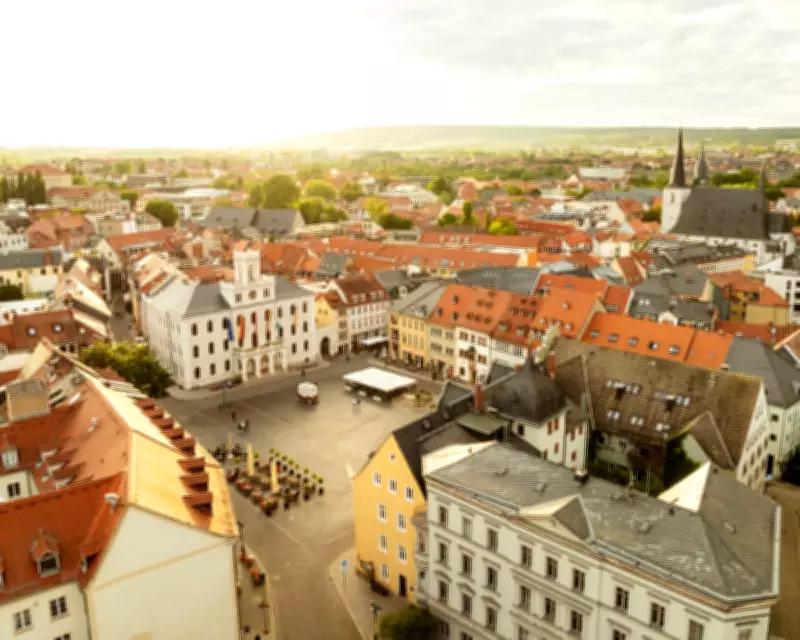
Weimar, Germany. Photograph: taikrixel/Getty Images
Weimar is a small city with a population of 65,000, yet it holds an outsized place in German history. As former president Roman Herzog once remarked, 'Weimar is Germany in a nutshell: a town in which not only culture and thought were at home but also philistinism and barbarism.' This historic city, nestled in the heart of the nation, is a shrine to literary giants such as Goethe, Schiller, and Nietzsche. In 1919, Germany’s first democratic constitution was proclaimed in its national theatre, chosen precisely because its refined cultural aura contrasted with the Prussian militarism of Berlin. From 1919 to 1925, Weimar hosted the Bauhaus School under Walter Gropius, placing it at the forefront of art and design.
Yet, from the mid-1920s onward, Weimar—also the state capital of Thuringia—became a pivotal site for the rise of the Nazi party and its early experiments in governance. After 1933, it vied with Bayreuth for recognition as the 'spiritual home of Nazism.'
Historian Katja Hoyer, best known for her 2023 book Beyond the Wall, delves into these contradictions in her new work, which chronicles Weimar’s interwar story. She divides the book into chapters covering each year from 1919 to 1939, blending public records with personal letters, diaries, and memoirs left by the city’s inhabitants.
In this chronology, 1926 emerges as a turning point. That year, Weimar hosted a Nazi congress on the weekend of 3-4 July—the first rally since the party’s re-foundation in 1925 following a 14-month prohibition. The event was modest, with police estimating 7,000 to 8,000 attendees. Yet, it established core elements of Nazism, including the Hitler Youth. On Sunday morning, in the very auditorium where the Weimar constitution had been agreed seven years earlier, Hitler instigated the 'Blood Flag' ritual. Newly formed SA Stormtrooper units marched across the stage, consecrating their standards by touching them to a party flag carried during the 1923 Munich putsch, allegedly stained with a fallen SA man’s blood. Hoyer writes: 'In the cradle of Germany’s post-war democracy, Hitler performed a ceremony to sanctify a movement intent on killing the young republic.'
The Nazis initially made a poor impression on the town. Over two days, they left a trail of damage and injury: breaking into cars, vandalising buildings, knifing locals, and shooting a policeman. Yet by 1929, amid renewed economic crisis, the mood in Weimar shifted. In that December’s state elections, 11% of Thuringians voted for the Nazis, but in Weimar, the share was 24%. Coming in third, they entered government for the first time, in coalition with other rightist parties, taking control of the state ministries of the interior and education. Until the coalition’s collapse in 1931, Thuringia—and Weimar in particular—became a laboratory for Nazi governance.
The year 1937 marked Weimar’s darkest pre-war chapter with the establishment of Buchenwald concentration camp, Germany’s largest, just five miles from the city centre. The camp and town were deeply intertwined. Prisoners arrived at Weimar’s railway station, and local authorities provided utilities and services, including, until 1940, use of the municipal crematoria to burn bodies. Although officially a work camp, not an extermination camp, Buchenwald claimed the lives of 56,000 inmates, mainly Jews. Weimar businesses supplied food and materials to maintain the camp, while locals enjoyed access to the zoo set up to entertain guards and their families. Surreally, despite Nazi abhorrence of Bauhaus, the sign over the camp’s gate—'Jedem Das Seine' ('To Each His Own')—was executed in one of the school’s elegant typefaces by a Bauhaus graduate and Buchenwald inmate, Franz Ehrlich.
Hoyer’s abhorrence of the Third Reich is clear, but she is reluctant to criticise the ordinary people whose archival traces lend her work colour. She argues: 'it is difficult and often unhelpful to judge people’s behaviour from our vantage point a century later.' Yet her book confronts readers with many troubling ambiguities. One example is Carl Weirich, a stationery shop owner and Hoyer’s most quoted voice. After repeated near bankruptcies caused by economic turmoil, Carl voted for the Nazis in 1933 and even financially supported the SS in 1934-35. Yet he was never a formal party member, and by 1938 his diary betrays unease. Following Kristallnacht, he noted that 'increasing persecution of the Jews began which blasphemed against God himself.' Weirich’s diary records with horror the sight of crematoria and piles of corpses at Buchenwald when American troops showed them to Weimarers after liberation. But never once, in a journal lasting until the 1970s, does he question what part his own choices might have played in bringing about those atrocities.
Though she eschews judgment on individuals, Hoyer writes with moral purpose. Understanding why ordinary, even likable, people turned away from democracy in the past is, she argues, essential to safeguarding freedom in the present. Given that Thuringia’s last state elections in 2024 witnessed another far-right breakthrough, with the AfD topping the poll at 33%, that task could scarcely be more urgent.
Weimar: Life on the Edge of Catastrophe by Katja Hoyer is published by Allen Lane (£30). To support the Guardian, order your copy at guardianbookshop.com. Delivery charges may apply.