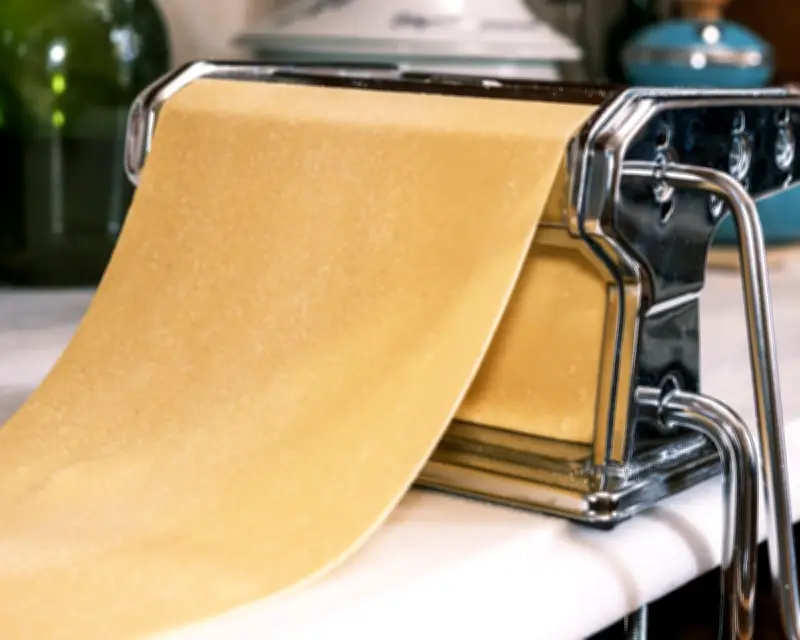
When making fresh pasta, the dough sometimes tears when rolling, frustrating home cooks. Experts weigh in on common culprits and solutions.
Common Causes of Tearing Pasta Dough
Jacob Kenedy, chef-patron of Bocca di Lupo in London, suggests several possible explanations. First, using the wrong type of flour: "use 00 flour." The dough might be too cold ("use it at room temperature") or too dry ("it should be supple, like Play-Doh"). Naz Hassan, head chef of Ornella and Lupa in London, adds that egg size matters: "One egg to 100g of 00 flour is the basic pasta dough recipe, but that will vary depending on the size of your egg."
Adjusting Dough Hydration
If using only yolks, Hassan suggests adding egg white: "It has the structure that allows pasta to have the stretchiness it deserves." However, Kenedy warns that a dough that is too wet can also cause problems: "I like my pasta dough wet enough to roll by hand – it gives a more elastic mouthfeel – which means, if I roll it in a machine, it sticks slightly to the roller and may rip." The fix: laminate the dough thoroughly and use "the finest dusting" of flour until the dough passes smoothly through the machine. "Then make sure to roll that flour in, so the outside of the pasta isn't dusty," Kenedy adds.

Resting the Dough
Resting the dough is crucial. "Like bread and any byproduct of flour, you need to rest the dough to allow the gluten structure to relax and bind together," says Hassan, who rests dough overnight. Kenedy prefers to rest his dough, covered and at room temperature, for half an hour to an hour after kneading. He believes poor gluten development is the most likely suspect: "Laminate the pasta many, many times at the thickest setting. Roll, fold in half, roll again, fold in three, roll again – at least 12 times – until the pasta is extremely silky-smooth, before rolling it any thinner."
Patience in Rolling
The rolling process requires patience. Avoid big jumps in thickness (clicks of the pasta machine wheel). Hassan says: "If you try to force the dough through the machine or skip one of the steps – going straight from setting number three to setting one – that will create ridges on the sides of the dough." Those ridges can cause rips. "Obviously, it's hard to know which of these reasons it might be without standing next to Thomas in the kitchen," Hassan adds.