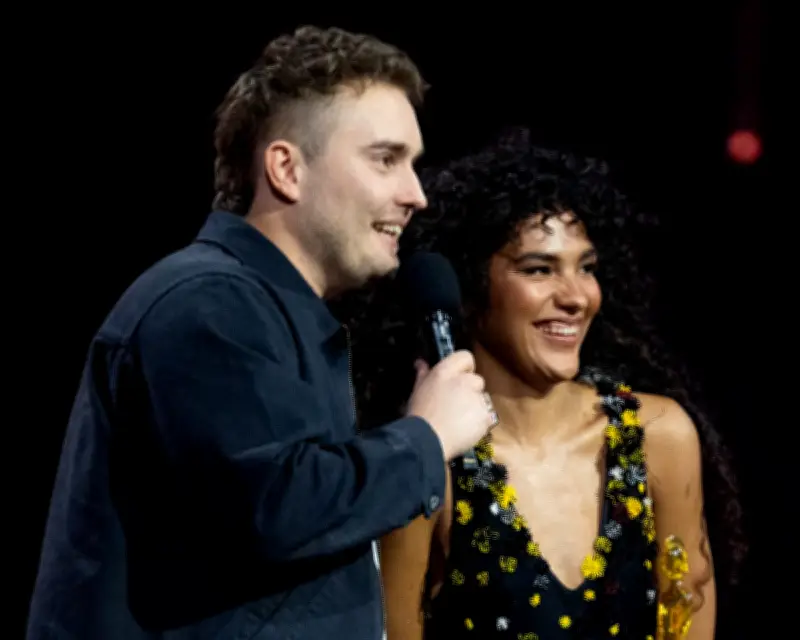
Sam Fender and Olivia Dean's duet 'Rein Me In' has become the longest-running No 1 single in UK chart history, spending 19 weeks at the top. Yet, a wave of online bafflement suggests many Britons have never knowingly heard it, sparking debate about whether the charts still reflect a shared national culture.
Record-Breaking Success or Cultural Blind Spot?
The British Phonographic Industry hailed the song for resonating with listeners "in such a profound way," and Fender thanked Dean and fans "for making this song the juggernaut that it is." However, social media users expressed disbelief, with one writing on X: "Crazy how monoculture no longer exists because I don't think I've actually ever heard this song."
Industry experts argue that dominance no longer means ubiquity. In the era of Top of the Pops and Radio 1, the weekly charts were a shared cultural event, says Chris Anderton, associate professor in cultural economy at Southampton Solent University. Streaming has replaced that with endless choice and algorithmic recommendation, creating what author Eli Pariser called the "filter bubble," where listeners are repeatedly served music similar to what they already like. Anderton notes this mechanism isolates social media users from opposing viewpoints, commodifying and automating taste.

From Physical Sales to Streaming Algorithms
The record was previously held by Frankie Laine's 'I Believe' with 18 weeks at No 1 in 1953, when the UK chart featured just 12 songs. Recent contenders like Bryan Adams' '(Everything I Do) I Do It For You' and Ed Sheeran's 'Shape of You' fell short. 'Rein Me In' took 36 weeks to reach No 1 and has held the top spot on and off since February, fending off challenges from Harry Styles, Olivia Rodrigo, Ariana Grande, and Taylor Swift. It even outlasted the Official Charts Company's "accelerated decline" rules introduced in 2017 to prevent streaming hits from lingering indefinitely.
Chart mechanics have changed: positions now blend physical sales with stream-equivalents from Spotify, Apple Music, and YouTube, where 100 premium streams or 600 ad-funded ones equal one sale. But fragmentation runs deeper than maths, says music and culture critic Nicolas-Tyrell Scott. Younger listeners discover music via TikTok, YouTube, and personalised algorithms, so "it's not as easy as saying a track is No 1, therefore it's resonant and dominating in everyone's sphere of influence." Gen Z spend just 16% of their audio day on radio, 42% on streaming, and 20% on YouTube, with algorithms reinforcing micro-cultures. "It's easy to see why a song like this could pass clusters of people by," Scott said.
The Demise of the Monoculture
Chart analyst James Masterton describes the situation starkly: a single can break records "yet it still struggles with any kind of cultural cut-through." Unlike past mega-hits, 'Rein Me In' has no film or event attached. "It isn't from a movie soundtrack or connected with any national event. It just … exists."
Weekly chart consumption has grown from around 20 million streams at the decade's start to over 30 million now, but most No 1s this year have clustered around just 60,000 of those streams. This proves that while the audience has grown, the biggest hits command a much smaller slice of attention. Television exposure barely helps: this year's Brit awards produced no lasting bump for its acts, and radio has splintered into narrowly targeted playlists.
"This is merely one symptom of what sociologists are noting as the demise of the monoculture," Masterton said. "With such a vast range of entertainment options available, few creations or productions really need appeal to a large cross section of the public. Which is just as well given how vanishingly few actually do."
Is the Disconnect Real?
Some online commentators suggest that claiming never to have heard a massive song is a performative act of detachment rather than genuine unfamiliarity. Anderton offers a caveat: songs like Kylie Minogue's 'Padam Padam' or the 'Brat summer' moment broke through because they escaped streaming and became wider cultural phenomena across television, social media, news coverage, and memes. "The ubiquitous hit is not dead," he said. "It just requires much more than chart success."