The Quest for Perfect Chives in Professional Kitchens
In the high-stakes world of fine dining, a seemingly simple garnish has become an unexpected status symbol among culinary professionals. Perfectly chopped chives, those delicate green circles that adorn dishes from tartare to gougères, have evolved into a benchmark of kitchen excellence and attention to detail that separates amateur cooks from master chefs.
The Rise of Chive Evaluation Culture
At the center of this culinary phenomenon stands Rate My Chives, an Instagram account that has transformed herb preparation into a competitive sport. Founded in 2022 by a UK-based chef who noticed poorly cut chives during a restaurant meal, the account has grown to command over 93,000 followers, including renowned chefs like Grant Achatz of Chicago's Alinea and Australia's Mark Best. The anonymous founder operates on a simple philosophy: "If the chefs don't care about the little things like how to chop chives, then the rest of the food's going to be crap as well."
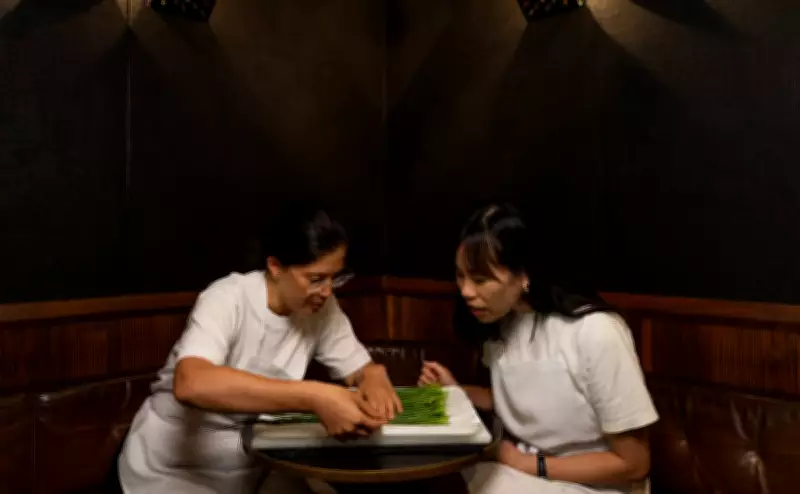
Executive chef Trisha Greentree of Sydney's Fratelli Paradiso explains the significance: "Perfect chives are not so much about showing off your chops, but more about showing you care." For many chefs trained in the western culinary tradition, chopping chives represents a foundational skill comparable to a musician mastering scales. It's the basic proficiency that must be perfected before advancing to more complex techniques.

The Anatomy of Perfect Chives
According to Rate My Chives' founder, scoring focuses on two critical elements: consistency and thinness. Chives must be sliced to identical sizes, with thinner cuts demonstrating superior knife skills. "You're not going to get a 10 if they're all one centimeter," he emphasizes. The ideal chive should be light and fluffy "like green confetti," as Greentree describes, with a "herbaceous, light pop" on the tongue.
At Tetsuya's, the now-closed Sydney fine-dining establishment, chives were never mere garnish but a key component of the signature confit of ocean trout. Former executive chef Derek Kim reveals the restaurant's exacting standards: "The kitchen would go through 10 large bundles of chives each service, with requirements for completely uniform length and thickness, clean cuts, and no green staining on the chopping board."
The Technical Challenge of Chive Perfection
Mastering chive chopping requires specific techniques and equipment. Greentree demonstrates proper form: gently grasping the green stalks in one hand while keeping them bunched together with pinky and thumb, maintaining a sturdy wrist position she calls "locking in that line." The tool matters equally—"To get a 10, you need a knife that's like a razor," says the Rate My Chives founder. "If you've just got a medium sharp knife, there's going to be pressure going on to the chive, which is then going to crush it."
Common mistakes include producing "train tracks" from a blunt blade denting rather than slicing through chives, creating warped diamond shapes from overly tight gripping, and green board staining from mishandled herbs. These errors result in bruised chives with unpleasant mouthfeel, earning low scores from the chive authorities.
Chive Culture and Community Impact
Rate My Chives has created a unique culinary community that oscillates between gladiator arena and supportive space. Some posts feature brutal critiques like "Did you cut those with your teeth?" while others applaud apprentices' efforts. Finnish-Singaporean chef Cliff Lyijynen, who received the first perfect 10 in 2023, notes the account's dual nature: "I was expecting to get roasted" but instead felt "proud and elated" with his perfect score.
The chive phenomenon has even created minor celebrities within the culinary world. Lyijynen reports being recognized in public twice as "the chive guy"—once at a rock-climbing gym and another time while working as a DJ. Some chefs now display their Rate My Chives scores on Instagram profiles as badges of honor.

Beyond Western Culinary Traditions
Despite the intense focus on perfect chives in western kitchens, Lyijynen offers perspective from Asian culinary traditions: "In Asia, your grandma or auntie takes out the scissors and they'll just cut the chives straight into the pot, and they're still amazing cooks. Even if you can cut chives, it doesn't mean you can get wok hei." This highlights how different culinary cultures prioritize different skills and techniques.
For home cooks and aspiring chefs, the pursuit of perfect chives represents more than just herb preparation—it's about mindfulness, attention to detail, and the satisfaction of mastering a fundamental skill. As one enthusiast describes it, it's about "turning an everyday task into an exercise in mindfulness" and pursuing "chive-powered self-improvement" while procrastinating on more substantial areas of personal development.
The journey from amateur to expert can be humbling. After receiving coaching from Greentree and sharpening neglected knives, one determined cook improved their Rate My Chives score from 2 to 2.3—a modest but meaningful improvement in the competitive world of culinary garnishes. Whether in professional kitchens or home cooking spaces, the quest for perfect chives continues to challenge and inspire those who believe that excellence lies in mastering the smallest details.