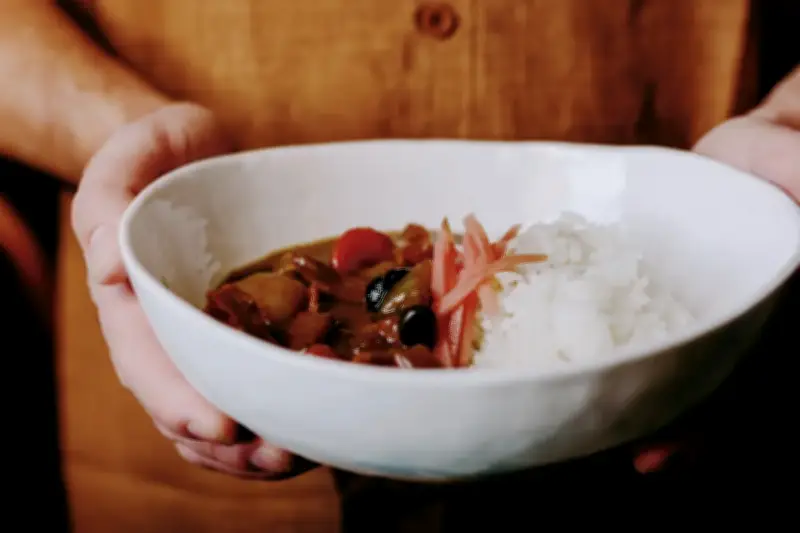
Emiko Davies, an Australian-born cook and author, has shared her recipe for Japanese curry rice, known as kare raisu, which includes a secret ingredient: a cube of dark chocolate. The dish, considered a national staple in Japan, is thickened with a potato starch slurry and flavored with a blend of spices including curry powder and garam masala.
The Origins of Japanese Curry
Japanese curry differs from South Asian curries due to its yoshoku (Western-influenced) nature and its historical route to Japan via the British Royal Navy during the Meiji Restoration, a period when India was under British colonial rule. It arrived as British "C&B" curry powder, so it was perceived as Western food rather than Indian. Curry became a staple in Japanese naval and army kitchens at the turn of the century, eventually making its way into homes and school lunches. Today, it is regarded as a national dish.
Japanese curry must be thick enough to be easily eaten with rice using a spoon. This can be achieved with a French-style roux of butter, flour, and liquid, or, as Davies prefers, by adding a potato starch slurry at the end of cooking. The spice mix often includes Japanese S&B curry powder, which contains 17 spices such as turmeric, coriander, fenugreek, cumin, cinnamon, fennel, ginger, and star anise.

Home Cooking and Secret Ingredients
In Japanese homes, curry is commonly made with packet mix cubes added to a stew of meat and vegetables. These cubes dissolve, turning the stew into a thick, fragrant, mild curry. Enthusiasts often enhance their curry with "secret" ingredients like honey, nashi (Asian pear), prunes for sweetness, or coffee for color and balance. Davies recalls her mother mentioning a friend who added dark chocolate, a technique she notes works well in meaty stews, similar to the Tuscan wild boar stew that includes chocolate or cocoa.
Davies' recipe serves four and calls for pork loin (or beef or other protein), butter, onion, fresh ginger, mirin, curry powder, garam masala, optional chilli powder, dashi (or chicken stock or water), soy sauce, salt, carrot, potato, mushrooms, potato starch or cornflour, water, and a cube of dark chocolate (about 10g, minimum 70% cocoa solids). It is served over warm rice with pickles such as beni shoga (red pickled ginger) and rakkyo (pickled Chinese onion).
Step-by-Step Preparation
To prepare, chop the meat into 3cm cubes and sear in a heavy-based saucepan with vegetable oil over high heat for four to five minutes, then set aside. Reduce heat to medium, add butter, onion, and ginger, cooking for two to three minutes. Deglaze with mirin, then add curry powder, garam masala, and chilli powder (if using). Add dashi, soy sauce, salt, vegetables, and meat; cover and simmer gently for 20 minutes.
Meanwhile, mix potato starch and water to create a slurry. After cooking, add the chocolate to the curry, stir, then add the slurry. Let it bubble for one to two minutes until thickened. Serve immediately over warm rice with pickles.
Dashi Stock and Vegetarian Option
The recipe includes a dashi stock made with kombu (dried kelp) and katsuobushi (dried bonito flakes). To make it vegetarian, omit the katsuobushi and double the kombu. The dashi can be stored in a jar in the fridge for up to a week.
To make the dashi, wipe the kombu, place it in a saucepan with one litre (four cups) of cold water, and steep for at least 30 minutes or overnight. Warm over low heat until the water is about to boil, then remove the kombu. Add the katsuobushi, bring to a near boil, turn off the heat, skim off scum, and let steep for five to ten minutes. Strain through a fine-mesh sieve.
This recipe is an edited extract from Gohan by Emiko Davies, with photography by Emiko Davies, Hana Davies, and Yuki Sugiura, available through Smith Street Books (AU $49.99).