In Valencia, horchata de chufa—a creamy, non-alcoholic drink made from tiger nuts—is so revered it is nicknamed “white gold.” Historic horchaterías (or orxaterias in Valencian) still thrive in prime city locations, serving this refreshing beverage alongside sugar-glazed farton pastries. Production is authorized in 16 towns in the Valencia region, with Alboraya (Alboraia in Valencian) acknowledged as its birthplace and global capital.
The Origins of Horchata and Farton
Chufas, or tiger nuts, have been cultivated in Valencia for more than 1,000 years. These tubers of a grass-like sedge plant look like wooden raisins but taste nutty and slightly sweet when raw. Valencia’s agricultural zone north of the city produces 5.3m to 8m kilograms of dried tiger nuts annually, with most harvesting in spring for summer supply. To make horchata, chufas are cleaned, soaked, crushed, and mixed with water; cinnamon, lemon or orange zest, and sugar are often added.
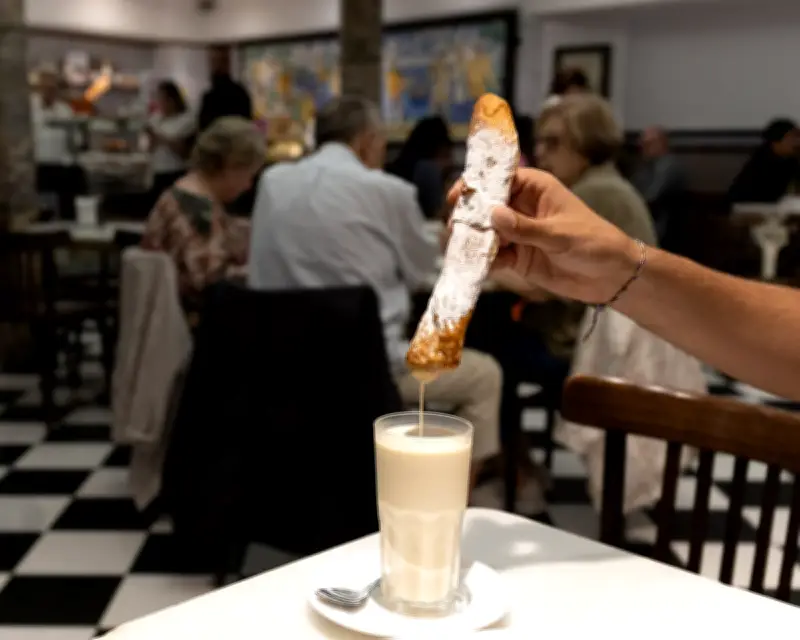
The farton, a long, cigar-shaped sugar-glazed pastry, was created in the 1960s by the Polo family for dipping into horchata. Some prefer the older rosquilletas (breadsticks), which are salty and anise-flavored.

Horchatería Fabián: A Disappointing Start
Family-run Horchatería Fabián, founded in 1975, is located in the old town. Despite its promising founding date, the horchata was over-sweet and artificial tasting, and the farton was dry and crumbly. The staff seemed distracted and cold. The overall experience left much to be desired. Horchata €3, 4/10; Farton €1, 3/10.
Horchatería Daniel: A Popular Chain
Horchatería Daniel, founded in 1949, is one of the most well-known horchatería companies in Valencia, with three locations. The original in Alboraya is large and busy, while the old town location near Plaza de la Reina offers a grand, airy room. The horchata there was creamy and moderately sweet, paired with a traditional farton. However, a newer farton with chocolate, raspberries, and pistachios was disappointing. Horchata €1.95, 6.5/10; Farton €0.85, 6/10.
Horchatería Santabárbara: A Neighbourhood Gem
In the Montolivet suburb, Horchatería Santabárbara has been open for four years. Manager Rafa passionately explains horchata production. The standard horchata was a bit too sweet, but the unsweetened version—just chufa and water—was a revelation: clean, refreshing, and natural. Paired with a spongy, glazed farton, it’s a winning combination. Horchata €2.50, 7/10; Farton €0.80, 6.5/10.
Horchatería de Santa Catalina: The Grandest of All
Located by the Santa Catalina Church’s baroque bell tower, Horchatería de Santa Catalina features ceramic tiles and marble tables. The horchata is darker, creamier, and richer than most, while the longer farton dusted with icing sugar melts in the mouth. The ambiance and quality make it a standout. Horchata €4, 8/10; Farton €1.55, 6.5/10.
Horchatería Mari Toñi: Early Morning Excellence
In the La Saïdia residential area, Horchatería Mari Toñi opens at 6:15am and stays busy for 15 hours. Fartons are freshly made each morning—light, fluffy, and perfectly porous. The horchata is creamy, though slightly less sweet than some. The authentic atmosphere and quality make it a neighborhood favourite. Horchata €3, 6/10; Farton €0.80, 7.5/10.
Takeaway Alternatives: Món Orxata and Gelática
Món Orxata revives a 400-year-old tradition of selling unpasteurised horchata from street carts across central plazas. Their horchata is clean and crisp. Pair it with an orange-infused farton made by award-winning pastry chef Migue Señorís at Gelática Ice Concept near the coast. Món Orxata horchata €3.30, 7/10; Gelática farton €1.90, 8.5/10.