The Ultimate Guide to Achieving Crisp Fish Skin Every Time
When frying fish, many home cooks struggle with skin that sticks, rips, or turns limp instead of developing that coveted golden-brown crust. According to leading chefs, the secret lies in mastering two critical elements: high heat and low moisture. This combination is essential to avoid a soggy or stuck-to-the-pan disaster.
Why Moisture Is the Enemy of Crispiness
Fish naturally contain a lot of moisture, which can sabotage your efforts to achieve a crisp texture. As British fish guru Nathan Outlaw explains in his upcoming book, On Fish: A Seafood Handbook, "If the fish has any moisture on it, it will create steam while it’s being cooked, which, in turn, will make the skin go soggy and inedible, rather than crisp and delicious." To combat this, the first step is to thoroughly dry the skin using kitchen paper or a clean tea towel.
Outlaw recommends taking this a step further by wrapping the fish in a second piece of kitchen paper and letting it sit for a couple of minutes. This allows any remaining moisture to be absorbed, ensuring a drier surface that’s primed for crisping.

Expert Techniques for Perfect Results
Mitch Tonks, founder of Rockfish in south-west England, emphasizes the importance of heat in the cooking process. After drying the fish, he suggests sprinkling it with salt and using a decent nonstick pan. Rick Toogood, head chef and co-founder of Prawn on the Lawn, and Jack Stein, chef director of Rick Stein Restaurants, agree but add their own twists. Stein places a square of quality greaseproof paper in the pan, a tactic Toogood also prefers, as it guarantees the fish won’t stick.
Once the pan is hot, add a couple of tablespoons of oil—sunflower oil is Stein’s choice, while Toogood recommends adding a little butter for extra flavor. Outlaw cautions that the fat must be hot before adding the fish; otherwise, it will stick and create a messy, scrappy piece.
The Cooking Process: Patience and Precision
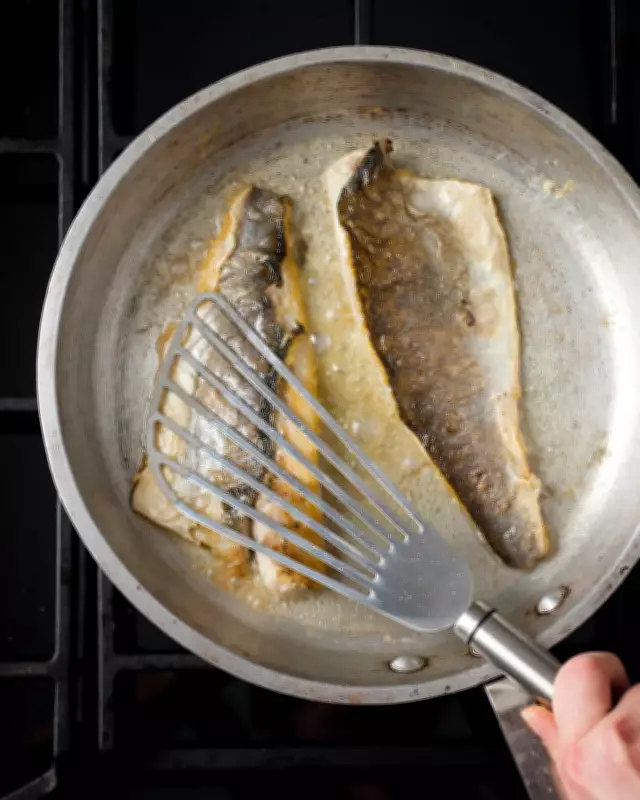
When the oil is shimmering, carefully lay the fish skin-side down in the center of the pan. It should crackle and hiss immediately. Press down gently with a fish slice or your fingers for the first few seconds to prevent curling, especially with super-fresh fish. Cook the fish without moving it until it’s about 80% done, indicated by the edges turning opaque. Once the skin is crisp, it should release easily from the pan, allowing you to flip it over to finish cooking the flesh side.
Tonks assures that following these steps will yield a glass-cracking texture on the skin, transforming your fish-frying experience and avoiding any sticky situations. For those with culinary dilemmas, expert advice is just an email away to help master seafood preparation.