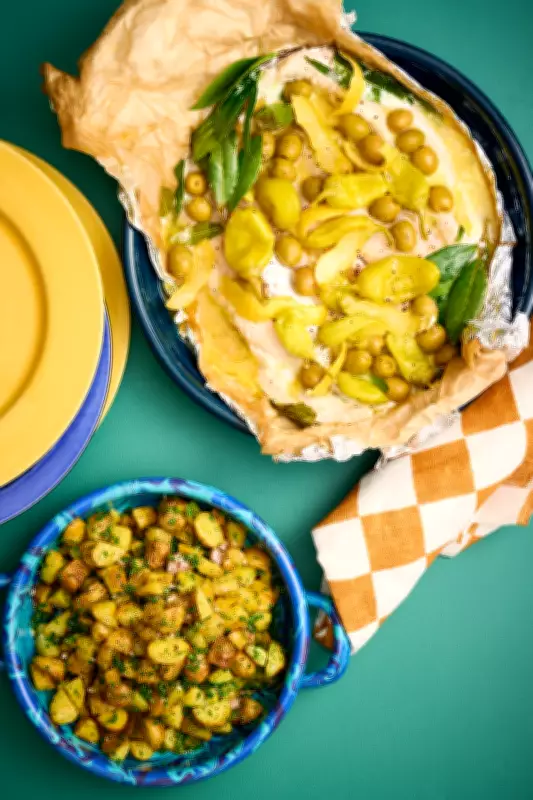
Alice Zaslavsky's En Papillote Fish: A Culinary Revelation for Easter
Alice Zaslavsky presents a groundbreaking recipe for flathead baked in parchment paper with roasted potatoes and peppers, ideal for Easter celebrations and beyond. This cooking technique, known as en papillote, offers a seamless method for preparing fish at home, addressing common concerns about moisture, flavor infusion, and kitchen odors.
Mastering the En Papillote Technique
En papillote, translating to "in parchment," combines baking and steaming by sealing ingredients in a parchment paper parcel. This method traps natural moisture and aromas during cooking, preventing strong sea smells from permeating the kitchen. For individuals hesitant to incorporate more fish into their diets due to lingering odors, this approach provides an elegant solution.
Selecting Fresh Fish: Zaslavsky emphasizes that fresh fish should exhibit minimal aroma, a glossy appearance, and clear eyes if whole. When purchasing fillets, she recommends asking fishmongers, "Which fish fillets would you take home tonight?" as a polite gauge of freshness. For prepacked options, consumers should prioritize the longest use-by dates and sustainable sourcing markers relevant to their region.

Flavor Infusion and Creative Adaptations
The en papillote method excels at infusing flavors, as fish absorbs surrounding aromatics like citrus, garlic, herbs, and spices. This versatility allows for creative adaptations, such as Mediterranean profiles with tomatoes and oregano or North African influences with harissa and preserved lemon.
Zaslavsky's recipe draws inspiration from the classic gilda pintxo of anchovy, green olive, and piquillo peppers, enjoyed during her honeymoon in San Sebastián. Key ingredients include anchovy-stuffed green olives, pickled guindilla peppers, and fresh bay leaves, which offer a delicate citric base when fresh. For dried bay leaves, she advises using half the quantity to avoid overpowering herbaceous notes.
Practical Cooking Tips and Variations
While traditional en papillote involves individual parcels for each fillet, Zaslavsky suggests baking everything in one large pouch for a swift meal for four. For entertaining, individual parcels add theatrical presentation, and smaller households can halve the recipe, reducing baking time to 15 minutes. Flathead fillets are recommended, but any skinless, boneless, firm-fleshed fish works well.
Roasted Chippie Chats: The accompanying potatoes are oven-baked cubes, described as a hybrid of roast potatoes and chips, offering tender interiors and crispy exteriors. Using smaller potatoes like chats or kipflers, parboiling accelerates cooking, maximizing roasting time alongside the fish.
Recipe: Gilda'd Fish En Papillote with Roasted Chippie Chats
Ingredients:
- 6-8 boneless flathead fillets (800g)
- 10 fresh bay leaves (halve if dried)
- 100g butter, cubed
- 1 lemon (peel stripped, sliced into wedges)
- 235g jar anchovy-stuffed green olives, drained
- 200g pickled guindilla peppers
- 2 tbsp olive oil, plus extra for serving
For Roasted Chippie Chats:
- 1kg chat potatoes, washed, unpeeled, cut into 1cm cubes
- 4 garlic cloves, unpeeled
- 60ml olive oil
- 1 cup finely chopped curly parsley leaves
Instructions:

- Preheat oven to 200°C (180°C fan) and place a roasting tray inside to heat.
- For potatoes, parboil cubes and garlic in salted water for 10 minutes until soft. Drain, steam dry, then toss with olive oil and salt. Line preheated tray with baking paper, add potatoes, and roast on highest rack for 20+ minutes until golden.
- Line a second tray with foil and baking paper. Scatter bay leaves, lay fish fillets, top with butter, lemon peel, olives, peppers, olive oil, salt, and pepper.
- Fold paper and foil over fish, crimping edges but leaving air space. Roast on lowest shelf for 15-20 minutes until fish is opaque. Rest for 10 minutes.
- Top potatoes with parsley and salt, then shake to coat. Transfer fish parcel to serving plate, open carefully (mind steam), and sprinkle with salt, pepper, and olive oil. Serve with potatoes and lemon wedges, discarding bay leaves.
This recipe not only simplifies fish cooking but also elevates it into a flavorful, aromatic experience, perfect for festive occasions and everyday meals.