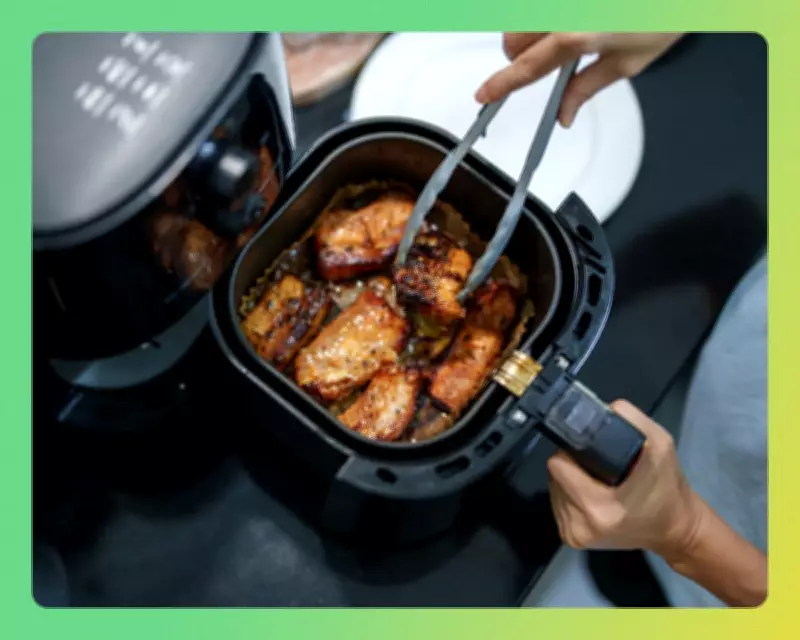
Air Fryer Debate: Essential Kitchen Tool or Unnecessary Clutter?
Everyday essential or kitchen clutter: do you really need an air fryer? These low-fat cookers have become one of the most-hyped kitchen appliances of the last decade, but are they worth the cost and counter space? The answer depends heavily on your lifestyle, who you cook for, and what you like to eat.
How Air Fryers Work and Their Benefits
Air fryers operate similarly to standard convection ovens: an element heats up, and a fan distributes the heat. The key difference lies in the smaller cavity size, which allows air fryers to heat up rapidly, saving energy. Users are advised to shake food frequently to expose more surface area to the heat, resulting in a crisp, browned exterior. Unlike conventional frying, food requires only a minimal amount of oil or none at all, making it a potentially healthier cooking method.
Natalie Mathie, an energy expert at Uswitch, highlights the efficiency: "Air fryers are quick, convenient and relatively cheap to run compared with conventional ovens. A jacket potato might take about 30 minutes in an air fryer, compared with closer to an hour in an oven. The average air fryer uses about 1.4kW of power, costing roughly 19p for 30 minutes at current energy prices, whereas a 2kW oven would cost about 28p." However, this comes with an upfront investment, raising the question of whether it's truly worth the expense.

Assessing Your Need for an Air Fryer
Before purchasing, consider how often you'll use it. A good air fryer is an investment in both cost and precious worktop space. If usage is infrequent, it contributes to manufacturing waste and potential landfill. Avoid buying the cheapest models, as they often feature flimsy drawers and non-stick coatings that degrade quickly. Higher-priced options typically offer better build quality and longevity.
Choosing the right size is crucial. For one to two portions, a small toaster oven with convection might suffice. Saifur Rahman, head chef at Tower Tandoori in London's Bermondsey, notes: "A 4-5L basket may suit one or two portions, but for family feasts, cooking happens in rounds, and the time and energy advantage of an air fryer shrinks." Air fryers excel at tasks like reheating pizza or roasting vegetables but may fall short with dehydrating or cooking meats that require moisture retention.
Alternatives to Air Fryers
If you doubt frequent use, it's more sustainable and cost-effective to optimize existing appliances. Many can replicate air fryer-style crisp textures or rapid cooking speeds. Andy Bowler, chef and owner of Indulge Dining, advises: "A fan oven, properly preheated, will do most of what an air fryer does: use a perforated baking tray or a wire rack to help air circulate and improve caramelisation." Electric pressure cookers and microwaves can also reduce cooking times, with browning added under a grill.
For those seeking speed, shallow frying is a viable alternative. Bowler suggests: "Shallow frying is a good alternative. With the right pan, such as a heavy-based stainless-steel one or a well-seasoned cast-iron skillet, and temperature control, you'll get excellent results." Ultimately, little that an air fryer cooks can't be produced another way, though it may involve trade-offs like extra oil or energy use. Air fryers are particularly forgiving for novice cooks, as preset programs simplify temperature and duration settings.
In summary, air fryers offer convenience and energy savings for regular users but may not justify the cost and space for occasional cooks. Evaluate your cooking habits and explore alternatives before making a decision to avoid unnecessary clutter and expense.