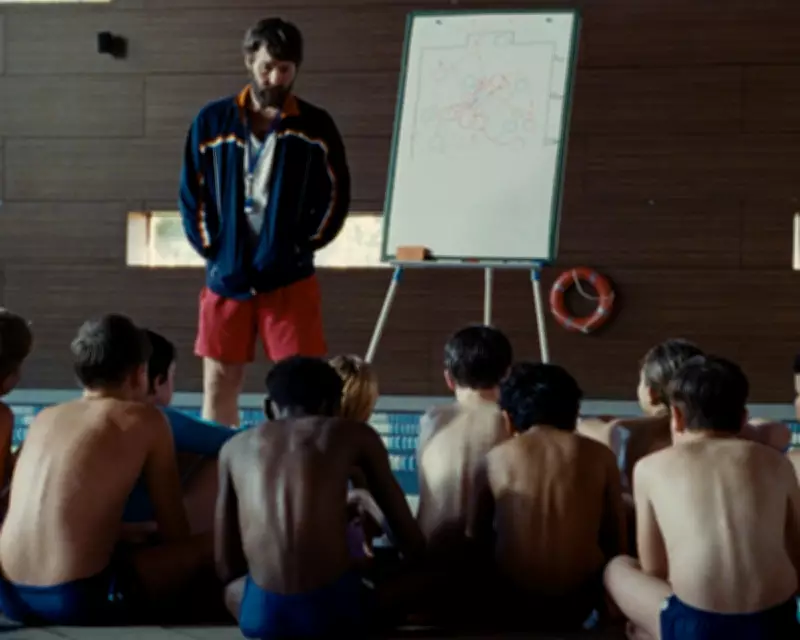
The Plague Review: Water Polo Camp's Brutal Tween Hierarchy Explored
Charlie Polinger's debut feature film The Plague dives deep into the concealed psychological depths of a boy's water polo training camp set in the summer of 2003. With a Fincher-like intensity, Polinger meticulously scopes out the brutal, animal-like hierarchy that governs these young athletes, driven by braggadocio, bullying, hazing, and gaslighting.
A Stylistically Sharp Descent into Tween Hellscape
From the stunning initial submerged shot of a pool glittering like a starfield, Polinger brings impressive stylistic bite to this tween hellscape. The film's trenchant intent is reminiscent of David Fincher's work, capturing the raw, unfiltered environment where social laws of the jungle play out with vicious precision.
Latecomer Ben, portrayed by Everett Blunck, is thrown in at the deep end upon his arrival at the camp. Desperate to ingratiate himself with the cool crowd lorded over by the impish Jake, played by Kayo Martin, Ben aims to avoid the pariah status of house lummox Eli, portrayed by Kenny Rasmussen. Eli is supposedly afflicted with a made-up disease the brats dub "the plague," with anyone who touches him required to immediately scrub themselves to avoid symptoms of diminished brain function and terminal dorkiness.

Juvenile Initiation Rites and Unfiltered Raw Performances
The first hour of The Plague is fantastic, echoing the juvenile initiation rites seen in Lucile Hadžihalilović's work and featuring bursts of Larry Clark-esque wantonness in a drunken bin fire blow-out. Polinger demonstrates visual sharpness as he observes Jake's mob almost like a nature documentary, coupled with a keen ear for the nonsense piped direct from the 12-year-old imagination.
Conversations among the boys touch on topics ranging from 90s rock outfit Smash Mouth and pirate exclamations to the ethics of bestiality and how best to fake chopping off your own thumb. This dialogue adds a layer of authenticity to the film's exploration of tween psychology and social dynamics.
Flirting with Body Horror and Predictable Beats
Flirting with body horror, the film never quite resolves its suggestion that the plague could be psychosomatic, even if not quite real. As Ben gravitates toward the oddball corner, The Plague begins to succumb to predictable beats and divulges its influences too easily, such as framing Eli as a prepubescent Private Pyle and lifting its ending from Beau Travail.
Despite these narrative stumbles, the three young performers stand out in their unfiltered rawness. Everett Blunck captures Ben's clammily eager-to-please demeanor and increasing disturbance, while Kayo Martin intimidates despite his tiny stature. Kenny Rasmussen stretches a cartoon geek role into genuinely unsettling outsiderdom, supported by an ever-reassuring Joel Edgerton as coach Daddy Wags.
This film serves as a memorable education in the laws of the tween jungle, offering a stark look at the brutal social hierarchies that can emerge in youth sports environments. The Plague is available on digital platforms from 20 April, marking a compelling debut for director Charlie Polinger.