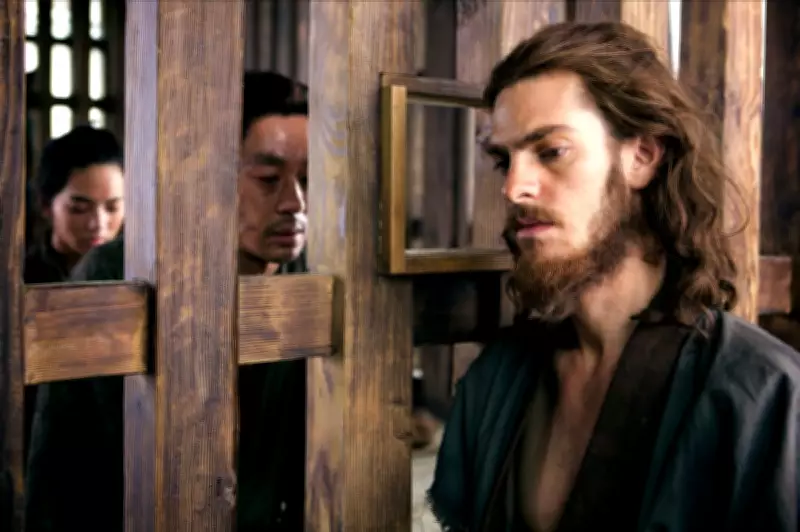
Scorsese's 'Silence': A 30-Year Journey into Faith and Doubt
Martin Scorsese's period drama Silence, released in 2016, represents a monumental achievement after nearly three decades in development. This epic film, set in 1640 Japan, delves into grand questions of spirituality and colonisation with intense fervour, standing as one of Scorsese's most intricate and thought-provoking works.
A Spiritual Quest in Feudal Japan
The story follows Jesuit missionaries Sebastião Rodrigues, portrayed by Andrew Garfield, and Francisco Garupe, played by Adam Driver, as they travel to Japan to search for their missing mentor, Cristóvão Ferreira, embodied by Liam Neeson. Upon arrival, they discover that Japanese Catholics, known as Kirishitans, must practise their faith in secret due to its status as heresy in Edo-period Japan. As Rodrigues witnesses the differences between Japanese beliefs and his own teachings, he begins to question his faith, praying ceaselessly yet hearing only silence from God.
The Long Road to Adaptation
Silence is based on Shūsaku Endō's novel, which has been adapted for the screen three times. The first adaptation was a 1971 Japanese film co-written by Endō himself, which screened at the Cannes Film Festival. A second, loose Portuguese adaptation titled The Eyes of Asia was nominated for the Golden Leopard at the Locarno Film Festival in 1996. Scorsese's version, much like its predecessors, has become a lesser-known gem within his acclaimed filmography, yet it remains a powerful exploration of spiritual themes.

Cinematic Mastery and Spiritual Ambiguity
Working with cinematographer Rodrigo Prieto, Scorsese employs overhead and tracking shots to evoke a sense of God's watchful gaze. However, when framed against the majestic landscapes of south-western Japan, including towering mountains and crashing waves, the film subtly questions the presence of the divine in such a harsh environment. The narrative oscillates between quiet contemplation and plot-driven moments, mirroring the trembling faith of its characters.
Characters and Conflicts
Rodrigues offers clandestine masses and baptisms under cover of night, drawing parallels to early Christians in ancient Rome. His pride becomes evident when Kichijirō, a reluctant apostate played by Yōsuke Kubozuka, informs him that officials are offering 300 pieces of silver for his capture, a sum that far exceeds the 30 pieces Judas received for betraying Jesus. In contrast, the Kirishitans, led by elder Ichizo portrayed by Yoshi Oida, uphold their faith with humility despite inaccuracies in their practice.
Shinya Tsukamoto delivers a compelling performance as Mokichi, an earnest martyr whose devotion is tested by the relentless forces of nature, such as crashing waves and cicadas, which only amplify God's silence. Liam Neeson shines as Ferreira, capturing the character's spiritual fatigue with heartbreaking precision, while Issey Ogata brings menacing magnetism to the role of Inoue, the inquisitor who argues that Japan must outlaw Christianity to resist Western colonialism.
Themes of Colonialism and Faith
The film raises poignant questions about the justification of Japan's brutal prosecution of Christians, considering that Christianity was introduced to the country alongside firearms. Through its rich character portrayals and stunning visuals, Silence challenges viewers to reflect on the complexities of faith, doubt, and historical conflict, cementing its place as a profound cinematic experience.