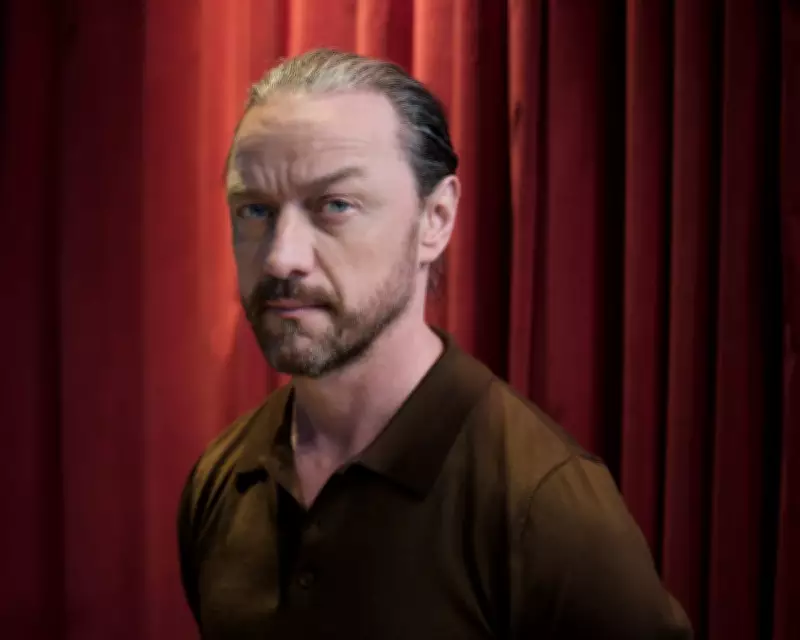
James McAvoy Confronts Scottish Stereotypes Through Directorial Debut
At the Glasgow Film Festival's prestigious closing night, James McAvoy presented his directorial debut, California Schemin', with palpable nervous energy. The X-Men star, who rose from a Glasgow council estate to Hollywood fame, personally introduced the film across all three screens at the Glasgow Film Theatre, demonstrating his enduring connection to his roots.
A Film Born from Personal Experience
California Schemin' tells the remarkable true story of two Dundee friends, Gavin Bain and Billy Boyd, who posed as Los Angeles rappers to secure a major record deal after being dismissed as "the rapping Proclaimers" by London talent scouts. McAvoy, 46, reveals this narrative resonated deeply with his own experiences facing bias in the entertainment industry.
"With my accent, I've had that experience where I'm suddenly no longer a person with infinite possibilities and potential – I am 'that Scottish person'," McAvoy explains. "I'm reduced to a noise that comes out of my mouth." He acknowledges his privilege as a successful white male actor but emphasizes the broader issue of limited representation.

Challenging Industry Perceptions
Despite a celebrated 30-year career featuring roles in Atonement, Split, and the X-Men franchise, McAvoy notes he has played only "four or five Scottish people" professionally. He criticizes the industry's narrow view of Scottish storytelling, which often focuses exclusively on themes of "unemployment, drug abuse, alcohol abuse, domestic abuse, all the fucking abuse."
"I do want to tell stories about working-class people with backgrounds that I recognise and limited horizons," McAvoy states. "But I don't know why they can't be entertaining. I don't know why they can't be adventures."
The Making of California Schemin'
The film features breakthrough performances from Séamus McLean Ross and Samuel Bottomley as Bain and Boyd, with Lucy Halliday playing Boyd's girlfriend Mary. McAvoy's sister, Joy McAvoy, makes a cameo appearance. The director worked closely with the real Billy Boyd, who contributed to the film's reconciliation scene.
Boyd observed McAvoy's intense commitment as a first-time director: "This wasn't just a star doing something on the side because he's Scottish – he was trying to make this the best possible film he could." He noted McAvoy's genuine approach made people forget his Hollywood status.
Systemic Issues in Scottish Filmmaking
McAvoy identifies deeper structural problems in Scotland's film industry, noting that only about five Scottish actors – including Gerard Butler, Ewan McGregor, Karen Gillan, Richard Madden, and himself – can reliably greenlight projects. "And we're all over 35 and only one of them is a woman," he points out. "Where's that 21-year-old movie star?"
The actor-director emphasizes the need for greater investment, acknowledging Screen Scotland's efforts while calling for more substantial support to meet the cultural needs of Scotland's population. "I don't think we make enough to be able to satisfy the cultural needs of the 6 million people that live in this country," he argues.
Personal Reflections and Future Directions
McAvoy reflects on his own journey from Drumchapel, where he was raised by his grandparents, to international stardom. He credits teachers at his secondary school with inspiring his performance career and maintains connections through educational initiatives, including funding a bursary at the Royal Conservatoire of Scotland.
Now navigating fatherhood in his 40s – he has a teenage son with ex-wife Anne-Marie Duff and a younger son with current wife Lisa Liberati – McAvoy notes the challenges of pursuing new creative directions later in life. "I'm getting all that first-timer stress in my 40s," he admits, describing sleepless nights during filming.
Looking ahead, McAvoy expresses interest in exploring other underrepresented Scottish stories, mentioning the Highland clearances as potential subject matter. His fundamental mission remains clear: expanding the range of narratives told about Scotland and challenging the stereotypes that have long constrained its creative expression.