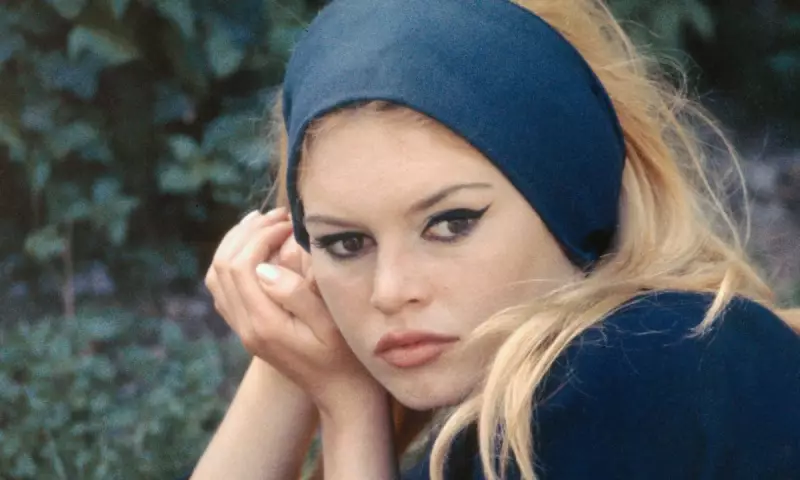
The world of cinema and activism has lost one of its most iconic and contentious figures. Brigitte Bardot, the French screen legend who became a global sex symbol before reinventing herself as an outspoken animal rights campaigner, has died at the age of 91.
From Parisian Ballerina to Global Film Icon
Born in Paris in 1934, Bardot's path to stardom began in the arts. A talented dancer, she secured a place at the prestigious Conservatoire de Paris. Her modelling career, however, catapulted her into the public eye, with a cover appearance on Elle magazine at just 15 years old. This exposure led to film roles and a fateful meeting with director Roger Vadim, whom she married in 1952 after turning 18.
Her early film work included a role opposite Dirk Bogarde in the 1955 UK hit Doctor at Sea. However, it was Vadim's 1956 film And God Created Woman that transformed Bardot into an international sensation. Her portrayal of a free-spirited teenager in Saint-Tropez cemented her image as the ultimate "sex kitten" and made her a front-rank star.

Bardot's influence extended far beyond cinema. She became a muse for intellectuals like Simone de Beauvoir and inspired artists including a young John Lennon and Paul McCartney. In a significant national honour, she was chosen as the model for Marianne, the symbol of the French Republic, in 1969.
A String of Cinematic Triumphs and a Secret Hit Song
Throughout the 1960s, Bardot starred in a series of acclaimed films. She worked with directing giants such as Henri-Georges Clouzot in The Truth, Louis Malle in A Very Private Affair, and Jean-Luc Godard in Contempt (Le Mépris). She also ventured into Hollywood, appearing in movies like Viva Maria! with Jeanne Moreau and the western Shalako alongside Sean Connery.
Parallel to her acting, Bardot had a music career. She recorded the original version of Serge Gainsbourg's famously sensual song Je T'Aime... Moi Non Plus, which he wrote for her during their affair. Fearing scandal, she asked him not to release it; he later re-recorded it with Jane Birkin, creating a global smash hit.
A Dramatic Pivot: Retiring from Film for Activism and Controversy
In 1973, at the age of 39, Bardot retired from acting, citing the immense pressures of fame. She later told The Guardian she was "never really prepared for the life of a star." Her focus shifted decisively to animal welfare. She protested against seal hunts in 1977 and founded the Brigitte Bardot Foundation in 1986, campaigning vigorously on issues from dolphin slaughter in the Faroe Islands to the treatment of stray dogs in Romania.
However, her activism became intertwined with increasingly controversial political views. She voiced strong support for France's far-right Front National (now National Rally) and made a series of incendiary statements about immigration and Islam. These comments led to multiple convictions for inciting racial hatred, including one in 2003 related to her book A Cry in the Silence.
Bardot was married four times: to Roger Vadim (1952-1957), actor Jacques Charrier (1959-1962, with whom she had a son, Nicholas), German millionaire Gunter Sachs (1966-1969), and finally to former Front National adviser Bernard d'Ormale, whom she married in 1992. Her life, marked by extraordinary fame, a dramatic second act, and enduring controversy, leaves a complex and indelible legacy.