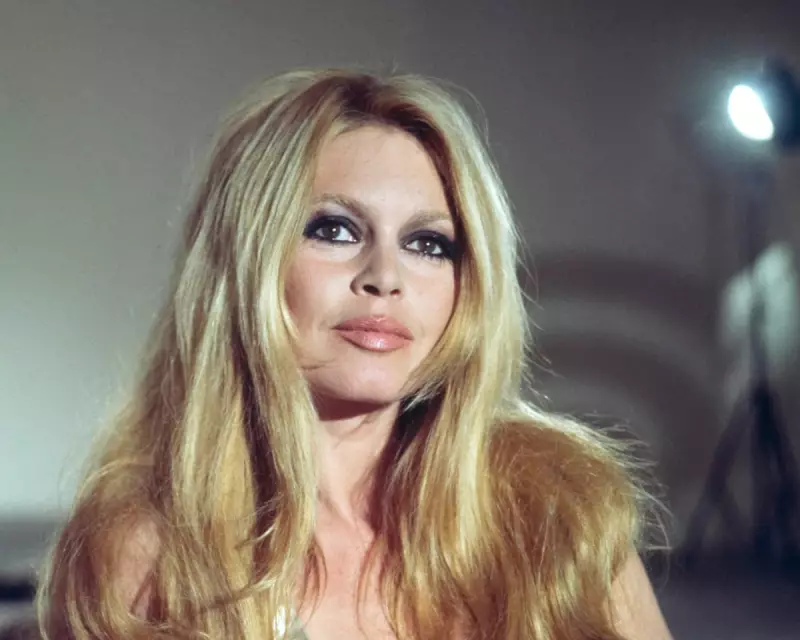
The world of cinema and animal welfare has lost one of its most iconic and controversial figures. Brigitte Bardot, the French film star who became a global sex symbol in the 1950s and later a fierce animal rights campaigner, has died at the age of 91. Her journey from the provocative star of And God Created Woman to the founder of a major animal protection foundation defined a life lived entirely in the public eye.
From Parisian Debutante to Global Sex Symbol
Bardot's path to stardom began early. Born in Paris in 1934 to a prosperous industrialist, she underwent rigorous ballet training. Her appearance on the cover of Elle magazine in March 1950 caught the eye of Roger Vadim, a young director's assistant. He famously told her mother he wanted to take her daughter and "make it seem as if she has gone completely off the rails." They married when she was 18, and Vadim meticulously crafted her screen persona.
International fame erupted in 1956 with Vadim's film Et Dieu … Crea la Femme (And God Created Woman). Bardot played a sensual, free-spirited young woman in Saint-Tropez, a role that resonated powerfully in a post-war world. Vadim's genius was presenting passion as youthful and playful, a departure from the mature, often tragic femmes fatales of the era. She was marketed not as a goddess, but as a "kitten" – an adolescent beauty with tousled blonde hair, gingham dresses, and a rebellious energy.

Bardot was famously self-deprecating about her acting talent, stating she "reacted to, rather than acted with" her leading men. The film's promotion was bolstered by very public gossip about her affair with married co-star Jean-Louis Trintignant. It was a smash hit, particularly in the United States, making her a valuable French export.
A Personal Life That Captivated a Nation
If her professional life was sensational, her private life was a national obsession. Her 1957 divorce from Vadim unlocked a relentless narrative of marriages, affairs, and public despair. At one point, a survey claimed 47% of all French conversation was about Bardot, eclipsing politics at 41%.
Her romantic list included singer Sacha Distel, actor Jacques Charrier (whom she married in 1959 after an accidental pregnancy), and German photographer Gunter Sachs, who famously wooed her with 1,200 roses dropped by helicopter. A passionate 1967 fling with musician Serge Gainsbourg produced several hit songs, including Harley Davidson, and he dedicated the album Initials BB to her.
This personal tumult often spilled over into crisis. Aged 26, she was found in a coma after taking sleeping pills over heartbreak with actor Sami Frey. The incident highlighted her profound vulnerability beneath the glamorous facade.
Retirement and Reinvention as an Activist
Weary of stardom, Bardot retired from film in 1973 before her 40th birthday, having made around 40 movies. She had already begun her second act: animal rights activism. Her campaigning in the early 1960s led directly to France's "BB law," mandating more humane abattoir practices.
In 1977, she travelled to the Arctic to protest the seal cull. Her commitment became all-consuming. In 1986, she established the Brigitte Bardot Foundation for the Welfare and Protection of Animals, funded by auctioning her jewellery and personal treasures, including her wedding dress and a £100,000 diamond.
She lived reclusively in her Saint-Tropez properties, La Madrague and La Garrigue, which became sanctuaries for rescued animals. Here, she wrote bestselling memoirs, Initiales BB (1996) and Pluto’s Square (1999), which were frank about her personal struggles but also revealed controversial conservative views on immigration and homosexuality.
Controversial Later Years and Lasting Legacy
Her later years were marked by legal battles. Her anti-immigration and anti-Muslim statements, partly stemming from her opposition to halal slaughter, resulted in multiple convictions and fines for inciting racial hatred. In 1992, she married Bernard d'Ormale, an adviser to National Front leader Jean-Marie Le Pen, a union that cemented her political alignment.

Despite the controversies, her cultural impact remains undeniable. She was the personification of a new, sexually liberated femininity in the 1950s, analysed by Simone de Beauvoir. In 1968, her features were used as the model for Marianne, the national symbol of France. And through her foundation, she channeled her immense fame into a forceful, decades-long campaign for animal welfare.
Brigitte Bardot was a woman who lived many lives: the manipulated ingénue, the global sex symbol, the tragic romantic, and the uncompromising activist. She is survived by her husband, Bernard d'Ormale, and her son, Nicolas Charrier. Her legacy is as complex and unforgettable as the woman herself.