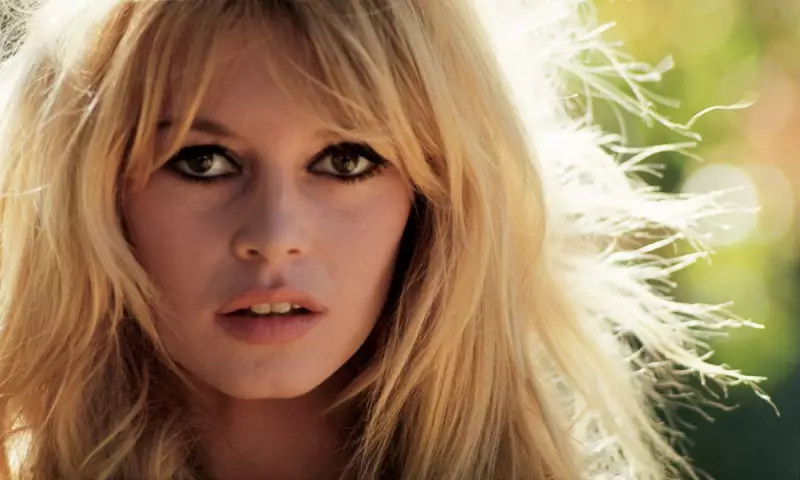
The world has bid farewell to one of cinema's most potent and enduring symbols of sexuality and modernity. Brigitte Bardot, the French actress and animal rights campaigner, has died at the age of 91. Her journey from a global screen siren who defined 1950s allure to a fiercely outspoken political activist encapsulates a life lived entirely in the public eye, marked by both adoration and intense controversy.
The Birth of a Global Phenomenon
Long before the sexual revolution and the French New Wave, Brigitte Bardot emerged as the embodiment of a new, liberated femininity. In the conservative 1950s, she became France's most sensational cultural export, a zeitgeist force that captivated audiences worldwide. Her impact was so profound that she was often likened to the French Beatles, a symbol of youthful rebellion and shameless sensuality.
Her spectacular breakthrough came in 1956 with the film And God Created Woman, directed by her then-husband Roger Vadim. At just 22, Bardot's portrayal of a devastatingly desirable blonde, complete with a signature hip-swaying walk, redefined screen sexiness for a generation. The film's success made her an international star, particularly in puritanical America, where her overt sexuality was both shocking and irresistible.

A Career Beyond the Pin-Up Image
Despite being perpetually framed by the media as a 'man-eater', Bardot's film career contained significant depth often overshadowed by the prurient fascination with her personal life. She collaborated with serious auteurs, delivering powerful performances that critiqued the very celebrity machine that created her.
In Louis Malle's Vie Privée (1961), she played a character mirroring her own existence, exploring the psychological toll of hysterical fame with a prescience that foreshadowed the fate of figures like Princess Diana. She starred for the legendary Henri-Georges Clouzot in La Vérité (1960), a gripping courtroom drama where her character's defiant final speech denounced societal hypocrisy.
Perhaps her most famous arthouse collaboration was with Jean-Luc Godard in Le Mépris (1963), though the director's use of her nakedness as a critique of commercialism has often been viewed as cynical. A more playful take on her icon status came from Agnès Varda in Le Bonheur (1965), which wittily acknowledged Bardot's inescapable appeal.
The Sharp Turn to Activism and Controversy
After retiring from films in the mid-1970s, Bardot embarked on a second, fiercely combative act as an animal rights campaigner. This passion was reportedly ignited in 1965 after an incident in Meribel where a dog she was minding bit French President Valéry Giscard d'Estaing. Her extravagant apology forged an unlikely political alliance.
She founded the Brigitte Bardot Foundation and campaigned relentlessly against practices like the Canadian seal hunt. However, her activism curdled into wider political controversy in the 21st century. Her advocacy morphed into attacks on halal meat and vehement criticism of what she termed the 'Islamicisation' of France, leading to convictions for inciting racial hatred and a profound rupture with her public image.
This marked a stark departure from her earlier status as a national treasure, admired even by Charles de Gaulle. The French press, which once lovingly called her 'BB' (bébé), later used the pun 'BB-phoque', referencing both her initials and her seal campaign.
The Legacy of an Icon
Brigitte Bardot's life was a paradox. She was a symbol of sexual liberation who later embraced deeply conservative views. She was a global star who loathed the media intrusion that made her famous, suffering greatly from the relentless attention. She was an actress of genuine charisma and ingenuous charm, as seen in films like En Cas de Malheur (1958) opposite Jean Gabin, yet her talent was frequently obscured by her image.

Her story is a compelling chronicle of post-war fame, examining the price of celebrity and the complex evolution of a public figure. From the scandalous starlet who titillated the world to the uncompromising activist who divided it, Brigitte Bardot remained, for over five decades, impossible to ignore. Her death closes the chapter on one of the most sensational and contradictory lives of the 20th century.