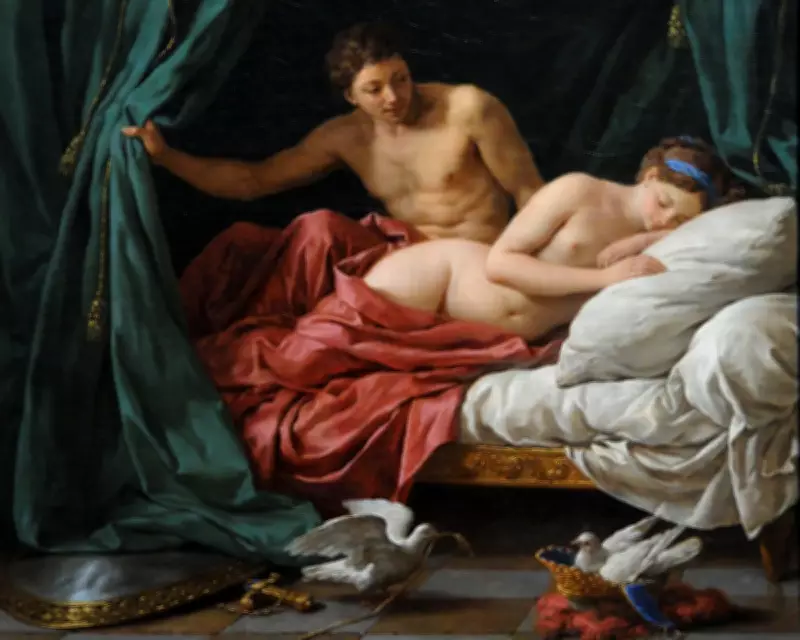
Across the world, people are having less sex. In Britain, the US, France, and Australia, frequency of sex has declined, though Denmark bucks the trend. In 2018, the Atlantic declared a "sex recession," and the Telegraph warned that "sex is dying out." As an ancient historian focusing on the history of sex, this drought fascinates me, especially since some articles hark back to ancient Greece. But antiquity was no bastion of sexual freedom, particularly for women.
Ancient Views on Female Sexuality
While modern society often sees men as the hornier sex, ancient Greeks and Romans believed the opposite. Women were considered "nymphomaniacs" with voracious sexual appetites that needed control. This perception continued into the medieval period. One manifestation was the medical theory of the "wandering womb." According to the Hippocratic Corpus, the womb could float freely, causing health issues like loss of speech or suffocation if it lodged under the diaphragm. The cure? Regular sex to keep the womb moist and in place.
This theory was taken seriously. In the second century, Apuleius defended himself against accusations of using magic to procure a wife by arguing she married him to cure her wandering womb. Thus, sex was a health matter, but it was prescriptive: penile penetration with a husband, with no advice on female pleasure, assuming women's rampant desire sufficed.
The Shift in Perception
Over time, the image of women's desire changed. Modern history often depicts women as needing to "lie back and think of England," as sex historian Kate Lister noted. Katherine Angel's 2021 book Tomorrow Sex Will Be Good Again highlights how male sexuality is framed as biologically driven to spread seed, while female desire is buried deep. Both ancient and modern views flatten the complexity of sexuality.
Evidence of Female Pleasure
Despite restrictions, women found ways to explore pleasure. The poet Sappho wrote of shared pleasures with women, and an anonymous Roman woman carved a poem in Pompeii about kisses and embraces. Ancient dildos, like the Vindolanda phallus, were used by women. However, oral sex was often insulted, and the orgasm gap likely existed, as most women cannot orgasm from penetration alone.
Modern Implications
Today, factors like economic stress and anxiety reduce sex frequency. As Emily Nagoski emphasized, pleasurable sex depends on context. The problem may not be libido but a society that restricts sexual expression. Women like Sulpicia, Heraeis, and Sophia sought to fulfill desires despite cultural taboos. Cassia tried to make adultery illegal for men, highlighting awareness of double standards.
Rather than asking how often people have sex, we should ask how often they have good sex. As the poet Nossis said, sex can be sweeter than honey. By learning from history, we can honor women's diverse desires and promote sexual agency.