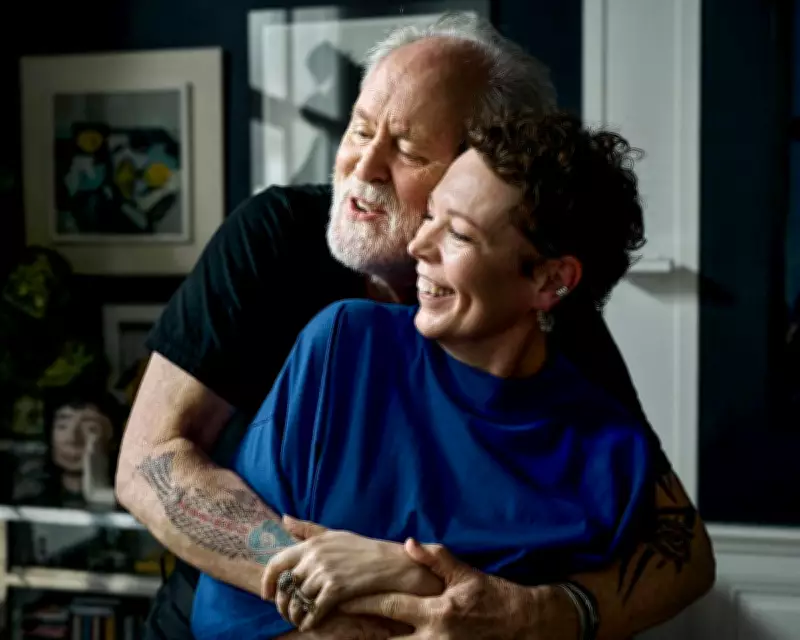
In the new film Jimpa, Olivia Colman plays Hannah, a woman who leaves Adelaide with her husband and 16-year-old child to visit her father, Jimpa (John Lithgow), in Amsterdam. The teenager, Frances, who is trans, announces they want to move to the Netherlands for school. Hannah and her husband respond with thoughtful calm, but Jimpa brings enough drama for everyone, having left his family 40 years ago for a fuller queer life.
The film revels in revealing Jimpa's lifestyle. Director Sophie Hyde recalls Lithgow insisting, 'Jimpa has to be naked!' Lithgow, now 80, appears nude often, sometimes for life drawing. Hannah is a film-maker trying to sell an autobiographical feature about two parents in the 80s: the dad comes out as gay, but the couple remain happily together as platonic co-parents, even after he leaves the country. Producers ask, 'Where the hell would be the drama in that?' juxtaposed against the family history on screen.
Loving Kindness vs. Conflict
Hyde ponders the question of drama in familial love. 'Can we ask our characters to respond with loving kindness, when usually our instinct is instant conflict? How do we lovingly disagree with each other? I think it's a very pertinent question right now.' The film explores intergenerational queerness, filial disappointment, and fabulous septuagenarians who refuse to grow up, all in dialogue with whether the world has lost its ability to conciliate.
Colman speaks from LA, Hyde from Adelaide, next to her child Aud Mason-Hyde, who plays Frances. 'I spent my 19th birthday on this set, having a fake argument with my fake mum, directed by my real mum,' they say. Their character is more observant than outspoken. 'I had to exercise a lot of restraint.'
Parallels with Real Life
Frances and Jimpa have an intensely affectionate relationship, but there's indulgent peace-keeping from young to old. Mason-Hyde says, 'To be a young trans person, you are constantly asked to belittle your needs for the sake of being palatable. Other people's reactions can be hateful, but it's somehow the responsibility of young trans people to soothe everyone.'
Colman lost her father shortly before shooting. 'My dad and I fought a lot. We adored each other, but oh my God, did we fight. I learned a lot from pretending to be someone else, from being with Sophie/Hannah, just to listen and shut up. I liked being that nicer person.' Lithgow reminded her of her father. 'There were moments when a scene would make me wish I'd been calmer with my dad. He would have loved this film. He'd have sat and cried all the way through it.'
Sexual Awakenings
Hyde's last film was Good Luck to You, Leo Grande. In Jimpa, each character has a sexual encounter that changes them. 'I didn't want Jim to not have a sexuality because he was older,' Hyde says. 'I wanted him to be a virile human being.' Frances arrives in Amsterdam intellectualizing queer life but with no lived experience. When they have sex with an older girl, it's groundbreaking to watch them decide to be vulnerable.
Hannah, in an open marriage, has a thing with her father's amanuensis, a younger bi man. Colman says she liked the script and characters. 'Then I met Sophie and I really liked Sophie.' Jim has a casual encounter with calamitous consequences. Hyde worried it might read as a moral message, but her child interjects: 'The kind of sex people have is the least interesting thing about them? Through a queer lens, the sex we have is instrumental to who we are.'
Critical Response
Colman doesn't read reviews. 'I'm not very thick-skinned. I just thought it was a beautiful story about kind people and who the fuck would have a problem with that?' Mason-Hyde adds, 'Oh, just me being here seems to merit backlash. The basics of who you are is being debated. It's awful and a disservice to art.'
Jimpa is on digital platforms in the UK, Australia, and the US now.