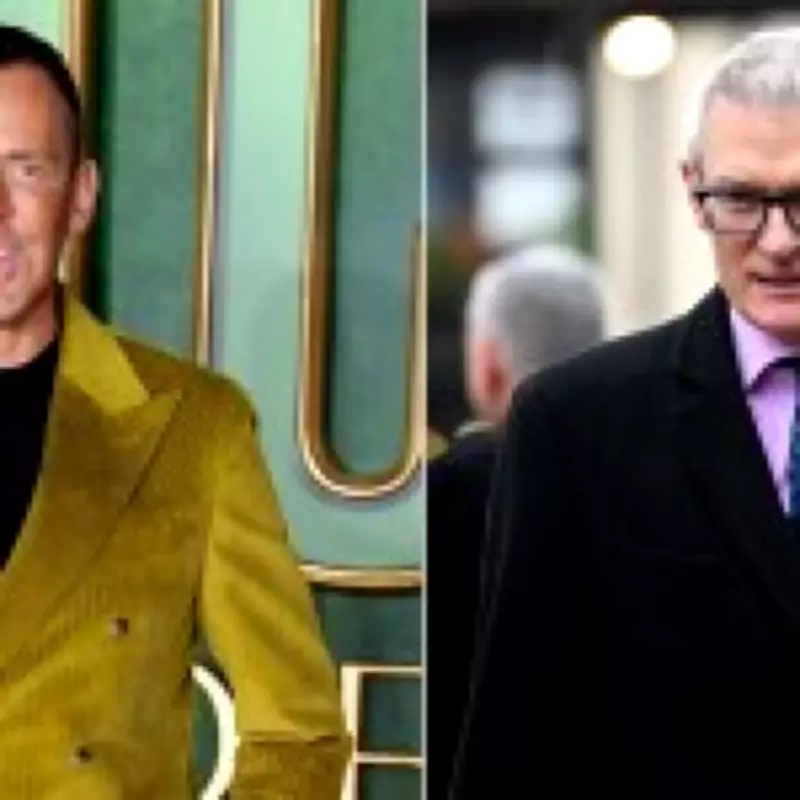
Jeremy Vine Condemns BBC's Handling of Scott Mills Dismissal as 'Unfair'
BBC Radio 2 presenter Jeremy Vine has openly criticized the national broadcaster's decision to fire his colleague Scott Mills, labeling the abrupt termination as 'unfair' and questioning the consistency of the BBC's disciplinary actions. The controversy erupted after news broke that Mills had been sacked over allegations related to his personal conduct, specifically concerning a historic relationship dating back more than a decade.
Allegations and BBC Statement
According to reports, Mills was dismissed following allegations tied to a historic police investigation into serious sexual offences against a minor, though the case was dropped approximately seven years ago due to insufficient evidence. The BBC confirmed Mills' departure with a brief statement: 'While we do not comment on matters relating to individuals, we can confirm Scott Mills is no longer contracted to work with the BBC.'
Vine, during his daily Radio 2 show, expressed shock and confusion over the handling of Mills' exit, noting that the news came as a complete surprise to staff at the station. He emphasized that Mills is a popular figure within the BBC and described the situation as a 'very painful episode' for those who know him.
Vine's Critique of Inconsistency
In a pointed critique, Vine highlighted what he perceives as inconsistencies in the BBC's approach to misconduct cases. He referenced the case of disgraced BBC News presenter Huw Edwards, who received a six-month suspended sentence after pleading guilty to making indecent images of children two years ago. Vine questioned why Edwards 'couldn't be sacked because he was in a fragile mental state,' while Mills, who also has a history of anxiety and depression, did not receive similar consideration.
'There is a thought here that what the BBC has done has sacked Huw Edwards, they wish they got in earlier with Huw and they decided to treat Scott how they wish they'd treated Huw. Which would be a bit unfair would it not?' Vine remarked during his broadcast.
Legal Context and Public Reaction
Vine further argued that 'there hadn't been a crime' in Mills' case, as he was never charged with any offence, and the police investigation had been closed years prior. He suggested that the BBC might be overcompensating for past failures in handling Edwards' behavior by taking a harsher stance with Mills.
The discussion on Vine's show also included insights from the BBC's media and culture editor Katie Razzell, who revealed that she had posed a series of questions to BBC bosses regarding their awareness of the police investigation into Mills prior to his dismissal.
Broader Implications for Broadcasting
This incident raises significant questions about:
- The fairness and transparency of disciplinary processes within major broadcasters.
- The handling of historic allegations versus recent misconduct.
- The impact of mental health considerations in employment decisions.
- Public trust in media institutions when dealing with sensitive personal conduct issues.
As the story continues to develop, it underscores the challenges faced by media organizations in balancing accountability with fairness, particularly in cases involving complex personal histories and unproven allegations. Vine's outspoken comments have sparked a wider debate about consistency and justice in the broadcasting industry.