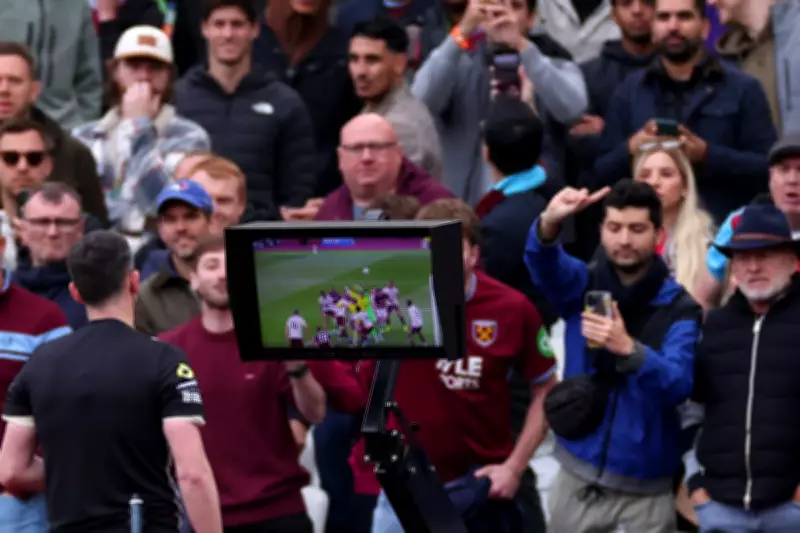
Chris Kavanagh watched replays of West Ham's late equaliser against Arsenal on Sunday, ultimately deciding to rule it out due to Pablo's foul on David Raya. The incident, which took nearly four minutes to resolve, has reignited the debate over Video Assistant Referees (VAR) in football.
The VAR Process in Action
Darren England, the VAR official, instructed referee Chris Kavanagh to delay the restart as multiple replays were reviewed. "Just keep delaying," England said, as the control room examined the incident from various angles. The replay operator asked, "Do you want to see it at full speed?" to which England agreed. They watched Pablo's foul on David Raya repeatedly, using split screens and different angles. After two minutes and 35 seconds, Kavanagh was sent to the monitor, where he watched 17 replays before ruling out the goal for a foul.
A Different Game in the Control Room
VAR officials watch the game in silence, a stark contrast to the noisy stadiums. This sanitised environment removes the context that on-field referees rely on, such as crowd mood and player tensions. Refereeing has always been subjective, based on tacit consensus rather than strict enforcement of every law. VAR undermines this tradition by scrutinising incidents to the point of absurdity.
Commercial Forces at Play
Despite 76% of Premier League fans wanting VAR scrapped, according to a Football Supporters' Association survey, the technology is expanding. This summer's World Cup will extend VAR to cover second yellow cards and corner kicks, though the Premier League may opt out of the latter. The reason? VAR generates controversy, engagement, and revenue. Interruptions formalise stoppages, paving the way for in-play advertisements. The technology produces endless debates, television segments, and newspaper columns, making it a "golden goose" for broadcasters.
The Human Element
Howard Webb, chief of Professional Game Match Officials, defended the process, praising his team's diligence. However, critics argue that officiating bodies will never advocate for less officiating. The solution is always more legislation, technology, and explanation, rather than streamlining the game. The muscle memory of traditional refereeing decisions has been delegated to technology, leaving fans confused about handball rules, contact in the box, and offside calls.
Conclusion
The VAR debate is not about right or wrong decisions, but about the nature of the sport. Football's authorities prioritise commercial interests over fan sentiment, embracing technology that keeps audiences watching, even if frustrated. As England told Kavanagh, "Just keep delaying," secure in the knowledge that the spectacle itself is the product.