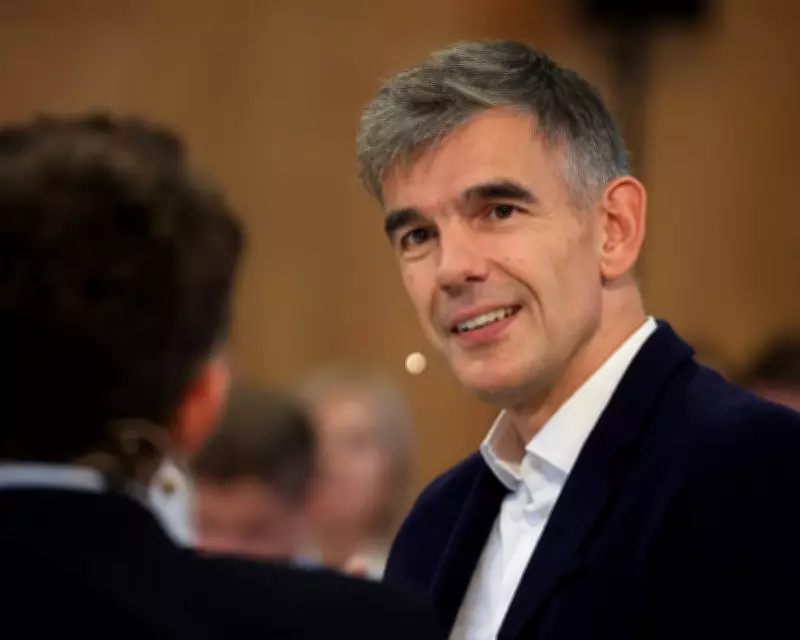
Former Google Executive Matt Brittin Appointed as New BBC Director General
Matt Brittin, the former top executive at Google for Europe, the Middle East, and Africa, has been officially named as the next director general of the BBC. This appointment comes at a pivotal moment for the corporation, as it engages in crucial discussions with the government to establish a sustainable future funding model.
Key Challenges and Strategic Support
Brittin, aged 57, steps into the role following a BBC board meeting that confirmed his selection. A former Olympic rower and avid fan of Doctor Who, he is viewed as a significant figure capable of immediately diving into high-stakes negotiations over the renewal of the BBC's royal charter. However, insiders have expressed concerns about his lack of editorial experience, particularly in handling the periodic crises that often arise within the organization.
To address this gap, the BBC is expected to create a new position of deputy director general, who will possess substantial editorial expertise. Additionally, a new head of BBC News will be appointed to bolster the leadership team. This move aims to provide Brittin with the necessary support to navigate the complex landscape of public broadcasting.
Background and Career Trajectory
Brittin's appointment follows the resignation of outgoing director general Tim Davie, who stepped down amid controversies including claims of bias and an apology for editing a speech by Donald Trump. Brittin, who also served as a non-executive director on the Guardian Media Group's board, joins the BBC as it identifies major cost-cutting measures. He will likely face difficult decisions regarding staffing levels and programming as part of these efforts.
His career began in business strategy consulting, followed by a brief stint at publisher Trinity Mirror, now known as Reach, before moving to Google in 2007. After leaving Google last year, Brittin took what he described as a "mini gap year," allowing him to prepare for this new challenge. Like his predecessor, he is an advocate for artificial intelligence, encouraging the television industry to embrace and learn from this technology.
Funding Pressures and Technological Integration
The BBC's traditional licence fee model is under increasing pressure, with more households opting not to pay. The corporation's leadership is pushing for reforms that would result in more homes contributing smaller amounts. Brittin's extensive experience at Google will be instrumental as the BBC plans to leverage a new tech division to achieve significant cost savings and forge a renewed relationship with YouTube, which is owned by Google.
YouTube has become a dominant platform, with UK viewers increasingly using televisions to access its content. While it offers opportunities to reach broader audiences, there are concerns within the BBC about ceding too much control to big tech by placing excessive content on the platform. Ministers and media regulator Ofcom are advocating for greater prominence for public service broadcasters like the BBC on YouTube.
Diversity and Leadership Considerations
Brittin's appointment means the BBC continues to await its first female director general. He emerged as the preferred candidate after several highly regarded women, including Charlotte Moore, Jay Hunt, and Alex Mahon, either withdrew from consideration or did not apply for the role. This highlights ongoing challenges in achieving gender diversity at the highest levels of leadership within the corporation.
As Brittin assumes his new position, he will focus on steering the BBC through a period of transformation, balancing financial constraints with the need to maintain editorial integrity and public trust. His background in technology and strategic management positions him uniquely to address these multifaceted challenges.