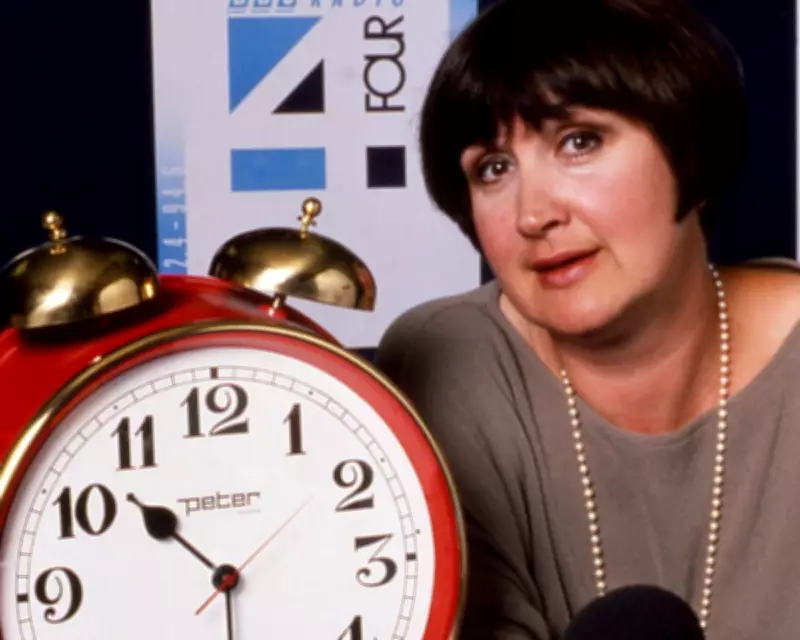
Jenni Murray's Transformative Impact on BBC Radio
The broadcasting world mourns the loss of Jenni Murray, the legendary presenter who redefined BBC Radio 4's Woman's Hour during her remarkable tenure. Murray passed away at the age of 75, leaving behind an indelible legacy that transformed how women's issues were discussed on national radio.
From Today Programme to Woman's Hour Revolution
Before taking over Woman's Hour in 1987, Murray had already established herself as a formidable journalist. She joined the BBC in Bristol in 1973, working as a TV reporter and presenter for South Today, bringing solid news credentials to her future role. However, her experience on the Today programme in the 1980s revealed the limitations of traditional formats, where gender roles were rigidly defined and opportunities for women were constrained.
Woman's Hour became Murray's canvas for innovation. She completely reshaped the programme in her own image, rejecting preconceived notions about what constituted appropriate content. Under her leadership, the show became a space where serious political discussions could seamlessly transition to conversations about gardening, followed by campaigns against domestic abuse - all within a single broadcast.
The Voice That Connected Millions
Listeners often described Murray's voice as "mellifluous" and "rounded," but this characterization missed the deeper truth about her broadcasting journey. When she first joined the BBC, the main barrier wasn't a lack of talent but rather not sounding "posh enough" by traditional standards. Murray, whose father was a civil engineer and mother a civil servant, mastered the required delivery while maintaining her authentic connection with audiences.
Her warmth became a daily presence in British kitchens after the show moved to morning broadcasts in the early 1990s. This warmth was perfectly balanced with natural curiosity and sharp wit, creating a listening experience that was both comforting and intellectually stimulating.
Fearless Interviewing and Feminist Solidarity
Murray's interviewing style became legendary for its fearlessness and insight. Her conversation with Margaret Thatcher after the former prime minister left office revealed Murray's unique approach. When she asked Thatcher about experiencing sexism in public life - citing specific instances like Alan Clark's comments about her ankles - the former PM appeared genuinely shocked, suggesting she hadn't been aware of such remarks.
Perhaps even more revealing was Murray's interview with Hillary Clinton, where she directly addressed Bill Clinton's infidelity. Clinton's response about marriage being based on friendship rather than just sex felt authentic and human, demonstrating Murray's ability to elicit genuine responses from even the most guarded public figures.
Murray maintained an instinctive solidarity with younger feminists, regularly featuring emerging voices on her programme. A 2013 episode featuring Caroline Criado-Perez campaigning for women on banknotes, Laura Bates of the Everyday Sexism project, and chef Allegra McEvedy discussing feminist approaches to hangover foods exemplified Murray's commitment to relevant, impactful conversations.
Personal Challenges and Audience Connection
In 2006, Murray faced her own battle with breast cancer, an experience she found difficult to discuss publicly yet felt compelled to share with her audience. "I couldn't just disappear to have a mastectomy," she explained in a Radio Times interview, highlighting the unique bond she had developed with listeners over decades. This relationship was truly reciprocal - Murray gave her audience honesty and insight, and they responded with loyalty and trust.
Jenni Murray's legacy extends far beyond her broadcasting achievements. She created a space where women's experiences were valued, where serious journalism coexisted with everyday concerns, and where authenticity always triumphed over convention. Her voice may have fallen silent, but her impact on British broadcasting and feminist discourse will resonate for generations to come.