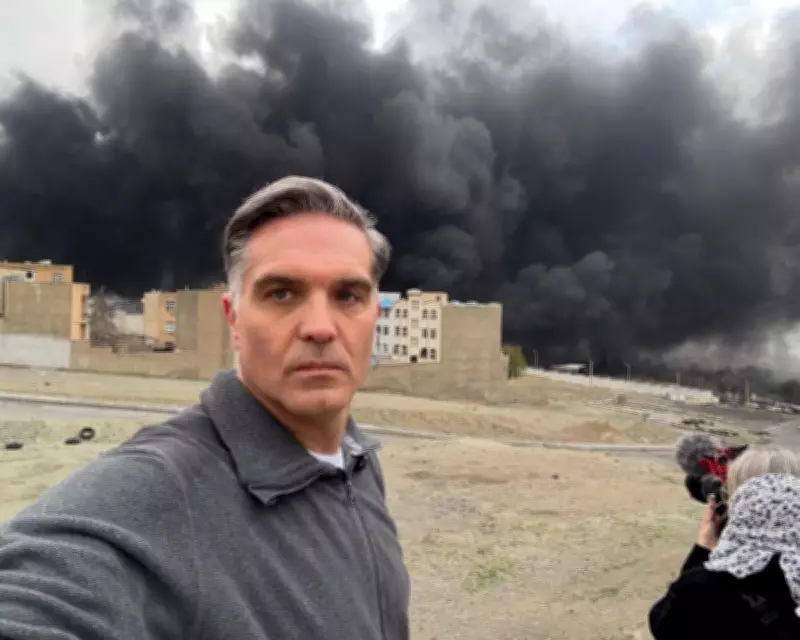
Frederik Pleitgen, CNN's senior international correspondent, recently returned from a week-long assignment in Iran, where he was the only western television journalist granted a visa to report from the country. His experience, detailed in an interview with the Guardian, sheds light on the complexities of war reporting under intense scrutiny and government oversight.
A Return to Normalcy After High-Stakes Reporting
After spending eight days in war-torn Iran, Pleitgen returned to his home in Berlin for a quiet Thursday evening with his family, walking his two Rhodesian Ridgeback dogs and spending time with his teenage children. This moment of normalcy followed a high-stakes reporting trip that saw him navigate anti-aircraft fire, explosions, and significant media criticism.
The 49-year-old journalist, who also serves as CNN's Moscow correspondent, is no stranger to hostile territories, having reported from conflict zones like Ukraine, Iraq, Afghanistan, and Syria. However, he noted that his wife had a "bad feeling" about this particular trip to Iran, though he ultimately couldn't pass up the reporting opportunity.
Navigating Criticism and Government Oversight
Pleitgen's presence in Iran with government permission drew criticism from some quarters, including a dismissive tweet from a member of the Trump administration. Some suggested he was doing propaganda for the Iranian regime, a claim CNN addressed by reminding viewers of the reporting conditions when he appeared on air.
"I can take the criticism. I think it's fine," Pleitgen said, acknowledging that in the current U.S. political climate, coverage often falls along party lines. "Even if there are restrictions, it's always better to be on the ground than to not be on the ground."
The Mechanics of Reporting in a Restricted Environment
While Pleitgen didn't have a government minder, he and producer Claudia Otto worked with a translator hired by CNN who was instructed by Iran's culture ministry not to take them to sensitive locations. They were required to inform authorities before visiting strike sites or areas with heavy Revolutionary Guard Corps presence.
"It was more restrictive this time than it had been in the past," Pleitgen noted, "but still, by and large, we could do everything that we wanted to do."
Safety Concerns and Reporting Challenges
The journalist described staying in a hotel in northern Tehran that was considered relatively safe because nearby police stations had already been bombed. Without air raid sirens or hardened shelters, their safety protocol involved moving to the bottom floor of the hotel whenever they heard jets overhead or bombing nearby.
Pleitgen contrasted the Iran conflict with the war in Ukraine, noting that the U.S. and Israel possess "the strongest and most modern air forces in the world" using precision munitions that can still cause significant collateral damage if coordinates are incorrect or outdated.
Coverage Limitations and Future Plans
While Pleitgen felt good about his war coverage, he expressed a desire to delve deeper into public sentiment toward the Iranian government. "There were very few people who were still out on the streets, and a lot of people are afraid to speak to you," he observed.
The correspondent plans to return to Iran as soon as possible, stating he would have stayed longer than eight days if possible. "I think it's important to be there and to see what's going on," he emphasized, highlighting the value of on-the-ground reporting despite the challenges and criticism.
Pleitgen's experience underscores the delicate balance journalists must maintain when reporting from conflict zones with government restrictions, while facing political criticism from multiple directions. His commitment to returning demonstrates the enduring importance of firsthand reporting in understanding complex international conflicts.