BBC's Flagship Today Programme Confronts Existential Crossroads
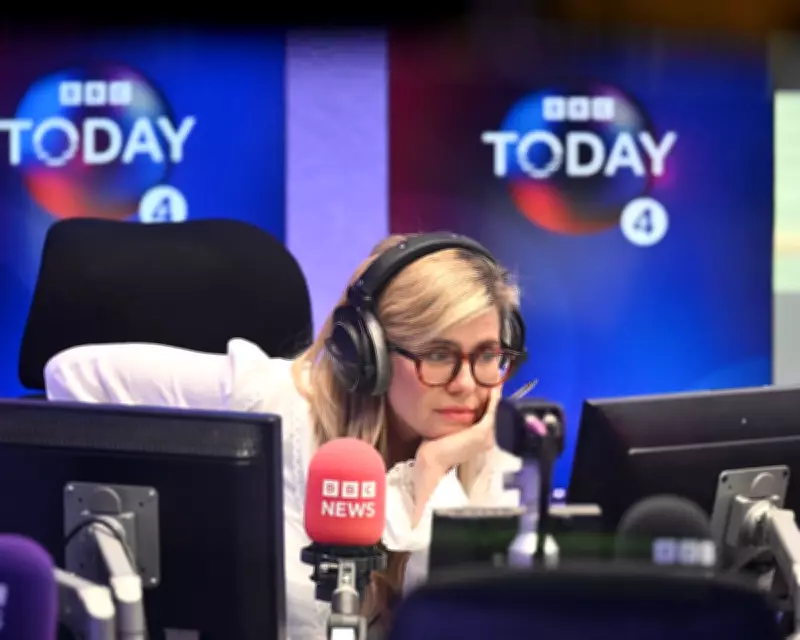
The BBC's venerable Radio 4 Today programme, which commands an audience exceeding 5 million weekly listeners, finds itself at a critical juncture as internal sources describe an "existential moment" for the long-running news institution. This pivotal moment arrives as the show simultaneously searches for both a new editor and presenter while navigating fundamental questions about its direction and relevance in today's rapidly evolving media environment.
The Changing Landscape of Broadcast Prestige
For decades, the Today programme represented the absolute pinnacle of achievement for British broadcasters, producers, and editors alike. Since its inception in the 1950s, the show has consistently strived to establish the daily news agenda, becoming synonymous with political accountability through its legendary 8:10 AM interview slot where ministers frequently stumble under rigorous questioning.
However, BBC insiders now openly question whether the programme retains the magnetic allure that once made it the ultimate career destination for top broadcasting talent. "There's one feeling that the Today programme is too staid and too structured," revealed one BBC insider. "The counter-argument is that's exactly what people expect and that's why 5-6 million people are listening to it."
Presenter Priorities Shift in Podcast Era
The soul-searching intensified significantly in January when Amol Rajan announced his departure from the show to focus on online content creation while maintaining his popular Radical podcast. This move highlighted a growing reality within contemporary media: presenters now possess alternative platforms and opportunities that compete with traditional broadcasting roles.
"Amol is a really good case in point of somebody who's smart and good and has got this enormous audience on Radio 4, but is actually just more interested in his podcast and doing [other things]," explained another BBC source. "Of course interviewing celebrities on a podcast is more interesting than getting up at 3 o'clock and interviewing a junior minister."
This represents a profound generational shift in attitudes toward the programme's status. Whereas legendary presenter John Humphrys reportedly viewed Today as "everything," contemporary broadcasters increasingly balance multiple projects alongside parenting responsibilities and personal interests.
The Recruitment Challenge and Format Tensions
The programme faces significant recruitment hurdles, as evidenced by executives' failed attempt to lure Matt Chorley from his successful 5 Live show. Presenters increasingly weigh the demanding hours and public scrutiny associated with the Today chair against expanding opportunities elsewhere in the media landscape.
"If you're a broadcast journalist, the opportunities have massively widened," observed Matt Deegan, a radio industry commentator and Media Club podcast host. "Historically there has been nowhere else to go, but suddenly there is. That can be doing a podcast, a Substack."
Simultaneously, internal tensions persist regarding whether the show should maintain its traditional news-agenda formula or evolve toward more conversational, personality-driven content. This conflict reportedly affected Emma Barnett, who joined the presenting team in 2024 after excelling at 5 Live with her distinctive personal style.
"Today is the biggest gig in speech radio, but she was at her best on 5 Live, gently skewering people and going viral," noted a BBC source. Deegan added: "Emma is not going to be short of an offer or two if she wanted to do something else. You can be at the top of the game now doing other things."
Leadership Transition and Future Direction
The programme undergoes additional turbulence as highly regarded editor Owenna Griffiths departs this month, with sources describing the editor position as increasingly challenging. "It is a massive show, but there's not much you can do with it," remarked one BBC insider about the editorial constraints.
Nick Sutton, formerly of the BBC and now with Sky, emerges as the frontrunner for the editor role. Meanwhile, the search for Rajan's replacement focuses heavily on candidates with substantial political experience, particularly given concerns about political interview coverage when former BBC political editor Nick Robinson isn't presenting.
Potential successors include Katya Adler (Europe editor, previously considered for the role), Dharshini David (deputy economics editor), Faisal Islam (economics editor), Katie Razzall (culture editor), and Adam Fleming, who receives internal praise for combining news expertise with personal touch.
Enduring Audience Amid Transformation
Despite these challenges, Today maintains a commanding weekly audience of approximately 5.5 million listeners, with numbers declining only gradually. However, the competitive landscape has fundamentally transformed, with listeners now accessing diverse current affairs content from LBC and Times Radio to popular podcasts like The News Agents and The Rest is Politics.
"Today was just the de facto news programme, whereas people are now exposed to lots of different types of current affairs broadcasting," Deegan explained. "It's fine to carry on as it is. But you need to have a recognition that it's probably past that high-water mark to deliver on the original concept."
The programme's future success may hinge on whether it can adapt its revered format to a media ecosystem where traditional broadcasting prestige competes with podcast flexibility, diverse opportunities, and changing presenter priorities—all while maintaining its essential journalistic mission and substantial audience.