BBC Arabic Defended as Lone Independent Voice in Arab World
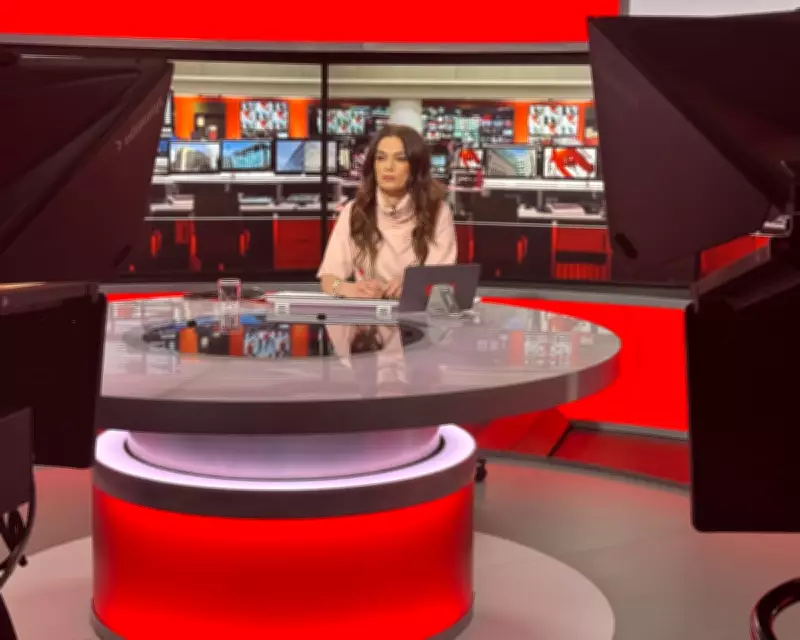
Fiona Crack, the director of the BBC World Service, has robustly defended BBC Arabic as a crucial and unique voice in the Middle East, specifically for broadcasting the Israeli perspective to an audience of nearly 40 million people weekly. In an exclusive interview, Crack emphasized that the service operates as one of the few independent and impartial news outlets in a region dominated by state-controlled media.
Sustained Criticism and Editorial Overhaul
The corporation's Arabic service has faced intense and sustained criticism over recent years regarding its editorial choices and for featuring some guests who had previously expressed antisemitic views on social media platforms. This scrutiny has even led to calls from some quarters for the complete closure of the service.
Crack acknowledged these past mistakes directly, stating the BBC has apologised and taken concrete steps to rectify them. "Where there have been mistakes, we have said there have been mistakes, and we have apologised for them, and we've looked at our systems to strengthen them," she affirmed.
This defence follows an extensive 18-month period during which the BBC undertook a significant overhaul of the editorial oversight for BBC Arabic. This process was initiated in response to criticisms about its output and story selection when compared to the BBC's main news services, as well as concerns over its choice of contributors.
A Vital Platform for Unreported Stories
Crack issued a stark warning to critics, arguing that without BBC Arabic, the Arab world would lose a vital source of diverse reporting. "What would it be without BBC Arabic? For example, in the Gaza war we wouldn't have heard the Israeli perspective, the Israeli experience," she explained. "We wouldn't have heard the kind of internal Israeli political arguments. That wouldn't have necessarily been in the Arab-speaking world without BBC Arabic."
She highlighted that the service often pursues and reports on significant stories that are ignored by other major Arabic-language channels, which are primarily owned by Gulf states. Crack cited specific examples from early in the conflict involving the US, Israel, and Iran, including a major oil refinery fire in Saudi Arabia and incidents involving downed jets.
"BBC Arabic were reporting on that because they had double sourced it, because we had done the journalism," she stated. "The other big channels in Arabic weren't because, of course, they're primarily owned by Gulf states and there was a reticence."
Operating in a Challenging Media Landscape
Crack contextualized the operating environment by pointing to the low rankings of many countries in BBC Arabic's broadcast region on the Reporters Without Borders media freedom index. Nations such as Syria, Afghanistan, Egypt, the United Arab Emirates, and Saudi Arabia all feature near the bottom of the global list of 180 countries.
She addressed the disconnect in perception, noting that while the service is attacked within its regional markets for being pro-Israeli due to its inclusion of Israeli perspectives, it faces criticism in the UK for different editorial reasons. "[The criticism from the UK] is a disconnect. Of course, because they are bringing the Israeli perspective and opinion to the airwaves in Arabic, unlike everybody else, they are attacked within their markets for being pro-Israeli – very vociferously sometimes," Crack observed.
Strengthening Editorial Standards
In response to specific criticisms outlined in a memo from former independent adviser Michael Prescott—which referenced contributors who had made extreme antisemitic statements online—Crack confirmed that many issues were already being addressed. Remedial actions include implementing deeper vetting checks on all potential contributors and the appointment of a new, Arabic-speaking editorial quality and standards executive to provide enhanced oversight.
The BBC had previously stated that one contributor, who suggested Jews should be burned, should not have been featured, and another, who described Jews as "devils," has been barred from future appearances.
Crack concluded with a broader plea for the support of public service media globally, which she described as being under threat. "We should be very careful [when] attacking it. It's worth just thinking about how unique BBC Arabic is in that region and the scale of what they're trying to do," she asserted, reinforcing the service's role as a journalistic lifeline in a complex and restrictive media environment.