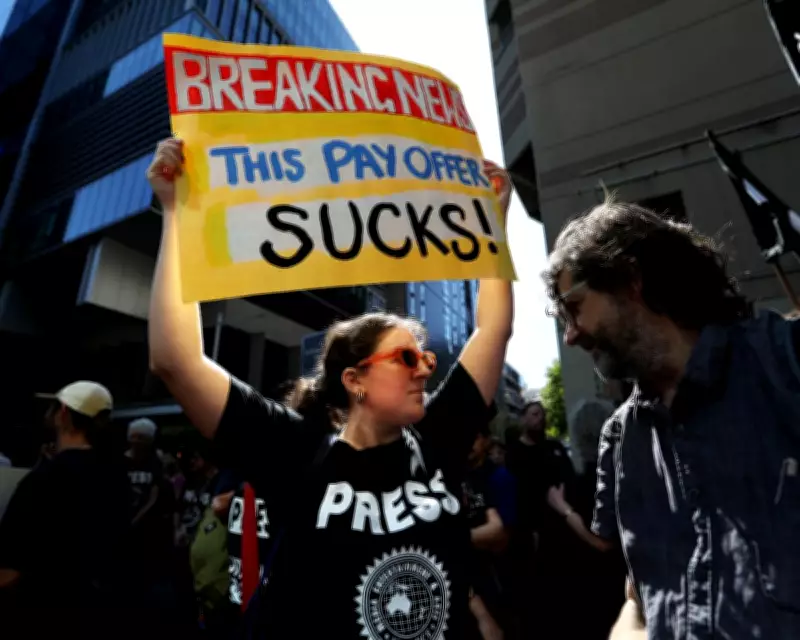
ABC Managing Director's 'Utterly Offensive' Remarks Condemned as Broadcaster Resumes Operations
ABC staff and union representatives have called on managing director Hugh Marks to retract what they label as "utterly offensive" comments, after he characterized recent industrial action as "a bit of a game." Marks made these remarks just hours before the conclusion of a 24-hour strike that saw over 2,000 employees walk off the job on Wednesday, marking the first such action at the broadcaster in two decades.
Strike Disrupts Programming and Sparks Management Backlash
The strike, organized by the Media, Entertainment and Arts Alliance (MEAA) and the Community and Public Sector Union (CPSU), forced ABC services across television, radio, and digital platforms to broadcast content from the BBC News channel and air repeats or pre-recorded local programs. Regular programming gradually returned on Thursday, with news bulletins resuming on all ABC radio stations by 11:45 a.m., though the ABC News Channel continued to feature BBC News and pre-recorded material into the afternoon.
In an interview with fill-in breakfast host Nick Lowther on ABC 702, Marks expressed frustration, stating, "Sometimes it feels like a bit of a game to me. And I don't think this is a game. I think this is really serious." He emphasized that audiences were suffering due to the disruption and urged both sides to prioritize viewers, saying, "We need to stop playing games and focus on that and get to an outcome."
Staff and Unions Demand Accountability and Fair Treatment
Michael Slezak, co-chair of the MEAA ABC national house committee, strongly rebutted Marks' comments, calling them "utterly offensive" and "outrageous." Slezak highlighted that staff have been negotiating with management for nine months to secure an agreement that supports quality journalism and fair working conditions. "The suggestion that ABC staff want to hurt audiences is beyond offensive," Slezak told the Guardian. "He should retract those comments immediately."
The strike stems from disputes over a pay offer of 10% over three years—3.5% in the first year and 3.25% in the subsequent two years—which unions argue falls below Australia's annual inflation rate of 3.8% as of January. Additional grievances include concerns about unfair work conditions, such as the use of rolling and short-term contracts, and fears that journalists might be replaced by artificial intelligence.
Management Defends Position Amid Financial and Operational Concerns
Marks defended the ABC's stance, noting that staff costs constitute 60% of the broadcaster's budget and that any significant pay increases could lead to job cuts. He claimed the offer, supplemented by a $1,000 sweetener, actually puts staff ahead of inflation at 4.4%. Furthermore, Marks refuted claims of job insecurity, asserting that over 90% of positions are permanent and the average employee tenure exceeds 10 years. He warned that "overindexing" payments would put the ABC "in peril" and described the staff's demands as "unmanageable."
Slezak countered these assertions, arguing that Marks is not listening to staff concerns. "What we are saying is that you cannot do fearless journalism if you're fearing for your own job," he said, stressing that job security is essential for maintaining quality news output.
Next Steps in the Dispute Resolution Process
The ABC has filed an application with the Fair Work Commission to assist in resolving the dispute, with the first hearing scheduled for Monday, March 30. As tensions persist, the focus remains on achieving a fair agreement that addresses pay, working conditions, and the long-term sustainability of the broadcaster, while ensuring that audience services are not further compromised.