Anozero Biennale's Ghostly Protest Against Hotel Development
In the historic Portuguese university city of Coimbra, the Anozero art biennale has transformed the 17th-century Monastery of Santa Clara-a-Nova into a haunting artistic statement. As disembodied children's voices echo through the convent's corridors and geometric foliage arrangements suggest occult rituals, the festival delivers a spectral warning to developers planning to convert the semi-derelict building into a luxury hotel.
The Battle for Santa Clara-a-Nova
Since 2015, Anozero has filled the monastery's 9,650 square meters with international contemporary art, breathing new life into a space that served as a barracks for nearly a century after the last nun died in 1891. Now, with the Portuguese government's Revive program granting development rights to a private company, festival director Carlos Antunes threatens to cancel future editions if hotel plans proceed. "I don't have a plan B," Antunes declares. "This is my fight. If the biennale gets cancelled, it will be a huge problem for the city."
Biennale Identity Crisis and Gentrification Concerns
The current edition, titled "Segurar, dar, receber" ("To hold, to give, to receive"), draws inspiration from Russian anarchist philosopher Peter Kropotkin's theories of mutual aid. This thematic choice reflects broader questions about art biennials' purpose in an era of proliferation. From Venice's inaugural 1895 event to today's 200-plus festivals worldwide, these exhibitions have evolved from cultural showcases to potential gentrification accelerators.
Artforum magazine's current issue asks pointedly: "Can the Biennial Serve a City, or Just 'Big Art'?" The suspicion persists that biennials primarily benefit international art elites while leaving minimal local impact or, worse, paving the way for property developers. Examples abound: Berlin's KW contemporary art center successfully repurposed a margarine factory, while Lagos squatters faced eviction after their disused rail shed hosted a 2017 biennale.
Anarchism as Artistic Antidote
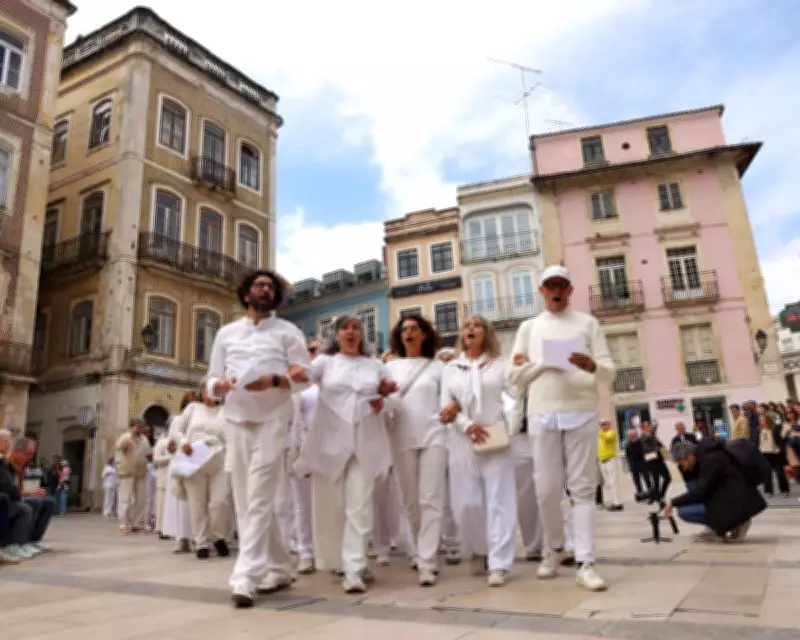
Anozero's anarchist theme manifests practically through community engagement. Portuguese artist Vasco Araújo led 260 local choir members in a white-clad procession singing Verdi's Nabucco chorus from Coimbra's central square to the monastery. The festival's modest €800,000 budget belies its ambitious 2023 manifesto commitment to reimagining biennials as "experiments in communal living and thinking" rather than mere artist showcases.
Installations gain potency through site-specificity. American artist Taryn Simon's multilingual lament recordings in Albanian, Chinese, Kurdish, Kyrgyz and Turkish transform the monastery's cells into spaces of collective mourning. Amsterdam-based Inside Outside architectural designers planted citrus and kumquat trees in the gardens, creating spaces for "conversations with strangers" intended to outlast the biennale.
Local Context and Student Traditions
Coimbra's unique protest culture provides rich context. The city hosts over 20 leftwing and anarchist student fraternities called repúblicas—self-managed communal housing projects with poetic names like Republic of Ghosts and Palace of Madness. These organizations offer support for disadvantaged students and practice mutual care principles that align with Kropotkin's philosophy.
Despite physical proximity to biennale venues, the repúblicas remain curiously absent from displayed content. Instead, exhibitions feature anarchist town planning books and Kropotkin influence charts. Veteran república members Jaime Miranda and João Paulo Bernadino note the biennale attracts "a certain elite" but appreciate the fight to preserve community access to the monastery.
Uncertain Future and Manifesta Partnership
The biennale's protest gestures sometimes waver in conviction. Overnight stays in monastery cells with experimental films parody impending hotelification yet might also serve as compromise trials. Wall texts vaguely allude to Santa Clara's "uncertain future."
For its 2028 edition, Anozero partners with nomadic European biennale Manifesta. To ensure survival, organizers might learn from local repúblicas' successful resistance tactics—when rental law changes threatened eviction, former inhabitants collectively purchased their building from the landlord.
As kumquat trees grow in monastery gardens, their future alongside a potential hotel swimming pool remains uncertain. Anozero continues at the Monastery of Santa Clara-a-Nova and Coimbra venues until July 5, its ghostly installations serving as both artistic achievement and pointed political statement about cultural space preservation in an era of rapid urban transformation.