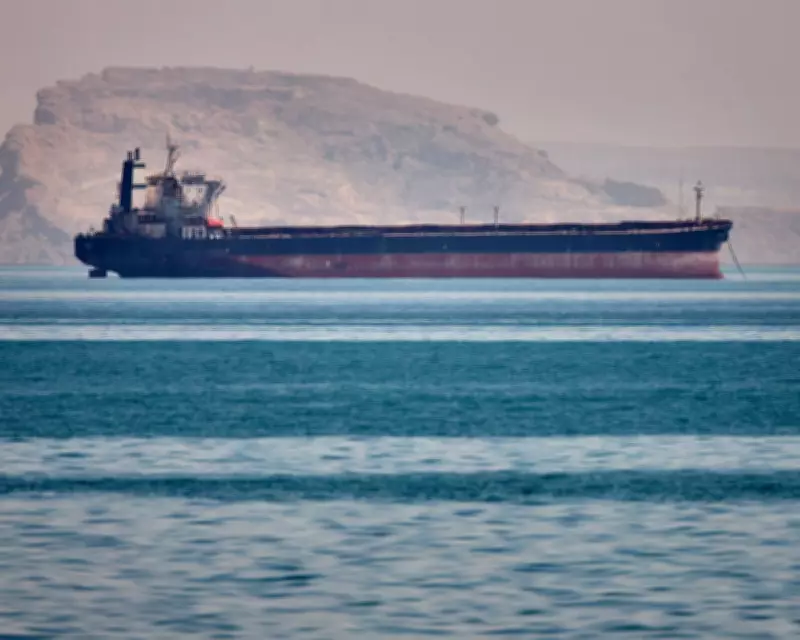
The global shipping industry has expressed deep skepticism over whether vessels can safely navigate the Strait of Hormuz following President Donald Trump's latest initiative to reopen the strategic waterway. Trump announced on Monday that the U.S. Navy would "guide" stranded ships out of the area, dubbing the operation "Project Freedom" and framing it as a humanitarian gesture "on behalf of the United States, Middle Eastern Countries but, in particular, the Country of Iran."
However, within hours, Iran's Fars news agency reported that a U.S. warship attempting to transit the strait had been struck by two missiles and forced to turn back after ignoring an Iranian warning. The United States denied that any of its vessels had been hit. Amid the conflicting reports, Brent crude oil prices surged approximately 2% to $110.36 per barrel.
Industry Concerns Over Safety and Viability
Shipping experts have questioned whether Trump's plan can be sustained or if it will merely serve as a limited operation to free some of the trapped vessels. Sascha Meijer, general secretary of the seafarers' union Nautilus, voiced caution: "Seafarers stuck in the strait would really appreciate protection to get ships sailing out. But is this protection sure? How about mines? Are the ships insured? Is this offer enough? It is really too soon to conclude if this is good news or creates more danger."

Her sentiments were echoed by oil tanker captain Raman Kapoor, who remains stranded in the strait. Speaking to BBC Radio 4's World at One, he said he "would not take this risk" of attempting to leave. "As a captain it is my duty as well to assess the situation. I have to take the consent of the whole crew – whether they are willing to put their lives at risk. It's a long process," he explained.
Details of the Plan Remain Unclear
Trump provided no specifics on how the more than 850 vessels currently trapped in the Gulf would be freed. In a post on Truth Social, he wrote: "I have told my Representatives to inform them that we will use best efforts to get their Ships and Crews safely out of the Strait. In all cases, they said they will not be returning until the area becomes safe for navigation, and everything else."
Jakob Larsen, chief safety and security officer at the shipping industry group Bimco, stressed the need for clarification. "Without consent from Iran to let commercial ships transit safely through the Strait of Hormuz, it is currently not clear whether the Iranian threat to ships can be degraded or suppressed," he said. "In view of the Iranian threats against any ship attempting to transit the strait of Hormuz without coordination with Iran's military, there is a risk of hostilities breaking out again if 'Project Freedom' goes ahead."
Military Assets Deployed
The U.S. Central Command (Centcom) confirmed that two U.S.-flagged merchant vessels had "successfully transited" through the strait. A Centcom statement added: "US military support to Project Freedom will include guided-missile destroyers, over 100 land and sea-based aircraft, multidomain unmanned platforms and 15,000 service members."
The White House's move comes as the crisis in the Middle East threatens to push the global economy into recession, with oil prices now approximately 50% higher than pre-conflict levels.