Oil prices experienced a significant decline and stock markets rallied after U.S. President Donald Trump indicated that the conflict with Iran could end and the Strait of Hormuz would be reopened to all maritime traffic if Tehran agrees to a deal with Washington. In a social media post, Trump stated, "Assuming Iran agrees to give what has been agreed to, which is, perhaps, a big assumption, the already legendary Epic Fury will be at an end, and the highly effective Blockade will allow the Hormuz Strait to be OPEN TO ALL, including Iran." However, he warned that if Iran fails to reach an agreement, "the bombing starts" and would be "at a much higher level and intensity than it was before."
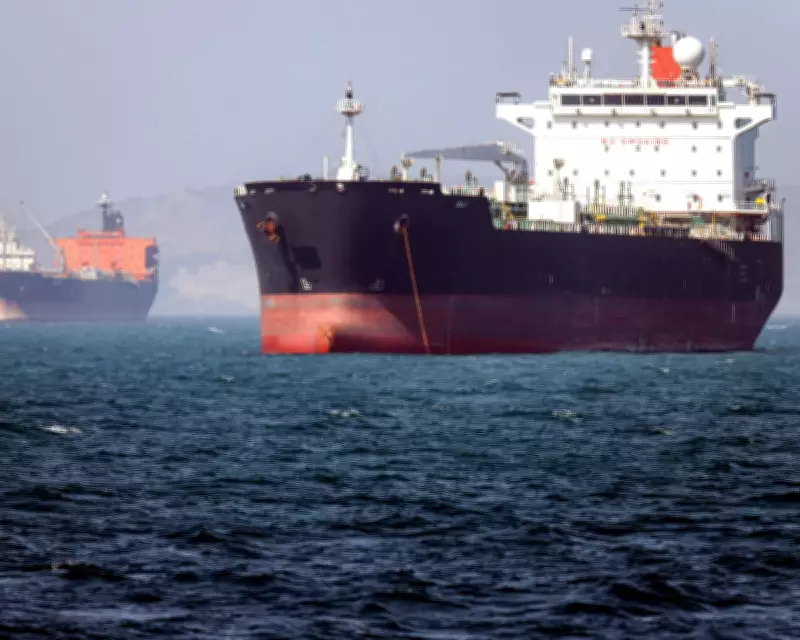
These comments followed the president's announcement of a temporary pause in the "Project Freedom" operation, which had been escorting ships through the strait. The strait carries approximately one-fifth of the world's oil supplies but has been blockaded by Iran since late February, sparking a global energy crisis. Trump clarified that while the escort operation would be paused for a short period to finalize a deal, the blockade of Iranian ports would remain in place.
In response, Iran's Revolutionary Guards Navy stated on Wednesday that safe transit through the strait would be ensured once U.S. threats cease and new procedures are implemented. This marked Iran's first reaction to the U.S. pausing operations to assist stranded ships. Initially, Brent crude oil, which had risen as much as 6% earlier in the week following recent Middle East attacks, plunged 11% to as low as $97 per barrel. This was the first time it fell below $100 since April 22. Wholesale gas prices also declined, with the British June contract dropping 6.3% to 107.8p per therm, while airline stocks rose on improved prospects for international travel.

The crude price decline accelerated after a report by Axios that the White House believed it was close to agreeing on a one-page memorandum of understanding to end the war with Iran, setting a framework for more detailed nuclear talks. However, oil pared losses later in the day, trading down 5.8% at $103.46 per barrel, as Iran dismissed the report as an "American wishlist, not a reality." The Guards' statement on the strait did not specify new procedures but thanked shipowners and captains for respecting Iranian regulations.
The oil price had reached $126 per barrel last week, its highest since 2022, after Trump indicated the blockade could last months and peace talks remained stalled. European stock markets rallied on Wednesday, with the UK's FTSE 100 rising 2%, France's CAC 40 up 3%, and Germany's DAX gaining 2.1%. MSCI's All-Country World Index rose 0.4% to a new record, alongside milestones for emerging markets and Asia Pacific shares. South Korea's Kospi surged 6.6%, clearing the 7,000 mark for the first time, led by Samsung Electronics' 14.8% increase, topping a $1 trillion market value. On Wall Street, the S&P 500 rose nearly 1% after hitting a new record on Tuesday.
In bond markets, UK long-term gilt yields decreased slightly from their highest level since 1998, with the 30-year yield falling about 9 basis points to 5.63%. Gold, a traditional safe-haven asset, rose 3% to $4,695 per ounce. Trump's comments came as French shipping group CMA CGM reported an attack on one of its ships, the San Antonio, while crossing the Strait of Hormuz, injuring crew members and damaging the vessel. The company stated it is closely monitoring the situation.
Susannah Streeter, chief investment strategist at Wealth Club, commented: "A dam of tension has eased with relief flooding into financial markets, amid hopes that hostilities will cease in the Middle East, with the Trump administration making conciliatory moves. Relief is starting to seep into the bond markets, with UK gilt yields easing off amid hopes that inflation might not head quite as high if a longer-term resolution can be negotiated."