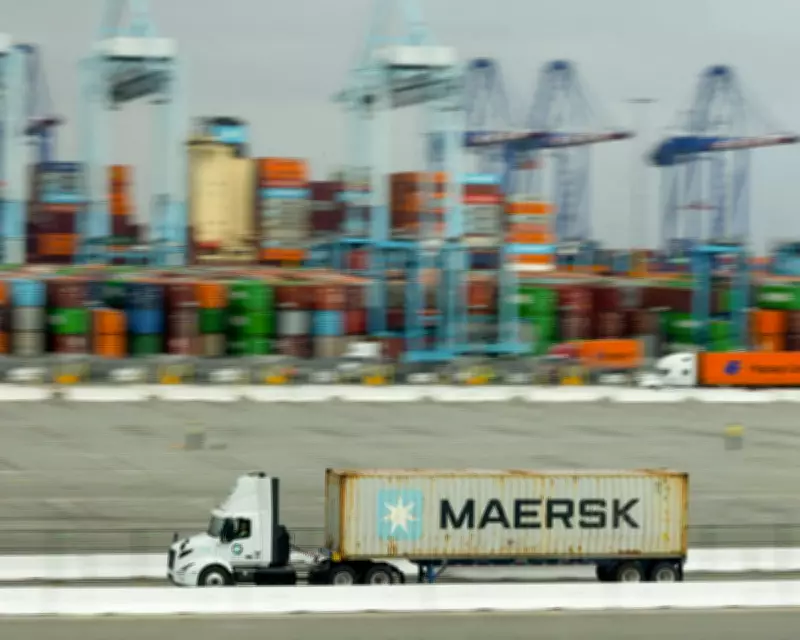
Maersk, the Danish shipping giant, has reported that demand for its shipping containers remains strong, even as the industry grapples with elevated energy costs due to the closure of the Strait of Hormuz. The company's first-quarter results showed a 2% drop in revenue to $13 billion, which still exceeded expectations.
Impact of Hormuz Strait Closure
The Strait of Hormuz, a critical waterway through which about a fifth of the world's oil and gas passes, has been effectively shut since late February, leading to a sharp rise in energy prices. Maersk's CEO, Vincent Clerc, stated that even if the strait reopens, the impact on cargo flows would be limited. He noted that the company's fuel bill has nearly doubled since the conflict began, adding up to $500 million in monthly costs, but these have been passed on to customers through higher freight rates.
Industry Challenges
More than 800 ships and roughly 20,000 crew members remain stranded west of the strait. This week, a US-flagged ship operated by Maersk's subsidiary, Farrell Lines, exited the strait with military assistance. Clerc emphasized that the primary focus is on mitigating cost increases through cost measures and commercial strategies, which have been successful so far. However, he warned of potential secondary effects, such as higher inflation and demand destruction, which could soften the market in the second half of the year.

Financial Outlook
Despite these challenges, Maersk maintained its profit guidance for the year, expecting container demand to grow by 2% to 4%. The company's shares, listed in Copenhagen, fell by 7% on Thursday. The broader shipping industry continues to face elevated fuel costs and safety concerns for vessels traveling to and from the Gulf.