Strait of Hormuz Shipping Crisis: Ceasefire Hopes Amid Lingering Oil Price Fears
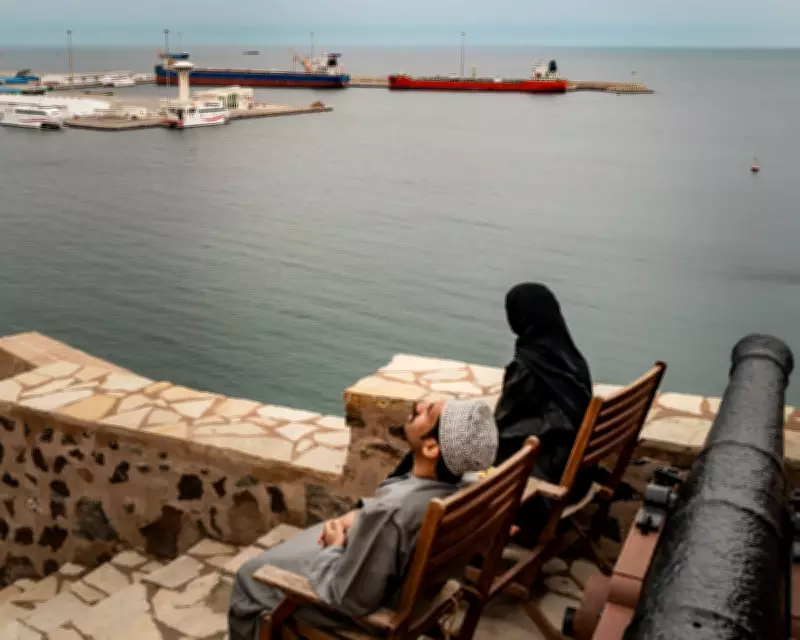
Two bulk carriers remain anchored off Muscat in Oman, south of the Strait of Hormuz, a critical waterway that Iran shut down after the outbreak of war in February. This closure has trapped an estimated 2,000 vessels, including oil tankers and cargo ships, with about 20,000 seafarers onboard, according to UN reports. The situation has led to dwindling supplies for crews and a severe disruption in global energy flows.
Ceasefire Uncertainty and Shipping Gridlock
If the US-Israeli ceasefire with Iran holds, it could offer the clearest hope for resolving the energy crisis since Iran's Revolutionary Guards assumed control of the strait 40 days ago. However, the deal appears shaky, with Iran arguing that Israel's attacks on Lebanon breach the agreement and state media claiming the waterway has been closed again. Even if the temporary detente between the White House and Tehran manages to hold, analysts fear that allowing hundreds of stranded tankers to transit will not be enough to restore pre-crisis levels of oil, gas, chemicals, and other vital items.
In the hours after the ceasefire announcement, there was no immediate increase in vessel traffic through the strait. Only a trickle of ships has passed in recent weeks, often in single digits daily, compared to an average of 140 ships per day before the conflict. Shipping analysts and owners caution that a temporary ceasefire does not provide sufficient safety guarantees, especially as Iran's foreign minister has stated that transit will be under Iranian military management.

Challenges to Resuming Normal Shipping
Many questions remain for shipowners and captains regarding safety. Iran has indicated it will continue operating a traffic control system in the strait, which includes granting approval to "non-hostile vessels"—those without links to the US or Israel—and requiring extensive information on ownership, cargo, and previous voyages. As part of a clearance process described as "fairly unsophisticated," Iranian officials on Larak Island use binoculars to check ship names and give approval to proceed.
Tehran has tried to reroute ships to a more northerly corridor near its coastline, away from traditional lanes, but this new route places constraints on an already congested waterway and could hinder high-volume traffic. A successful ceasefire could allow Iran and Oman to charge fees of up to $2 million per ship to pass through, dubbed "Tehran's tollbooth" by analysts at Lloyd's List. It is unclear if all shipowners would be willing to pay, and fully loaded vessels are expected to leave first, rather than empty ones unable to reload.
Shipping analysts predict operators will gain confidence once a large European-owned ship safely crosses, but caution that it is a different matter for empty ships to enter the strait for loading, with no clear timeline for when this may start.
Impact on Global Energy Supplies and Prices
Energy markets have fallen sharply on hopes that trapped crude oil and gas in the Gulf could soon relieve a crisis deemed more serious than the energy flashpoints of 1973, 1979, and 2022 combined by the International Energy Agency. However, disruption has been compounded by forced shutdowns of production as storage facilities reached capacity and damage from drone attacks to key sites.
Experts say it could take months or years to fully restore the Gulf's energy production. Qatar has reported significant damage at its main liquefied natural gas (LNG) production hub after an Iranian strike, reducing capacity by 17%, with repairs potentially taking three to five years. Wood Mackenzie, an oil consultancy, notes that if Qatar restarts undamaged capacity next month, it might not return to service until the end of August, though it is unclear if this would occur during a ceasefire.
Gulf refineries, which provide over half of Europe's jet fuel, have also been damaged and could take months to return to normal. Willie Walsh, director general of Iata, warned that even with the strait open, it could take months to restore supply due to refining capacity disruptions.

Future Outlook for Energy Markets
Oil and gas markets reacted with relief to ceasefire reports, with prices slumping initially, but analysts predict prices could drift higher again as supply squeezes intensify in May and June. The international crude benchmark opened below $95 a barrel, down from about $110, while European gas prices fell nearly 20% to under €43 per MWh, though these levels remain above pre-crisis norms. Jet fuel prices, which have more than doubled since the conflict, are a particular concern.
Traders are expected to price in a "geopolitical risk premium" due to ceasefire uncertainty, keeping energy prices significantly higher than before the conflict. Tamas Varga of PVM Oil suggests a return to sub-$70 levels is improbable over the next year or two.
Long-Term Implications for Gulf Exports
The Gulf's oil and gas exports may never return to normal. Even if the strait remains open and capacity is restored, many countries are rethinking their energy strategies. In Asia, the crisis has exposed risks of over-reliance on a single region, likely prompting diversification to sources like the Americas. There could be higher costs from long-term transit fees and risk premiums for tanker operators.
Greater interest in nuclear power and renewable energy, combined with shifts to electrified transport and greener industry, may help countries reduce fossil fuel reliance. Shipping analysts note that maritime companies take time to regain confidence in dangerous routes; for example, few returned to the Red Sea a year after Houthi rebels stopped targeting ships, preferring the longer route around the Cape of Good Hope.